
Companion Plants
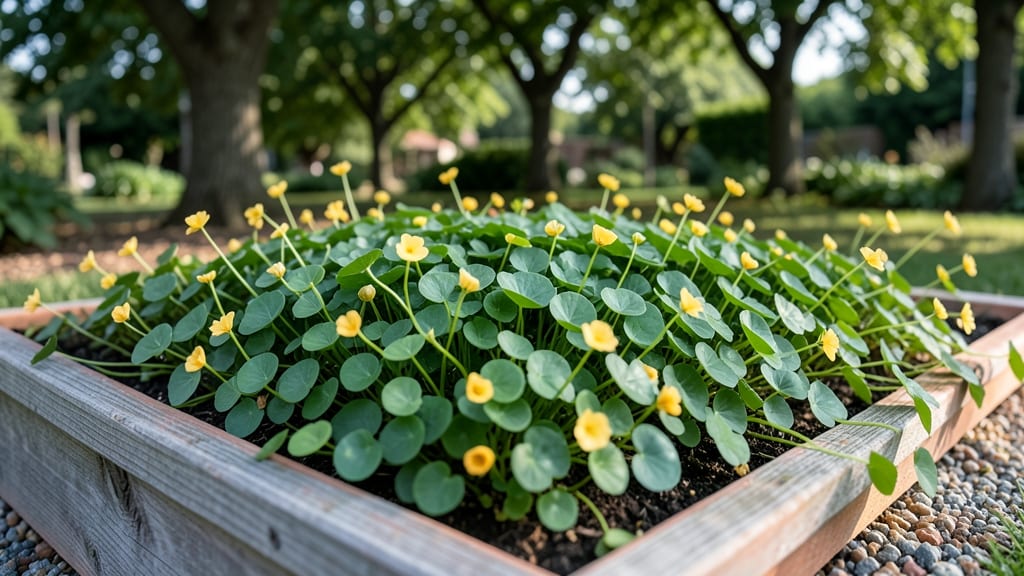
Creeping Jenny grows best in USDA zones 3 through 9, where it handles everything from frosty winters to hot summers. For cooler regions (zones 3-7), opt for hardy varieties like Lysimachia nummularia, while southern climates (zones 8-9) benefit from heat-tolerant types. Keep soil consistently moist and provide partial shade to maximize growth.
This ground cover thrives across a wide range of climates, but its success depends on matching the right variety to your local conditions. 🌱 In colder zones, the classic Lysimachia nummularia handles frost well when mulched, while southern gardens benefit from sun-loving varieties that won't scorch in summer heat.
What's interesting is how adaptable it is—just adjust your watering and sunlight based on your specific zone. For example, northern growers should prioritize shade protection in summer, while southern gardeners might need afternoon shade to prevent leaf burn.
💡 In This Article
- USDA Hardiness Zones for Creeping Jenny: Climate and Survival Factors
- Top Creeping Jenny Varieties by Region: Shade, Sun, and Drought Resistance
USDA hardiness zones for creeping jenny: climate and survival factors
Creeping Jenny's remarkable adaptability to zones 3-9 stems from its ability to tolerate both freezing temperatures and summer heat, thanks to its native range across Europe and Asia.
The plant's thick, succulent leaves store water efficiently, allowing it to survive brief dry spells while its shallow root system thrives in moist, well-drained soils.
In colder zones (3-5), where winter temperatures can drop to -30°F to -20°F, the plant enters dormancy, with its roots protected by the insulating ground. This dormancy period is crucial—without it, creeping jenny would succumb to frost damage in its tender new growth stages.
The real challenge comes during spring and fall transitions, when temperatures fluctuate unpredictably.
For example, in zone 6, a late frost after buds appear can stunt growth, while in zone 8, sudden heatwaves can cause leaf scorch if the plant isn't acclimated. 💫 The key is understanding your microclimate: creeping jenny in zone 7 might need afternoon shade in July to prevent wilting, while the same variety in zone 4 could benefit from a thick layer of 4-6 inches of mulch to protect roots during winter.
Humidity also plays a role—drier climates (like parts of zone 9) may require more frequent watering to prevent leaf edges from turning crispy.
What most gardeners don't realize is how creeping jenny's growth rate adjusts to temperature. In zones 3-5, it grows slowly in spring, conserving energy until soil temperatures reach 55°F, while in zones 8-9, it can spread aggressively when daytime highs exceed 80°F.
This is why northern gardeners often see creeping jenny as a slow but steady ground cover, while southern growers may need to contain its spread with edging.
The plant's ability to photosynthesize efficiently in low light (as little as 3-4 hours of sun daily) makes it ideal for shady gardens in cooler zones, where direct sunlight would cause leaf burn.
For marginal zones (like zone 2 or 10), creeping jenny can still thrive with adjustments. In zone 2, where winters drop below -40°F, use heavy winter mulch (straw or leaves) and plant in sheltered spots.
In zone 10, where summers exceed 90°F regularly, provide dappled shade and water deeply 2-3 times weekly to prevent root stress. The plant's resilience lies in its flexibility—it can handle everything from 100 days of sub-freezing temps to 90°F heatwaves, as long as moisture levels remain consistent.
One often-overlooked factor is how creeping jenny's color intensity varies by zone. In cooler climates (zones 3-6), the classic green varieties appear brighter and more vibrant due to slower growth and higher chlorophyll production.
Meanwhile, in warmer zones (7-9), golden varieties like 'Aurea' develop richer hues because the heat accelerates carotenoid production. This color shift is a visual cue that your plant is thriving in its ideal conditions.
For example, a creeping jenny in zone 5 that turns dull green may need more sunlight, while one in zone 8 that fades to pale yellow might be thirsty.
To maximize survival in challenging zones, focus on these three critical adjustments: mulching depth (3-4 inches in cold zones, minimal in hot zones), watering frequency (daily in summer, weekly in winter), and light exposure (morning sun in north, afternoon shade in south).
These tweaks can push creeping jenny's hardiness one zone beyond its official range, making it a versatile choice for nearly any garden. The plant's ability to recover quickly from minor stress—like temporary drought or light frost—is what makes it such a forgiving ground cover.