
Planting
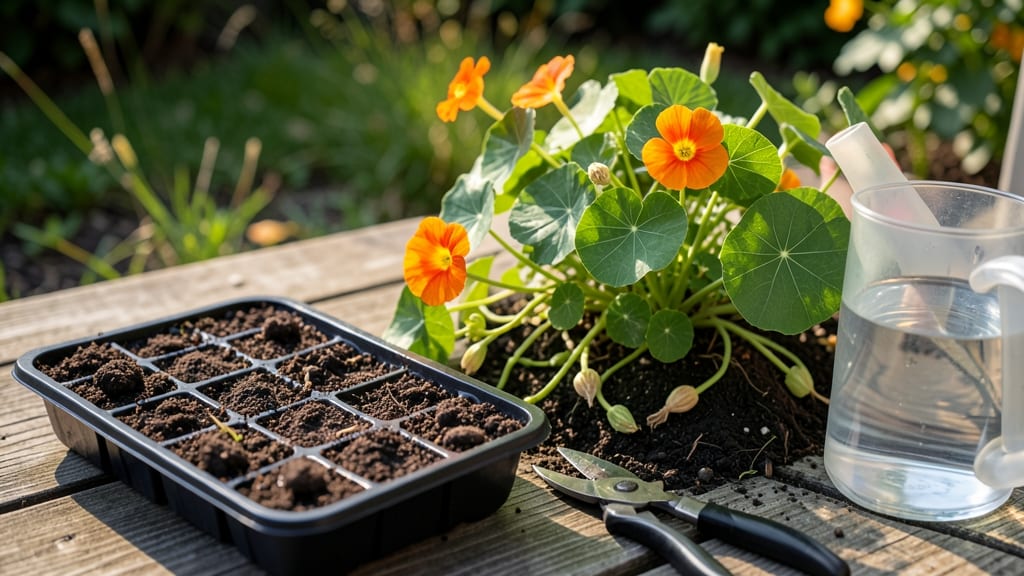
Plant nasturtium seeds in Zone 7 when soil reaches 55°F—typically mid-April to early May after your last frost date. 🌱 I’ve learned the hard way that rushing these seeds leads to leggy, weak plants, while waiting too long risks bolting before they bloom.
The key is timing them with warm soil but before summer’s intense heat sets in. Zone 7’s mild winters actually let you try a fall planting too—sow seeds 8-10 weeks before your first frost (usually late August).
This second chance gives you blooms well into autumn, and the cooler weather prevents the plants from bolting prematurely. Just be ready to protect them with row covers if early frosts sneak in. You’ll know you’ve timed it right when those round, vibrant leaves appear within 7-10 days of germination.
By summer, you’ll have lush, edible flowers that repel pests and add pops of orange, yellow, and red to your garden. The secret? Consistent moisture and full sun—no fancy soil amendments needed. For container growers or small spaces, nasturtiums thrive in 5-gallon pots with proper drainage.
And yes, you can eat them—they’re peppery and perfect for salads! Just avoid planting them where cucumbers grew last year, as they share diseases.
📚 In This Guide
- What you need
- Instructions
- Tips and common mistakes
- Wrapping up and next steps
What you need
- ● Nasturtium seeds – Choose Tropaeolum majus varieties (e.g., 'Alaska,' 'Empress of India,' or 'Jewel Mix'). Aim for 10–20 seeds per plant if starting indoors or 1–2 seeds per cell in seed trays.
- ● Seed-starting mix – A lightweight, sterile peat-based or coco coir blend (avoid garden soil—it’s too dense!). A 10–12 quart bag works for 50+ seeds.
- ● Containers – 2–4 inch deep trays with drainage holes (e.g., 1020-cell seed trays or 4-inch pots for direct sowing).
- ● Grow lights or sunny windowsill – If indoors, provide 12–16 hours of light/day (LED grow lights work great!).
- ● Misting bottle or watering can – Keep soil consistently moist (not soggy) until germination.
- ○ Fertilizer (optional but helpful) – A balanced, water-soluble fertilizer (5-5-5 or 10-10-10) diluted to half-strength for seedlings.
- ● Well-draining soil – Nasturtiums hate soggy roots! Amend heavy soil with compost or perlite for better aeration.
- ● Sunny spot – 6+ hours of direct sunlight daily (partial shade tolerates 4–6 hours).
- ○ Mulch (optional) – Straw or shredded leaves to retain moisture and suppress weeds.
- ● Support (for trailing varieties) – Trellis, cage, or stakes if growing ‘Mascotte’ or other climbing types.
- ● 🌡️ Soil temp check: Nasturtiums germinate best in 60–70°F soil. Use a soil thermometer if unsure!
- ● ✨ Direct sowing hack: Sprinkle seeds ¼ inch deep—they’re large, so no need to cover heavily!
- ● 🔄 Successive planting: Sow every 2–3 weeks in Zone 7 for continuous blooms from spring to frost.
Instructions for planting nasturtium seeds in Zone 7
Here's the exact timing and method I use to get vibrant nasturtium blooms all season long.
🌱 Step 1: Start Seeds Indoors 4-6 Weeks Before Last Frost
Nasturtiums germinate quickly but need warmth to break dormancy. I begin seeds indoors 4-6 weeks before your last frost date in Zone 7 (typically mid-March). Fill 2-3 inch deep seed trays with moistened seed-starting mix and press seeds ¼ inch deep—they're large enough to handle easily.
Cover with a humidity dome or plastic wrap and place in a warm spot (65-75°F). You'll see sprouts in 5-10 days—watch for the first tiny leaves (cotyledons) to appear. Real talk: if your home runs cooler, use a seedling heat mat to speed germination.
🌿 Step 2: Harden Off Seedlings Before Transplanting
Two weeks before your last frost date, move seedlings outside for 1-2 hours daily in a sheltered spot. Gradually increase exposure over 7-10 days40°F.
You'll notice seedlings darken slightly when first moved outside—that's normal. If leaves yellow or wilt, they're not ready yet. I always transplant on an overcast day to reduce shock, and water deeply right after moving them to the garden.
☀️ Step 3: Plant Directly After Last Frost or Start Indoors Later
For faster results, skip starting indoors and plant seeds directly in the garden 2-4 weeks after your last frost date. Nasturtiums grow quickly and don't mind cooler soil. Scatter seeds ½ inch deep in well-draining soil, 12-18 inches apart for bush varieties or 8-12 inches apart for trailing types.
Press seeds lightly into soil—they need light to germinate, so don't bury too deeply. Water gently but don't soak the soil. You'll see sprouts in 7-14 days, with first true leaves appearing shortly after. Here's the thing—nasturtiums self-seed aggressively, so you might get volunteers popping up all season.
🪴 Step 4: Choose Optimal Planting Locations
Nasturtiums thrive in full sun to partial shade (at least 4-6 hours of sunlight daily). In Zone 7's hot summers, afternoon shade helps prevent bolting. They're incredibly adaptable, growing in containers, hanging baskets, or directly in garden beds.
I always plant trailing varieties near trellises or along fences—they'll climb and spill beautifully. Bush types make great edging plants or border accents. The key is well-draining soil; nasturtiums hate soggy roots. Amend heavy clay with compost to improve drainage.
⏰ Step 5: Time Succession Plantings for Continuous Blooms
For nonstop color, make 2-3 succession plantings every 3-4 weeks through early summer. Nasturtiums grow fast and bloom quickly after germination. Each new planting will extend your flowering season until frost.
Watch for seed pods forming—when they appear, pinch them off to encourage more blooms. You'll get the most vibrant flowers if you deadhead spent blooms regularly. This is the moment that matters: consistent deadheading keeps plants producing new flowers instead of going to seed.
Tips & tricks for perfect nasturtium planting in Zone 7
Here's what I wish I knew before my first nasturtium planting—these tricks will help you avoid common pitfalls and get the most vibrant blooms possible.
Germination Secrets: Nasturtium seeds need light to sprout, so don't bury them too deeply in Step 1. Press them just ¼ inch deep in moist seed-starting mix and keep them consistently warm at 65-75°F. I've found that using a seedling heat mat makes all the difference when your home stays cooler than ideal. The seeds will germinate in 5-10 days, but if you're impatient, try soaking seeds overnight in warm water before planting—it can speed things up by a day or two.
Harden Off Gradually: In Step 2, when you're hardening off seedlings, start with just 1 hour of outdoor exposure on day one. I learned this the hard way—overdoing it too soon causes shock. Gradually increase by 30 minutes daily until they can handle full sun. Watch for nighttime temperatures above 40°F before transplanting permanently. A simple trick: move seedlings to a spot that gets morning sun and afternoon shade during this process.
Succession Planting Strategy: For continuous blooms in Step 5, I recommend making your first succession planting 3 weeks after your initial planting, then every 3-4 weeks thereafter. This staggered approach ensures you always have fresh flowers. Mark your calendar now—nasturtiums grow fast, and you'll want to keep this schedule to prevent gaps in your blooming season. The key is consistency; don't let more than 4 weeks pass between plantings.
Soil Prep Tip: Before planting in Step 3, mix a handful of compost into your planting holes. Nasturtiums love well-draining soil, and this extra boost gives them the nutrients they need to thrive. If you're planting in containers, use a high-quality potting mix with added perlite or sand to improve drainage. I've noticed that plants in enriched soil produce larger, more vibrant flowers throughout the season.
Pro Tips for When To Plant Nasturtium Seeds Zone 7
- Here's what I wish I knew before my first nasturtium planting—these tricks will help you avoid common pitfalls and ge...
- Germination Secrets: Nasturtium seeds need light to sprout, so don't bury them too deeply in Step 1. Press them just ...
- Harden Off Gradually: In Step 2, when you're hardening off seedlings, start with just 1 hour of outdoor exposure on d...
Frequently asked questions
Got questions about planting nasturtium seeds in Zone 7?
You’re not alone! Here are answers to the most common queries to help you grow vibrant, edible blooms with confidence.
When is the exact best time to plant nasturtium seeds in Zone 7?
For Zone 7, aim for 2–4 weeks after your last frost date (mid-to-late April). Nasturtiums thrive in warm soil (60°F+), so avoid planting too early—they’ll rot in cold, damp conditions. For a fall harvest, sow seeds again in late summer (August) for blooms before frost.
Can I plant nasturtium seeds in Zone 7 before the last frost?
Not recommended! Nasturtium seeds won’t germinate in cold soil and may develop fungal issues. Instead, start indoors 4–6 weeks before transplanting (if you’re impatient) or wait for soil to warm. A quick fix: Use row covers after planting to protect tender seedlings from late frosts.
What if my nasturtium seeds don’t sprout after planting?
Don’t panic! Nasturtiums are slow germinators (10–21 days). To troubleshoot:
- Check moisture: Keep soil consistently damp (not soggy).
- Test depth: Seeds need ½ inch of soil—don’t bury them too deep.
- Warmth matters: Use a heat mat or place trays in a sunny window.
Are nasturtiums safe to eat, and how do I harvest them?
Both flowers and leaves are edible—peppery like arugula. Harvest young leaves or fully opened flowers for the best flavor. Snip stems with scissors, leaving some blooms for pollinators. Pro tip: Use flowers as garnishes or infuse them in honey or vinegar for a tangy kick!
Will nasturtiums survive Zone 7 winters, or do I replant yearly?
Nasturtiums are annuals (or tender perennials in mild climates). They won’t survive frost, so replant each spring. However, they self-seed eagerly—you might spot volunteers popping up in spring! Save seeds from your healthiest plants for next year’s garden.
What’s a good alternative if nasturtiums fail in my Zone 7 garden?
Try these low-maintenance, edible flowers with similar growing needs:
- Calendula: Bright, medicinal, and pest-repellent.
- Borage: Fast-growing with cucumber-flavored leaves.
- Pansies: Cold-hardy and great for salads.
Wrapping up and next steps
Planting nasturtium seeds in Zone 7 is all about timing—whether you’re chasing those vibrant blooms for summer color or edible greens for your kitchen! 🌸 With a frost-free window spanning from mid-April to early October, you’ve got plenty of opportunities to sow seeds directly into the soil or start indoors for a head start.
Remember, these hardy plants thrive in cooler weather, so don’t wait too long.
Now that you’re armed with the perfect planting timeline, grab those seeds and get growing! 🌱 For extra inspiration, explore companion planting ideas or creative ways to use nasturtiums in your garden—or even your meals. Happy planting!