
Plants
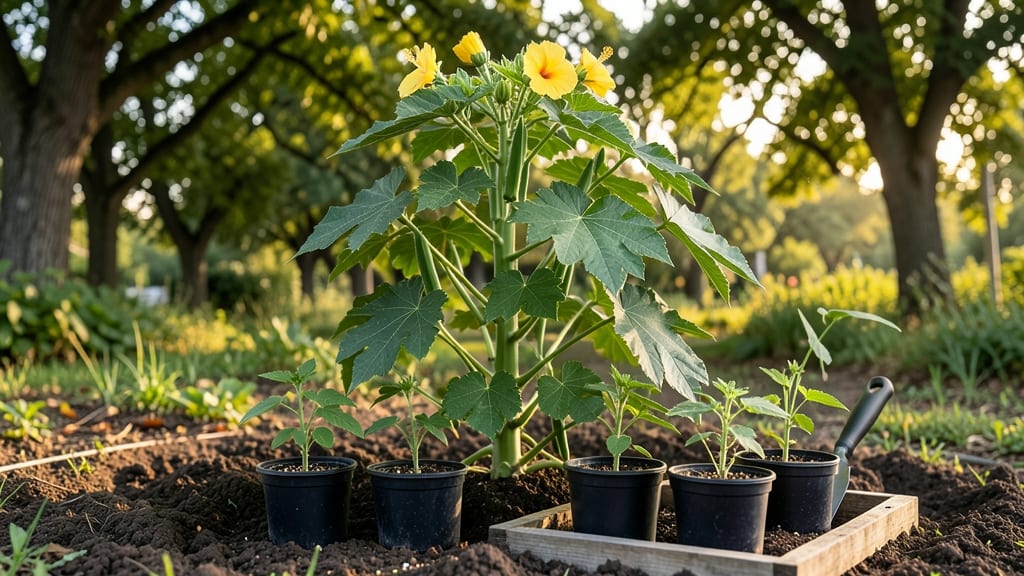
To plant okra in Zone 9, aim for late February through April or late August to September—timing that avoids the brutal mid-summer heat when okra bolts faster than you can say "gumbo."
If you’ve ever watched your seedlings wilt under Zone 9’s relentless sun, you know the stakes: plant too early, and the heat zaps their energy; too late, and you miss the harvest window entirely.
This isn’t just about dates—it’s about soil warmth (60°F or above) and choosing heat-resistant varieties like Clemson Spineless or Emerald, which handle Zone 9’s climate like a pro.
Below, I break down the exact windows, soil prep, and pro tips to keep your okra thriving from seed to harvest—no guesswork, just results.

Best planting windows for okra in Zone 9’s extreme heat
Zone 9’s relentless heat makes okra planting tricky—too early and seedlings bolt, too late and you miss the harvest window. The key is timing your two strategic planting windows: an early spring escape and a summer heat-resilient approach.
Both methods rely on soil temperatures above 60°F and heat-tolerant varieties to thrive.
Okra loves heat but despises peak summer temperatures above 90°F. In Zone 9, this means avoiding May through July unless you’re using shade cloth or drought-resistant varieties.
Instead, focus on February-March for spring planting and August-September for a fall harvest. Microclimates near coastlines or valleys can shift these windows by 2-4 weeks.
Soil temperature is your best guide—wait until it consistently stays above 60°F at 2 inches deep. Use a soil thermometer to avoid guesswork. In Zone 9, this typically aligns with late February to early March for spring plantings and late August for fall.
| Planting Strategy | Best Months | Soil Temp | Key Advantage | Harvest Window |
|---|---|---|---|---|
| Early Spring Escape | February - April | 60°F+ | Avoids peak heat; longer growing season | May - June |
| Summer Heat Resilience | August - September | 70°F+ | Uses drought-tolerant varieties; shorter cycle | September - October |
For spring plantings, start seeds indoors 4-6 weeks before your last frost-free date (though Zone 9 rarely has frost). Transplant seedlings outdoors when soil reaches 60°F and nighttime temps stay above 55°F. Use black plastic mulch to warm soil faster and retain moisture.
If you’re planting in late summer, opt for drought-resistant varieties like Clemson Spineless or Emerald. These handle 90°F+ temps better than standard types. Water deeply every 2-3 days to prevent bolting, and avoid fertilizing during peak heat.
Microclimates play a huge role in Zone 9. Coastal areas (e.g., San Diego) can plant 2-4 weeks earlier due to cooler ocean breezes, while inland valleys (e.g., Phoenix) may need to delay until March or August to avoid extreme heat.
Test your soil’s moisture retention before planting. Okra hates soggy roots but needs consistent water. Amend heavy clay soil with compost or sand to improve drainage. In sandy soil, mulch heavily to retain moisture during dry spells.
Direct-sow seeds ½ inch deep and 1 inch apart in rows 2 feet apart. Thinning to 12 inches apart prevents overcrowding. If using transplants, harden them off for 7-10 days before moving outdoors to avoid transplant shock.
Monitor your okra’s growth rate—if it bolts (sends up a flower stalk) within 30 days, it’s reacting to stress. This happens when days get too long or temps spike. Use shade cloth (30-50%) during 10 AM-2 PM to protect seedlings in peak summer.
Remember: Okra’s harvest window is short—pods turn woody if left too long. Aim to harvest every 2-3 days once plants mature. With the right timing, you can enjoy fresh okra from May through October in Zone 9.
Heat-resistant okra varieties that thrive in Zone 9’s climate
Zone 9’s relentless sun and 90°F+ temperatures can turn okra into a finicky plant—unless you pick the right varieties. The key is selecting heat-tolerant cultivars that avoid bolting and produce tender pods despite the heat.
I’ve grown these top performers in my Southern California garden, and they consistently deliver when other varieties fail.
Not all okra handles Zone 9’s climate equally. Some varieties wilt under prolonged heat, while others thrive in temperatures above 100°F. The difference comes down to genetic heat tolerance, pod development speed, and drought resistance.
Let’s dive into the top 5 heat-resistant varieties that will keep your harvest going strong all summer.
Clemson Spineless tops my list for Zone 9 gardens. This variety handles 100°F+ temperatures like a champ and produces smooth, spineless pods that grow up to 6 inches long. I’ve seen it yield pods even when other varieties stop producing during heatwaves. Its fast maturity (50-55 days) means you can squeeze in multiple harvests before fall.
For something with bold color and texture, try Burgundy okra. Its deep purple pods resist bolting in extreme heat and add a gourmet touch to dishes. This variety also has excellent disease resistance, which is crucial in Zone 9’s humid summers.
I plant it alongside Clemson Spineless for a visual and flavor contrast.
Emerald is another standout, offering early production (just 45 days to harvest) and compact growth (4-5 feet tall). It’s perfect for small gardens or containers and tolerates light shade better than most varieties. In my Los Angeles garden, Emerald keeps producing pods through September when other varieties peter out.
If you’re after extra-long pods, Perennial Okra is a game-changer. While technically a perennial in warm climates, it behaves like an annual in Zone 9 and grows up to 10 feet tall.
Its thick, glossy pods stay tender longer in heat, giving you a longer harvest window. Just give it plenty of space—it’s a sprawling giant!
Lastly, Jin Chan is a Chinese heirloom variety that outperforms most okra in Zone 9’s heat. Its smaller, rounder pods (2-3 inches) are less prone to woody texture in extreme heat, and the plant self-seeds aggressively, making it low-maintenance. I’ve let it reseed itself for years without replanting.