
Planting
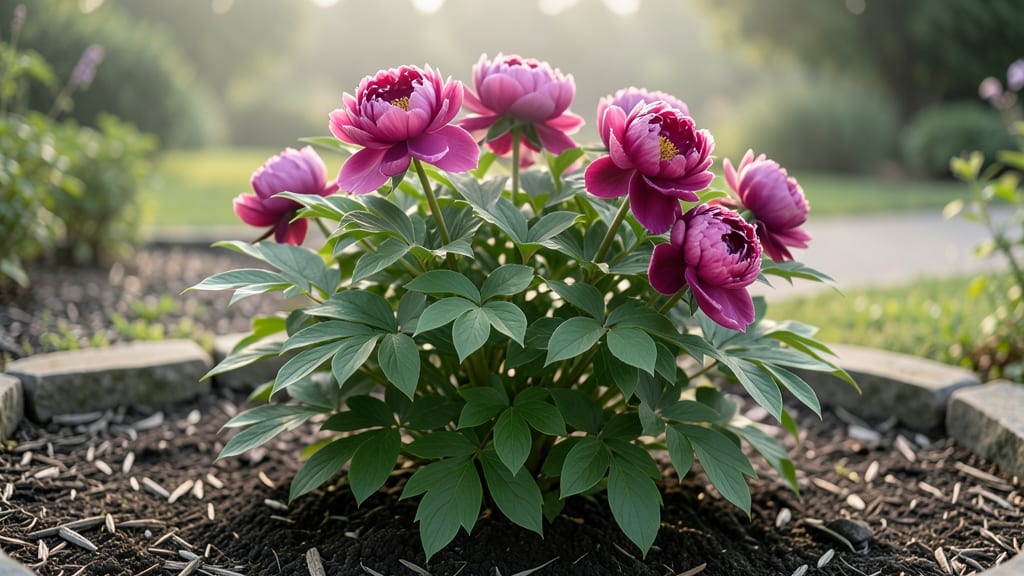
Peonies in Zone 5 thrive with cold-resistant varieties like 'Sarah Bernhardt' or 'Bowl of Beauty,' planted in early fall to establish roots before winter. Heavy mulching and late-winter pruning protect them from freezing temperatures while promoting lush spring blooms.
Zone 5's harsh winters can be tricky for peonies, but the right cultivars and timing make all the difference. 🌸 These hardy varieties develop deep root systems before dormancy, allowing them to withstand temperatures down to -20°F.
The early fall planting window (September-October) gives roots 6-8 weeks to harden off before frost, while mulching with 4-6 inches of straw or wood chips insulates the crown. Pruning in late winter—after the ground thaws but before new growth—removes dead foliage while preserving next year's blooms.
What sets these varieties apart is their genetic resilience. Herbaceous peonies like 'Sarah Bernhardt' die back to the ground each winter but regrow from the same roots, while tree peonies (like 'Duchesse de Nemours') keep their woody stems year-round.
Both types benefit from well-draining soil and full sun, but tree peonies tolerate slightly more shade. The key is balancing protection with airflow to prevent rot during snowmelt.
💡 In This Article
- Cold-Hardy Peony Varieties for Zone 5 Gardens
- Zone 5 Peony Planting and Winter Care Checklist
Cold-hardy peony varieties for Zone 5 gardens
Zone 5's -20°F winters demand peony varieties with genetic resilience. The best options fall into two categories: herbaceous peonies (which die back annually) and tree peonies (woody-stemmed perennials).
Herbaceous types like 'Sarah Bernhardt' (pink blooms) and 'Bowl of Beauty' (salmon-pink) have developed deep root systems that store energy for spring reblooming, while tree peonies like 'Duchesse de Nemours' (deep pink) maintain their structure year-round.
The difference lies in their crown depth—herbaceous types need 2-3 inches of soil cover to protect their dormant buds, while tree peonies can handle slightly shallower mulch.
Color and bloom time vary significantly between varieties. 'Sarah Bernhardt' produces 5-7 inch-wide flowers in early to mid-May, while 'Bowl of Beauty' blooms slightly later with a more delicate, frilly appearance.
Tree peonies like 'Karl Rosenfield' (red) often bloom 2-3 weeks later than herbaceous types, making them ideal for extending your garden's color season.
The key to selecting varieties is matching their chill requirements—most Zone 5 peonies need 400-600 hours below 45°F annually to trigger blooming, which Zone 5 typically provides.
What most gardeners overlook is how soil pH affects winter hardiness. Peonies prefer slightly acidic to neutral soil (pH 6.5-7.0), as alkaline conditions can weaken root systems, making them more susceptible to freeze damage.
Amending clay-heavy Zone 5 soils with compost and sand improves drainage, which is critical—waterlogged roots can't withstand sub-zero temperatures. The best varieties for Zone 5 also exhibit disease resistance, particularly to botrytis blight, which thrives in the damp springs common to this climate.
Consider these top performers for Zone 5:
- 'Sarah Bernhardt': Classic pink blooms, 60-70 cm tall, reblooms reliably with proper care
- 'Bowl of Beauty': Soft pink with yellow centers, 50-60 cm tall, fragrant flowers
- 'Duchesse de Nemours': Deep pink tree peony, 4-5 feet tall, single blooms on woody stems
- 'Karl Rosenfield': Vibrant red tree peony, 5-6 feet tall, late-season blooms
The secret to their success lies in their root structure. Unlike shallow-rooted annuals, peonies develop 3-4 inch deep taproots by their second year, allowing them to access moisture and nutrients below the frost line.
This deep root system also makes them drought-tolerant once established—a valuable trait for Zone 5's unpredictable spring rains and summer heat waves.
For gardeners in colder microclimates (Zone 5a), opt for varieties with extra-hardy ratings like 'Coral Charm' (salmon-pink) or 'Alice Harding' (white). These cultivars have been selectively bred to withstand -30°F temperatures, making them ideal for northern Zone 5 areas.
The trade-off? Some ultra-hardy varieties may have slightly smaller blooms or later flowering times, but the winter survival benefits far outweigh these minor compromises.