
Companion Plants
Zone 5a gardeners can enjoy stunning, low-maintenance perennials that return year after year—even through harsh winters. These 10 cold-hardy plants thrive in your climate, multiply effortlessly, and offer seasonal color, texture, and pollinator support.
Russian Sage with Lavender Blue Spikes

If you're dreaming of a low-maintenance perennial that thrives on neglect and still delivers jaw-dropping color, Russian sage (Perovskia atriplicifolia) is your secret weapon. This drought-tolerant superstar reaches 4-5 feet tall, creating dramatic vertical accents in borders while requiring almost no water once established.
Its silvery-blue foliage provides year-round interest, and the lavender-blue flower spikes bloom from mid-summer through fall, attracting butterflies and bees. Plant it in full sun with well-drained soil—it handles poor conditions like a champ—and watch it spread gently over time. The best part? Deer and rabbits leave it alone, making it ideal for problem areas.
Perfect for urban gardeners or busy homeowners, Russian sage offers four months of color with almost zero fuss. Pair it with coneflowers or catmint for a pollinator paradise that stays vibrant through Zone 5a winters. 🌻
Peony Bushes with Fragrant Double Blooms

If you crave a perennial powerhouse that rewards patience with decades of beauty, peony bushes are your answer. Unlike annuals that demand yearly replanting, peonies establish deep roots in their first few years, then burst into fragrant double blooms every spring—often for 50 years or more with minimal fuss.
Plant them in full sun to partial shade with well-draining soil, and water moderately during their first growing season. Once established, they’re drought-tolerant and virtually pest-free. Choose from classic pinks, creamy whites, or deep reds—each bloom measures 3-6 inches wide, perfect for cutting and arranging indoors. Their lush, fern-like foliage also adds texture to gardens long after the flowers fade.
Ideal for cottage-style gardens or as a focal point near pathways, peonies bring old-world charm with modern reliability. Beginners will love their low-maintenance nature, while experienced gardeners appreciate their cut-flower potential and long-lived performance. 🌷
Black-Eyed Susan Golden Blooms

If you want a pollinator powerhouse that keeps your garden buzzing from summer through fall, Black-Eyed Susan (Rudbeckia hirta) is your go-to. This cheerful, golden-blooming perennial thrives in Zone 5a and beyond, offering a long season of color while supporting bees, butterflies, and birds.
Plant it in full sun to part shade and watch it self-seed generously, creating natural drifts over time. The deep green foliage contrasts beautifully with its bright blooms, making it a standout in wildflower meadows or cottage gardens. Deadhead spent blooms to encourage more flowers, but leave some seed heads for winter interest and wildlife.
Perfect for beginners or busy gardeners, Black-Eyed Susan demands little care but delivers maximum impact. 🌻
Hostas with Variegated Green and White Leaves

Tired of shade gardens that look dull all year? Variegated hostas bring bold contrast with their white-and-green foliage, thriving where sunlight is scarce. These shade-loving perennials offer year-round texture, even when flowers fade in winter.
With over 3,000 varieties, you can mix blue-green or chartreuse tones to create visual layers. Plant them in moist, well-draining soil under trees or along foundation edges—their sword-like leaves add architectural interest. For best results, divide clumps every 3-4 years to prevent overcrowding.
Perfect for beginners, hostas require minimal fuss beyond occasional watering and mulching. Their deer-resistant nature makes them ideal for problem-prone areas. 🌿
Coneflower Purple Blooms for Pollinators

Want a pollinator powerhouse that thrives in Zone 5a’s dry spells and harsh winters? Purple coneflower (Echinacea purpurea) delivers drought-resistant blooms that attract butterflies and bees while standing tall in your garden. Unlike fussy perennials, this plant requires almost no care—just full sun and well-drained soil to reward you with months of vibrant color.
Its tall, sturdy stems (3–4 feet) make it perfect for cut flower arrangements that last weeks in vases. Deadhead spent blooms to encourage more flowers, and watch as your garden becomes a buzzing hub for wildlife. Disease-resistant and deer-proof, this perennial is the ultimate low-maintenance star for wildflower gardens or sunny borders.
Ideal for beginners and pollinator enthusiasts alike, purple coneflower brings year-round value—from summer blooms to winter seed heads that add texture. Plant it once, and it’ll multiply effortlessly for decades. 🌻
Catmint with Purple Flower Spikes

Tired of perennials that demand perfect soil or frequent watering? Catmint (like Nepeta varieties) thrives in poor, rocky soil where many plants struggle, yet still delivers lavender-blue flower spikes from early summer to fall. Its silvery foliage adds texture even when not blooming, making it a year-round asset.
This deer-resistant plant spreads gently, creating natural ground cover without becoming invasive. Plant it in full sun for the best blooms, and deadhead spent flowers to encourage more blooms. Catmint also attracts pollinators like bees and butterflies, making it a dual-purpose garden star. Its aromatic leaves even deter pests naturally.
Perfect for beginners or busy gardeners, catmint requires almost no care once established. Try it in borders, pollinator gardens, or even containers for a low-maintenance pop of color. 🌿
Daylilies with Vibrant Orange and Yellow Flowers

Looking for a perennial powerhouse that delivers nonstop color from early summer until frost? Daylilies with their fiery orange and yellow blooms are the ultimate workhorses—blooming repeatedly on the same plant for weeks at a time. Unlike many perennials that fade after one flush, these thrive in full sun to partial shade and even tolerate dry spells once established.
With over 30,000 registered varieties, you can mix and match heights (from 12" to 36") and bloom times to create a continuous summer show. Plant them in slopes to prevent erosion, tuck them into container gardens for patio pops of color, or use them as border edging where they’ll spread gently over time. Deadhead spent blooms to encourage more flowers, and divide clumps every 3-4 years to keep them vigorous.
These low-maintenance superstars are perfect for busy gardeners or anyone who wants bold, cheerful blooms with minimal fuss. 🌻
Lungwort with Spotted Purple Leaves

If you're looking for a shade-loving perennial that adds drama without demanding full sun, lungwort (Pulmonaria) is your answer. Its silver-spotted purple leaves create a striking contrast against dark soil, while delicate blue flowers in spring draw in early pollinators like bees and butterflies.
This slow-spreading plant thrives in partial shade—perfect for under trees or woodland gardens—and handles Zone 5a winters with ease. Its year-round interest starts with spring blooms, followed by foliage that stays attractive until frost. To keep it tidy, simply snip back old flower stalks in early summer.
Ideal for gardeners who love low-maintenance shade plants with a unique look, lungwort pairs beautifully with hostas or ferns for a lush, woodland-inspired bed. 💚
Russian Orange with Bright Red-Orange Flowers

Looking for a late-summer pop of color that doesn’t demand constant attention? Meet Russian orange (*Hydrangea paniculata 'Limelight'), a standout perennial with fiery red-orange blooms that light up the garden when many others fade. Unlike its more common cousins, this variety thrives in Zone 5a’s hot, dry spells and keeps deer from nibbling your efforts.
This drought-tolerant beauty flourishes in full sun to partial shade and reaches 4-6 feet tall, making it perfect for borders or prairie-style plantings. Its conical blooms start green, mature to creamy white, and finally blush a stunning red-orange—adding drama to your garden’s final act. With minimal pruning (just trim back in late winter), you’ll enjoy year-round structure and a pollinator-friendly show.
Ideal for cottage gardeners or those craving effortless elegance, Russian orange delivers seasonal interest without the fuss. Pair it with coneflowers or catmint for a prairie-inspired masterpiece that blooms until frost. 🌻
Sedum Autumn Joy Succulent Leaves

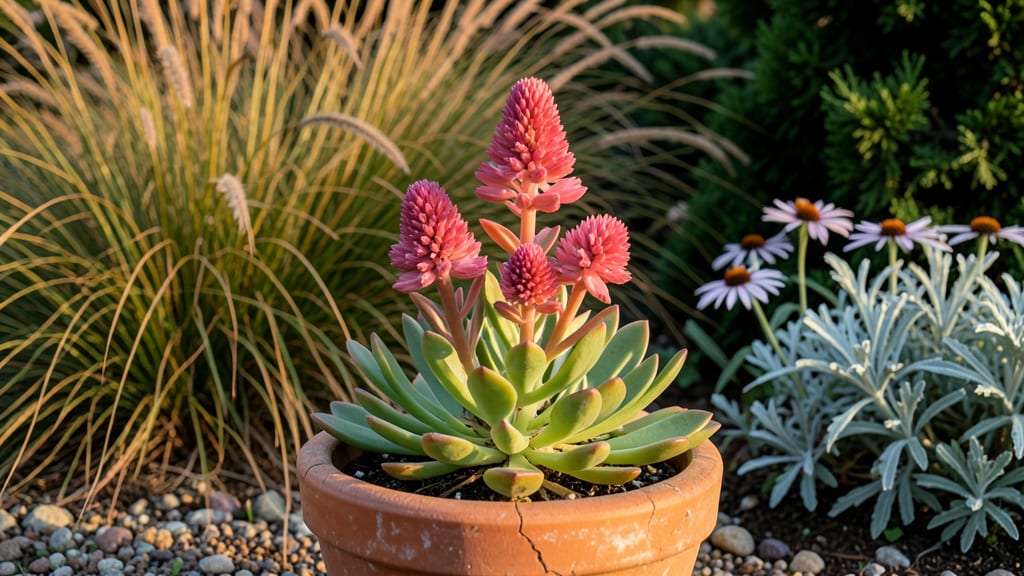
When your garden needs a late-season splash of color that requires almost no water, Sedum Autumn Joy delivers. This succulent-leaved perennial transforms from green to deep pink in fall, creating a stunning contrast against golden grasses or evergreens.
Thriving in rocky soil or containers, it tolerates full sun and drought once established, making it ideal for sunny borders or pollinator gardens. Deadhead spent blooms to encourage more foliage color, and watch it spread slowly over time. This plant is especially rewarding for gardeners who want year-round interest with minimal effort.
Perfect for beginners or busy gardeners, Sedum Autumn Joy proves that drought-proof plants can still be showstoppers. 🌻