
Planting
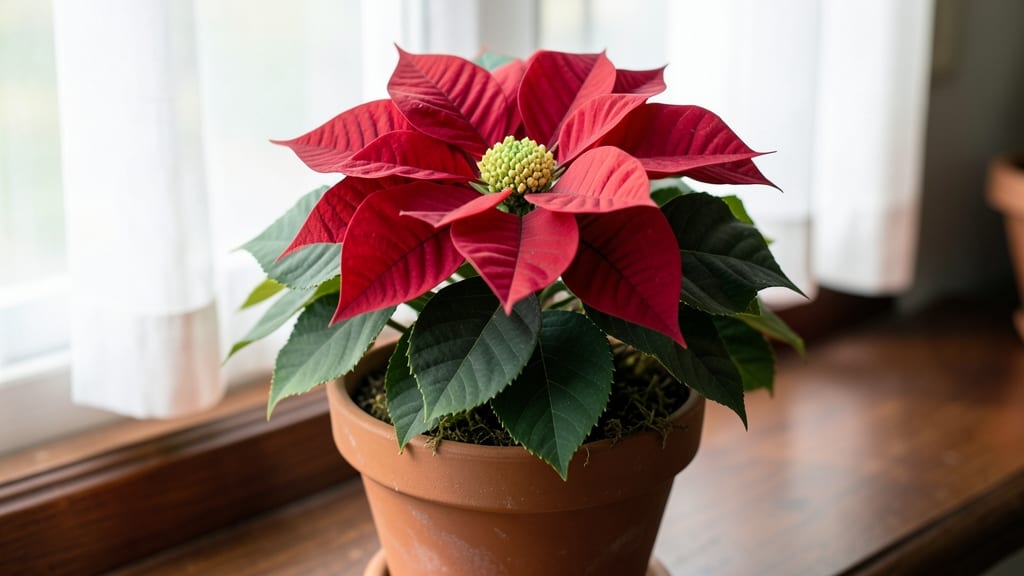
Determining poinsettia hardiness zones is critical: these plants only survive outdoors in USDA Zones 9–11, where they can enjoy frost-free winters. Gardeners in colder regions must treat them as seasonal plants or move them indoors before temperatures drop below 30°F.
Poinsettias originate from Mexico's highland tropical forests, where temperatures rarely dip below 50°F. Their leaves and stems can't tolerate frost—even a light freeze will cause irreversible damage. 🌱 In zones outside 9–11, most gardeners bring potted plants inside before fall, giving them bright indirect light and 60–70°F temperatures.
The key to overwintering success is maintaining consistent moisture and avoiding drafts, which can stress the plant just as much as cold does.
What many don't realize is that poinsettias actually need a 14-hour dark period daily to trigger their signature red bracts. This photoperiod requirement makes indoor growing tricky—too much artificial light can disrupt flowering.
For gardeners in colder climates, choosing compact varieties like 'Winter Rose' (which handles cooler temps better) can make the difference between a thriving plant and a lost investment.
💡 In This Article
- Understanding Poinsettias’ Tropical Climate Needs
- Year-Round Poinsettia Care for Cold-Climate Gardens
Understanding poinsettias’ tropical climate needs
Poinsettias, native to Mexico's highland forests, evolved in microclimates where temperatures hover between 60-80°F year-round. Their leaves contain water-storing cells that help regulate moisture, but these cells rupture when exposed to 32°F or below—a process called "cold-induced cell lysis."
This is why even a light frost can cause blackened, mushy foliage within 24 hours, making them completely unsuitable for USDA Zones 8 and colder without protection. 🌿
The USDA zone system categorizes climate suitability based on average annual minimum temperatures, and poinsettias' threshold sits at Zone 9a (20-25°F) as their absolute limit. In Zone 10a (30-35°F), they can survive brief dips but still require shelter during cold snaps.
The real challenge comes from humidity levels—these tropical plants thrive in 50-60% relative humidity, while many temperate climates drop below 30% in winter, causing leaf edges to crisp and fall off even if temperatures stay above freezing.
What makes poinsettias particularly vulnerable is their shallow root system, which can't penetrate deep enough to access warmer soil layers during cold snaps. Unlike hardy perennials that develop thick rhizomes, poinsettias rely on their above-ground biomass for survival.
This is why gardeners in Zones 7-8 often lose plants even when moved to sheltered spots—the roots can't recover from the stress of temperature fluctuations between day and night. 🌡️
Another critical factor is the plant's photoperiod sensitivity. Poinsettias need 12+ hours of darkness daily to trigger flower formation, but they also require consistent warmth during this period.
In colder zones, indoor lighting solutions must maintain temperatures above 65°F while providing the necessary darkness—something that's difficult to achieve with standard grow lights that also emit heat. This dual requirement explains why commercial poinsettia production facilities use specialized "dark rooms" with precise temperature controls.
For gardeners pushing the limits in Zone 8b (15-20°F), the solution often involves creating microclimates. Wrapping pots in bubble wrap or using heat mats can raise soil temperatures by 5-10°F, while placing plants against south-facing walls provides radiant heat.
However, these methods only work for brief periods—once temperatures drop below 25°F, even the most careful protection becomes ineffective due to the plant's fundamental tropical nature. 🌎
The key takeaway is that poinsettias' hardiness isn't just about temperature tolerance—it's a combination of thermal stability, humidity maintenance, and photoperiod management.
In their native habitat, these factors remain remarkably constant, which is why attempting to grow them outdoors in colder climates requires recreating their tropical environment as closely as possible. For most gardeners in Zones 7 and below, this simply isn't practical without indoor overwintering. ❄️