
Planting
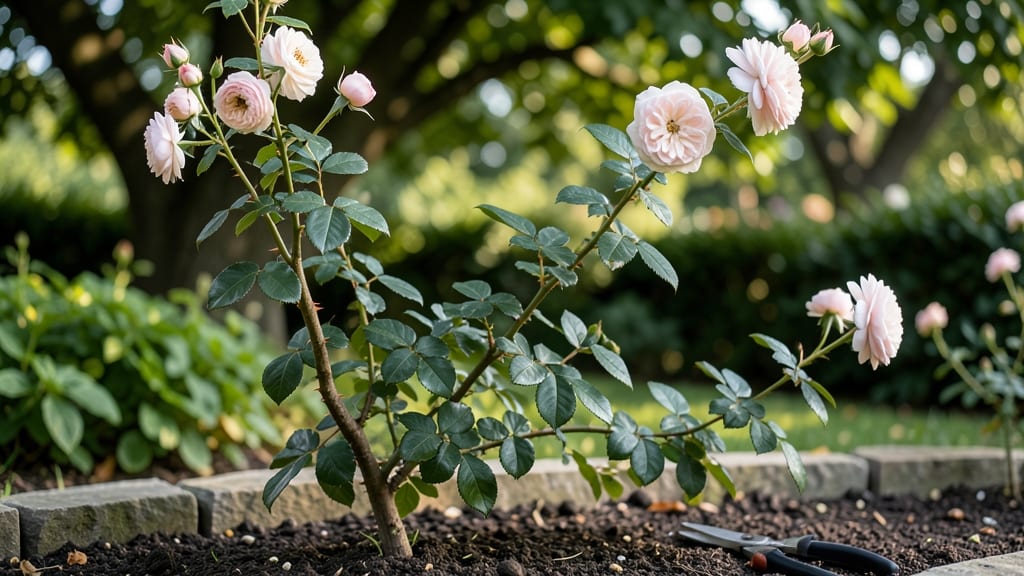
Your Rosa 'Eden' climbing rose thrives in zones 5-9, where it unfurls velvety blooms that smell like a summer garden party. 🌸 I planted mine in zone 6 last spring, and by July, it was draping itself over the arbor like a living tapestry.
The key isn't just the zone—it's the right spot where sun, soil, and support come together perfectly.
This rose demands 6+ hours of sunlight daily and well-draining soil rich in organic matter. My secret? Amending clay soil with compost and a handful of bone meal at planting time. The first year, it grows fast—sometimes too fast—so install sturdy trellis or wires before those canes get heavy.
Patience pays off: by year two, you'll see those signature blush-pink blooms appearing in waves from June through frost.
Pruning might seem scary, but it's simple: cut back 1/3 of old wood in late winter and deadhead spent blooms all season. The result? More flowers, stronger canes, and a shape that fills your vertical space beautifully.
My neighbors think I have a green thumb—honestly, I just follow this routine and feed it regularly with a balanced rose fertilizer.
For best results, mulch heavily to protect roots in winter and water deeply during dry spells. The payoff? A rose that blooms prolifically, resists disease better than many hybrids, and becomes the star of your garden.
Whether you're training it on an arbor, fence, or pergola, this rose delivers year after year of reliable, show-stopping color.
📚 In This Guide
- What you need
- Instructions
- Tips and common mistakes
- Wrapping up and next steps
What you need
- ● Rosa 'Eden' climbing rose: 1-2 bare-root or potted plants (choose healthy, disease-free specimens).
- ● Well-draining soil mix: 50% native soil + 50% compost or organic matter (e.g., Miracle-Gro Garden Soil or Espoma Organic Garden Soil).
- ● Organic fertilizer: 1 lb of rose-specific fertilizer (e.g., Dr. Earth Rose & Flower Fertilizer) or balanced 10-10-10.
- ● Mulch: 2-3 inches of wood chips, straw, or pine bark to retain moisture and suppress weeds.
- ● Garden trowel or spade: For digging holes (12-18 inches wide/deep).
- ● Pruning shears: Sharp, sterilized shears for trimming dead wood (Felco or Fiskars brands recommended).
- ● Garden hose or watering can: With a spray nozzle for gentle watering.
- ● Support structure: 6-8 ft tall trellis, arbor, or fence (Rosa 'Eden' can climb 10+ ft but thrives with support!).
- ● Garden gloves: Heavy-duty to protect against thorns.
- ● Sunlight: Full sun (6+ hours/day)—partial shade in hotter zones (8-9) is ideal.
- ● Water access: Consistent moisture (1-2 inches/week; drought-tolerant once established).
- ● pH-balanced soil: Aim for 6.0-6.5 (test with a soil kit if unsure).
- ○ Pest/disease prevention: Neem oil or copper fungicide (optional but helpful for zones 5-6).
- ● Rose food tablets (e.g., Osmo Rose Food) for slow-release nutrients.
- ● Drip irrigation system for automated watering.
- ● Decorative stakes or ties to guide young canes.
- ● Compost tea for a nutrient boost during blooming season.
Instructions for planting and caring for Rosa Eden climbing rose
Here's how to give your climbing rose the perfect start in your hardiness zone.
🌱 Step 1: Choose the Right Planting Location
Rosa Eden thrives in full sun—at least 6 hours of direct sunlight daily. I always pick a spot where the afternoon sun can reach the plant, as this encourages stronger blooms. Look for a location with sheltered air circulation to protect delicate petals from strong winds, which can tear them.
Check your soil's drainage by digging a hole and filling it with water. If it drains in under 30 minutes, your soil is ideal. If water pools after an hour, amend with compost or sand to improve drainage. The rose's roots need air, not soggy conditions.
🪴 Step 2: Prepare the Planting Hole and Amend Soil
Dig a hole twice as wide as the rose's root ball but only as deep—planting too deep can suffocate the graft union. Loosen the roots gently if they're circling the root ball, which helps them spread outward instead of staying compacted.
Mix the excavated soil with half a bucket of compost and a handful of bone meal to provide slow-release phosphorus for root growth. This ensures your rose has the nutrients it needs right from the start. The amended soil should feel light and crumbly, like a well-aerated cake batter.
☀️ Step 3: Plant and Stake for Support
Place the rose in the hole so the graft union (the swollen area near the base) sits 2 inches above soil level. This protects the plant from disease and rot. Backfill with the amended soil, pressing gently to remove air pockets but not compacting too tightly.
Install a 6-foot tall trellis or sturdy post immediately and tie the main stem loosely with soft plant ties. Climbing roses need support from day one to grow upward properly. Water deeply right after planting to settle the soil and encourage root contact with the amended mix.
💧 Step 4: Water and Mulch for First-Year Establishment
Water your Rosa Eden deeply 2-3 times per week during the first growing season, ensuring the soil stays moist but not waterlogged. You'll know it's right when the top 2 inches of soil feel damp but not soggy. Overwatering is the fastest way to kill a rose.
Apply a 3-inch layer of mulch around the base, keeping it 6 inches away from the stem to prevent rot. I use shredded bark mulch because it breaks down slowly and improves soil structure over time. Replenish mulch as it decomposes to maintain protection.
✂️ Step 5: Prune and Fertilize for Continuous Blooms
In early spring, prune back any dead or weak canes to just above an outward-facing bud. This encourages new growth and better air circulation. For Rosa Eden, I also remove any suckers that grow below the graft union—they sap energy from the main plant.
Fertilize in early spring with a balanced rose fertilizer (10-10-10), then again in early summer. Follow package instructions for amounts, but I've found roses appreciate a little extra nitrogen in spring for leafy growth and phosphorus in summer for blooms. Always water after fertilizing to prevent root burn.
Tips & tricks for perfect climbing rose planting
Took me a while to figure these out, so here goes—these tricks will help your Rosa Eden climb and bloom like a pro.
Sunlight Secret: While 6 hours of sunlight is the minimum, I've found that positioning your trellis to capture morning sun (which is less intense) and afternoon sun (warmer) gives your rose an energy boost. Early morning light helps prevent sunburn on delicate petals, while afternoon rays fuel those vibrant blooms. If you're in a hotter zone, consider partial afternoon shade during peak summer months to prevent stress.
Soil Test Trick: That 30-minute drainage test is crucial, but here's what I do next: if your soil drains too quickly, mix in a bit of coconut coir along with the compost—it holds moisture better than regular soil while still allowing airflow. For heavy clay soils, add perlite or coarse sand to break up compaction. Think of it like giving your rose's roots a fluffy pillow to nestle into.
Graft Union Guard: Keeping that graft union 2 inches above soil level is non-negotiable, but here's how to remember it: imagine a small "waist" on your rose's stem where it swells. That's your visual cue. If you plant too deep, the graft can rot, and your rose might revert to wild-type growth (less desirable flowers). I mark the planting depth with a small stake beside the hole to avoid mistakes.
Watering Wisdom: For those 2-3 weekly waterings, I use the "sponge test": press your finger 2 inches into the soil. If it feels dry, it's time to water. In extreme heat, I increase to daily waterings but only in the morning to prevent fungal issues. Mulch helps retain moisture, but don't let it touch the stem—this is where rot starts. Think of mulch as a protective blanket, not a stem hugger.
Pro Tips for Rosa Eden Climbing Rose Zone
- Took me a while to figure these out, so here goes—these tricks will help your Rosa Eden climb and bloom like a pro.
- Sunlight Secret: While 6 hours of sunlight is the minimum, I've found that positioning your trellis to capture morning sun (which is less intense) and afternoon sun (warmer) gives your rose an energy boost.
- For heavy clay soils, add perlite or coarse sand to break up compaction.
Frequently asked questions
about growing Rosa 'Eden' in your zone—because every gardener deserves a thriving climbing rose without the guesswork!What USDA hardiness zones does Rosa 'Eden' thrive in?
Rosa 'Eden' is a Zone 5-9 climbing rose, meaning it handles winters as cold as -20°F (-29°C) and summers up to 100°F (38°C). If you’re in Zone 4 or below, plant it near a south-facing wall or use mulch to protect roots. For Zone 10+, provide afternoon shade to prevent heat stress.
How much sun does a climbing rose like 'Eden' need daily?
This beauty craves 6-8 hours of full sun for optimal blooms and disease resistance. Plant it where it gets morning sun and afternoon shade in hotter zones (like Zone 9) to avoid leaf scorch. Partial shade (4-6 hours) will still produce flowers but may reduce vigor.
When is the best time to plant Rosa 'Eden' for zone-specific success?
Plant in early spring or fall (4-6 weeks before your first frost) for the best root establishment. In Zones 5-7, spring planting (after last frost) gives roots time to settle before winter. Zones 8-9? Fall planting (October-November) avoids summer heat stress.
What support system works best for 'Eden' in tight spaces?
Use a trellis, arbor, or obelisk for vertical growth—'Eden' can climb 8-10 feet! For small gardens, a fan-trained arch (like a mini pergola) saves space while showcasing blooms. Avoid wire cages; they limit airflow and encourage mildew. Pro tip: Train canes gently to avoid damaging bark!
How do I prevent pests like aphids or black spot in my zone?
Start with resistant varieties (like 'Eden') and prune for airflow to deter pests. Spray with neem oil or insecticidal soap at the first sign of aphids. For black spot, apply fungicide in early spring and remove infected leaves immediately. Mulch with wood chips to keep soil moist (but not soggy) and reduce fungal spores.
Do I need to protect 'Eden' from winter in Zone 5-6?
Yes! After the first hard frost, mound soil or mulch 4-6 inches high around the base to insulate roots. Wrap canes loosely with burlap or rose cones (avoid plastic—it traps moisture). In Zone 5, add a cloche or frost blanket for extra protection. Prune in late winter (after danger of frost) to encourage new growth.
Wrapping up and next steps
Growing Rosa 'Eden' in your zone is a rewarding journey that brings stunning blooms and fragrant beauty to your garden. With the right soil, sunlight, and care, this climbing rose will thrive and become the star of your landscape.
Now that you’re equipped with the knowledge, it’s time to roll up your sleeves and watch your Eden bloom—literally!
🌱 Next Steps:
- Pick the perfect spot—sunny and sheltered is key!
- Plant with confidence and follow the care tips shared.
- Enjoy the process—your garden will thank you with gorgeous, repeat blooms!