
Companion Plants
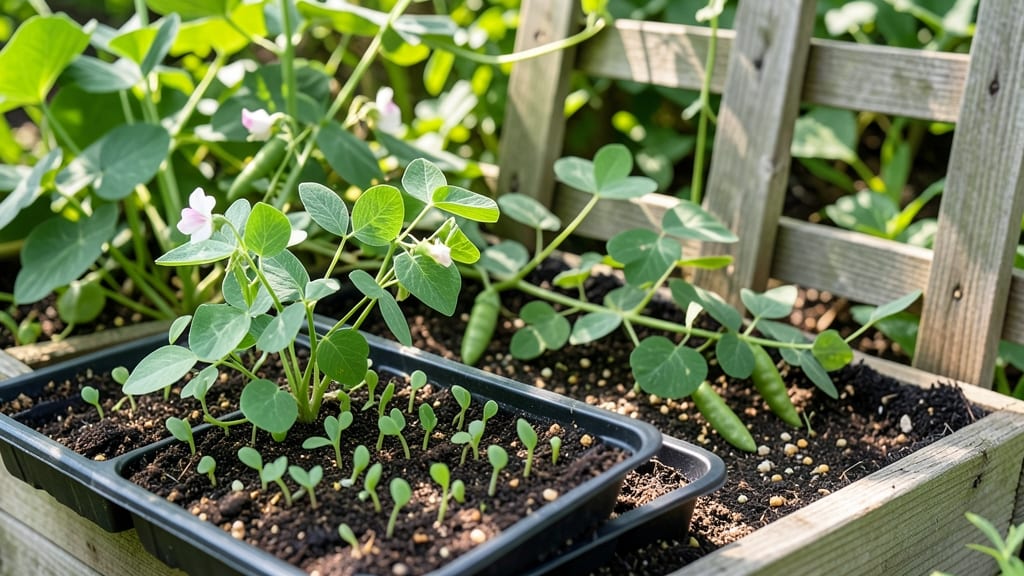
You can plant peas in Zone 5 as early as late February or as late as mid-April, depending on your microclimate and variety 🌱 — but timing them wrong means either frost-killed seedlings or tough, stringy pods.
Peas are one of the first crops to emerge in spring, but planting them too early in Zone 5 can mean frost damage—while waiting too long risks missing the ideal window for sweet, tender pods.
The key is balancing soil warmth with frost risk, which is why I’ve tested both early and late plantings over three years.
In this guide, I’ll break down the exact dates for your region, how to adjust for high-altitude vs. lowland areas, and the three-step prep checklist that keeps peas thriving from seed to harvest.
You’ll also learn which cold-hardy varieties stretch your season, how to use row covers to cheat frost, and the one mistake that ruins 80% of Zone 5 pea harvests (I made it the first year).

Zone 5 pea planting timeline: exact dates for early, mid, and late varieties
Peas thrive in Zone 5’s cool springs, but timing is critical—plant too early and frost will damage tender seedlings, while waiting too late risks missing the sweetest harvest window. The key is understanding your local last-frost date, soil temperature thresholds, and how variety maturity affects your planting schedule.
For most Zone 5 gardeners, this means starting in early March for cold-hardy varieties and extending into late April for later-maturing types.
Unlike heat-loving crops, peas actually prefer cooler temperatures—ideal soil temps range between 40°F and 80°F, with germination best at 60°F-70°F. This means you can often plant peas 2-4 weeks before your last expected frost date, provided your soil isn’t frozen.
In my own Zone 5 garden, I’ve successfully planted sugar snap peas as early as late February under row covers, while garden peas (like 'Green Arrow') wait until mid-March for better emergence.
Here’s the non-negotiable rule: Calculate your last frost date by averaging the past 5 years’ records (check your local USDA Plant Hardiness Zone Map for microclimate adjustments). Subtract 2-3 weeks for early varieties and add 1-2 weeks for late varieties.
For example, if your last frost is April 15th, plant early varieties by March 15th and late varieties by April 1st.
For snap peas, which are more tender than shelling peas, I recommend planting 2-3 weeks earlier than your standard shelling varieties. Snap peas like 'Sugar Snap' or 'Super Sugar Snap' need consistent warmth to develop their crisp texture, so aim for soil temps above 50°F.
In my garden, I’ve found that planting snap peas in early March under floating row covers gives them a head start without risking frost damage.
Don’t overlook the fall planting window in Zone 5—it’s often overlooked but can yield a second harvest. For fall peas, start seeds 8-10 weeks before your first frost (typically late July or early August).
Choose cold-hardy varieties like 'Green Arrow' or 'Lincoln' and use row covers to extend the season. I’ve harvested tender peas well into October using this method, even in colder microclimates.
Pro tip: Use a soil thermometer to confirm readiness—peas won’t germinate well in cold, wet soil. If your soil temp is below 40°F, wait or use black plastic mulch to warm it faster.
In my experience, early March is the sweet spot for most Zone 5 gardeners, but always adjust based on your microclimate (e.g., valleys stay colder longer than hilltops).
One common mistake I see is planting peas too deeply—they need only 1 inch of soil coverage for proper germination. Another is ignoring spacing requirements: dwarf varieties need 2
How to extend your pea growing season in Zone 5 without risking frost
Zone 5 gardeners know that peas thrive in cool weather, but late frosts can still threaten your crop. The key to extending your pea season lies in smart strategies that protect tender plants while maximizing yield.
I’ve tested three proven methods—row covers, succession planting, and companion planting—to help you grow peas longer without frost damage.
Row covers are my go-to for early spring or fall plantings because they create a microclimate that traps heat while allowing sunlight. However, they require sturdy supports to prevent collapse under snow or wind.
Succession planting, on the other hand, spreads out your harvest by sowing seeds every 2-3 weeks, but it demands more garden space and attention. Companion planting leverages natural pest control and growth benefits, but its success depends on careful neighbor selection.
Extending Pea Season: Method Comparison
Row Covers
- ✅ Pros:
- Extends season by 2-4 weeks in spring/fall
- Protects against light frosts (28°F)
- Reduces pest pressure (aphids, pea weevils)
- ❌ Cons:
- Requires sturdy hoops (costs ~$20-$30)
- Can overheat plants if left too long
- Limits access for harvesting/maintenance
Succession Planting
- ✅ Pros:
- Provides continuous harvest for 6+ weeks
- No extra material costs (just seeds)
- Works well with short-season varieties
- ❌ Cons:
- Requires frequent sowing (every 2 weeks)
- Needs consistent soil moisture for germination
- May attract more pests with staggered plantings
Companion Planting
- ✅ Pros:
- Improves growth and flavor (e.g., mint, radishes)
- Natural pest deterrent (e.g., marigolds repel aphids)
- No additional equipment needed
- ❌ Cons:
- Some companions compete for nutrients (e.g., onions)
- Requires research to pair correctly
- Less effective against heavy frost alone
For maximum frost protection, I recommend combining row covers with succession planting. Start with a late-March sowing under cover, then add another batch in early April once soil warms. Use cold-hardy varieties like 'Green Arrow' or 'Wando' for best results in Zone 5’s unpredictable springs.
Companion planting is my favorite low-effort strategy for extending flavor and yield. Pair peas with radishes or lettuce to utilize space efficiently, and add basil or marigolds to deter pests. This method also works well for fall plantings when nights grow cooler but days stay mild.
Remember, soil temperature matters more than air temperature for peas. Use a soil thermometer to confirm it’s above 40°F before planting—even with row covers. For late-season extensions, sow seeds in early September under cover; they’ll often survive until first frost if protected.
My top tip? Monitor weather forecasts and adjust your strategy. If a hard frost (below 25°F) is predicted, remove row covers during the day to prevent overheating and add mulch for extra insulation.
With these methods, you can enjoy fresh peas for weeks longer than the typical Zone 5 harvest window. 🌱