
Tools
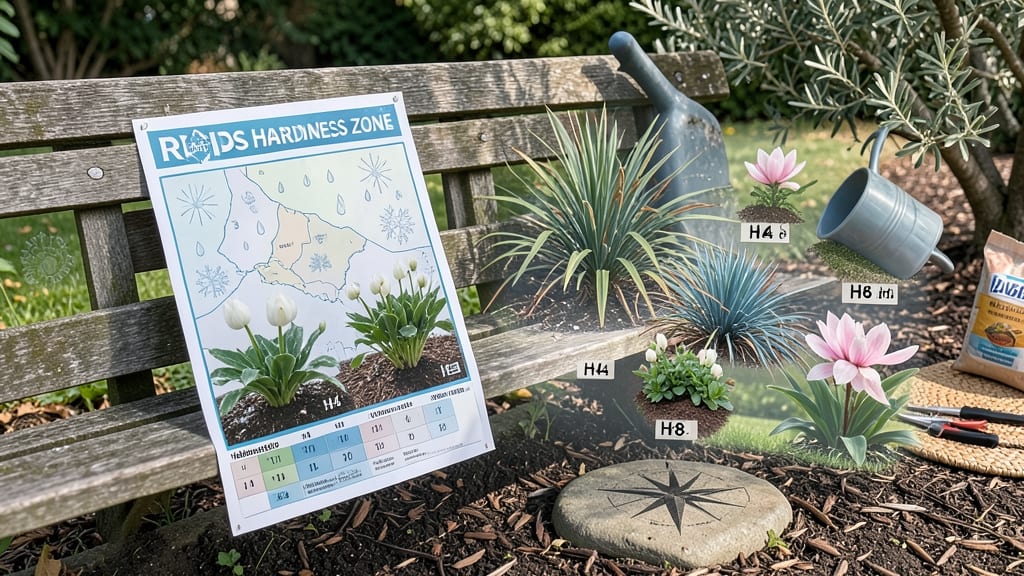
UK garden zones help gardeners choose plants that thrive in their local climate by mapping frost risk and temperature ranges. The system divides the country into Zones 1 through 10, with most areas falling between Zones 6 and 9. Knowing your zone ensures you select hardy plants that survive winter conditions.
Understanding these zones is all about matching plants to your area's coldest winter temperatures. 🌱 For example, Zone 6 can handle plants that survive down to -10°C (14°F), while Zone 9 extends to -1°C (30°F).
The UK's maritime climate creates unique microclimates—coastal areas often have milder winters than inland spots just miles away. This is why checking your exact postcode matters, as it accounts for these local variations that standard maps might miss.
Once you know your zone, you can confidently choose perennials, shrubs, and trees that will thrive year after year. Many gardeners in Zones 6-8 focus on hardy favorites like lavender, hebe, and hydrangeas, while Zone 9 enthusiasts can experiment with more tender Mediterranean plants.
The key is starting with plants rated for your zone, then gradually introducing slightly less hardy varieties as you gain experience with your microclimate.
💡 In This Article
- How UK Garden Zones Determine Plant Survival
- Finding Your UK Garden Zone and Planting Guide
How UK garden zones determine plant survival
The UK's garden zone system is based on the average minimum winter temperatures recorded over 10 years, which directly determines which plants can survive.
Unlike the USDA zones (which run from 1-11), the UK system uses Zones 1-10, with Zone 1 being the coldest (like the Scottish Highlands) and Zone 10 the mildest (parts of Cornwall and the Isles of Scilly).
The critical threshold is the coldest winter temperature your area typically reaches—this dictates whether a plant’s roots will freeze or its leaves will blacken. For example, a plant rated for Zone 7 won’t survive in Zone 5 if temperatures drop below -15°C (5°F).
The science behind this involves plant hardiness zones, which measure how far south a plant can grow before winter kills it. The UK’s maritime climate creates microclimates—coastal areas (like Devon) often sit in Zone 9, while just 50 miles inland (e.g., Exeter) might be Zone 8.
This happens because the sea moderates temperatures, preventing extreme cold snaps. 🌊 Even within a single zone, elevation matters: a garden at 300 meters (984 feet) could be 1-2 zones colder than a valley below.
That’s why tools like the RHS (Royal Horticultural Society) zone finder use postcode-level data to account for these nuances.
What most gardeners don’t realize is that frost depth plays a hidden role. Soil freezes deeper in Zone 5 than Zone 8, meaning bulbs like tulips (hardy to -15°C) may rot if planted too shallow in colder zones.
The UK’s system also accounts for late spring frosts, which can damage early bloomers like cherry blossoms in Zone 6. This is why gardeners in transitional zones (like Zone 7/8 borders) often use frost blankets or choose late-flowering varieties to avoid damage.
Comparing UK zones to USDA zones reveals key differences. The USDA system is coarser—each zone spans 10°F (5.5°C)—while the UK’s zones cover 5°C (9°F) ranges, offering finer precision.
For instance, a plant hardy to -10°C (14°F) fits UK Zone 6 but USDA Zone 5b. This matters when sourcing seeds or plants labeled with both systems. 🌡️ The UK’s zones also reflect rainfall patterns, as some areas (like the Lake District) have wetter, cooler microclimates that affect plant stress levels.
Here’s how to apply this knowledge: if you’re in Zone 7, avoid Zone 8 plants like olive trees (which need Zone 9+) unless you provide winter protection. Instead, opt for hardy roses (Zone 5-9) or lavender (Zone 5-8), which thrive in your area’s temperature range.
The zone system isn’t just about survival—it’s about maximizing growth. Plants at the upper edge of their zone often grow slower or flower less vigorously, while those in the sweet spot (e.g., a Zone 6 plant in Zone 6) perform best.
Pro tip: Use the RHS Plant Finder to cross-reference plants with your zone. For example, a hydrangea labeled "Zone 4-9" is safe for Zone 6, but a "tender" variety (Zone 10) needs winter wrapping.
Even in mild zones, unexpected cold snaps (like the 2018 UK freeze) can push temperatures 5°C lower than average, so always err on the side of hardiness. 💡