
Plants
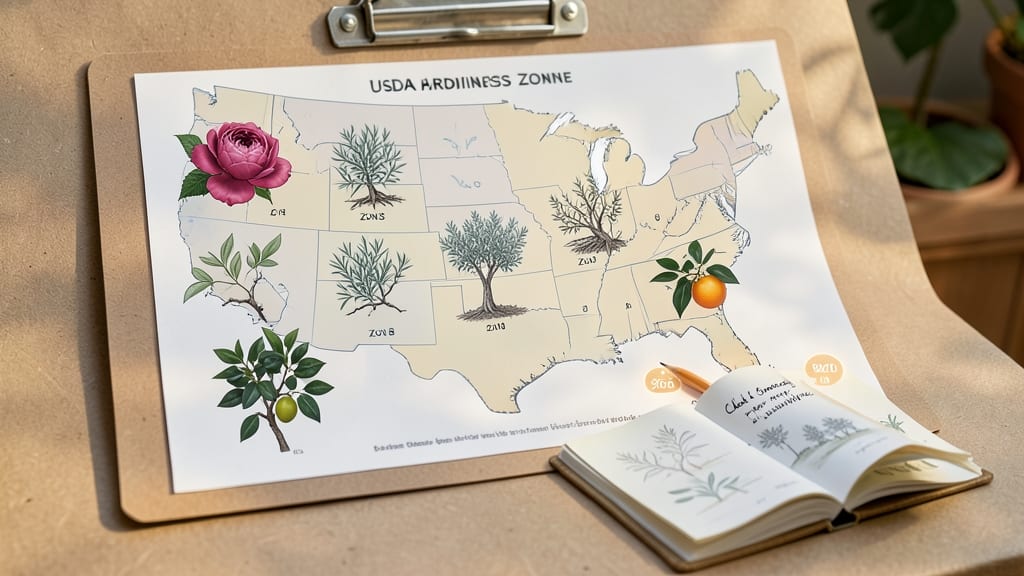
Finding your hardiness zones by ZIP code shows which USDA Plant Hardiness Zone you're in, helping you select plants that survive your local climate extremes. The official USDA map or digital tools let you input your ZIP for accurate frost risk and planting recommendations.
Understanding your exact hardiness zone by ZIP code is the first step to successful gardening. These zones are based on the average annual minimum temperature in your area, divided into 10-degree Fahrenheit increments.
For example, Zone 5 endures temperatures between -20°F and -10°F, while Zone 9 stays above 20°F. 🌱 The USDA updates these zones every 10 years using climate data, so even a small ZIP code change could shift you between zones.
This system helps gardeners choose plants that won't freeze in winter or struggle with summer heat.
For precise results, always use the official USDA interactive map or trusted tools like the National Gardening Association's zone finder. These resources account for microclimates—like urban heat islands or valley frost pockets—that standard maps might miss.
I recommend double-checking with a local nursery too, as they often have firsthand experience with your specific growing conditions.
💡 In This Article
- How USDA Plant Hardiness Zones Work
- Best Tools for Instant Hardiness Zone Lookup by ZIP
How USDA plant hardiness zones work
The USDA Plant Hardiness Zone Map divides North America into 13 zones (1-13) based on the average annual minimum temperature—the coldest temperature expected to occur in any given year.
Each zone spans 10°F increments, with Zone 1 enduring -60°F to -50°F (Alaska) and Zone 13 staying above 60°F (southern Florida, Hawaii).
For example, a plant labeled "Zone 5-9" thrives where winter lows range from -20°F to +20°F. 🌡️ This system was first introduced in 1960 and updated in 2012 to reflect climate change trends.
Zones are calculated using 30 years of climate data from weather stations across the country. The USDA uses a statistical model that accounts for temperature variations over time, not just a single year's extremes.
For instance, a ZIP code in Denver, CO (Zone 5b), might experience -15°F to -10°F winters, while nearby Boulder (Zone 6a) averages -10°F to -5°F. This precision helps gardeners avoid planting tender species like citrus in colder microclimates or hardy perennials in heat-stressed areas.
Why do these zones matter? Plants have genetic survival thresholds—when temperatures drop below their hardiness range, cells freeze, and water expands, rupturing cell walls. A Zone 7 tomato plant (like 'Celebrity') can survive -5°F but will die if exposed to -10°F for more than a few hours.
Conversely, tropical plants like bougainvillea (Zone 9-11) won’t survive a 20°F freeze, even if they love summer heat. 🌿 The zones also guide planting timing: Zone 3 gardeners start seeds indoors by March 1st, while Zone 10 can direct-sow year-round.
Microclimates add complexity—your ZIP code might place you in Zone 6a, but a south-facing wall could create a Zone 7 microclimate just a few feet away.
Urban areas often run 1-3°F warmer than rural zones due to concrete and pavement (the "heat island effect"), while valleys collect cold air, dropping temperatures 5°F lower than surrounding hills.
To account for this, the USDA map now includes half-zones (a/b), splitting each zone into 5°F increments—critical for borderline plants like hydrangeas (Zone 3-9).
Climate change is shifting zones faster than the 10-year update cycle allows. Since 1990, two-thirds of the continental U.S. has warmed by 1-3°F, pushing Zone 7 northward into areas previously classified as Zone 6. For example, Chicago (Zone 5b in 1990) is now Zone 6a.
This means older gardening guides may be 1-2 zones off—always verify with the latest USDA data. 🌍 The takeaway? Hardiness zones aren’t just about winter survival; they’re a climate snapshot that dictates plant behavior year-round.
For practical use, think of zones as a starting point, not an absolute rule. Factors like soil type, wind exposure, and water access further refine plant success. A Zone 4 peony might thrive in a sheltered Zone 3 garden but struggle in an exposed one.
The key is to use zones to narrow your choices, then observe how plants perform in your specific conditions over 2-3 growing seasons.