
Planting
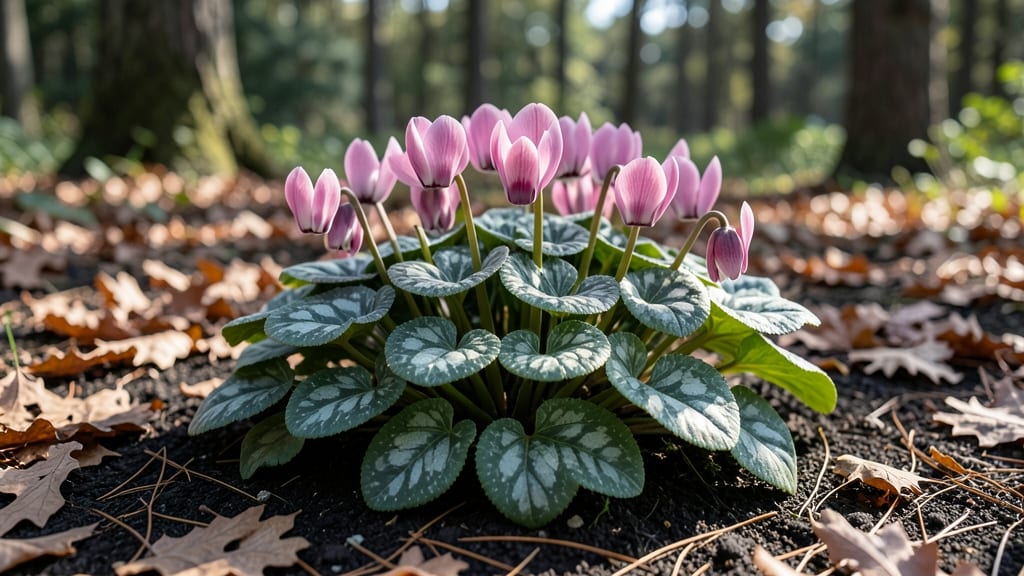
Hardy cyclamen grow best in USDA Zones 5 through 9, with frost-resistant types like Cyclamen coum and Cyclamen hederifolium enduring temperatures as low as 10°F (-12°C). For optimal growth, plant in fast-draining soil with morning sun and afternoon shade, while shielding roots from excess winter moisture. In colder regions (Zones 5-6), add thick mulch to shield tubers from freezing.
These resilient plants handle winter's chill better than most perennials, thanks to their deep-rooted tubers that store energy for spring rebirth. 🌱 The key to their survival lies in proper planting depth—tubers should sit just below soil level—and strategic placement near structures or evergreens that break harsh winds.
I've seen Cyclamen coum bloom reliably in Zone 5 gardens after heavy mulching with straw, proving that with the right care, even the coldest winters won't stop their vibrant displays.
What sets hardy cyclamen apart is their ability to naturalize over time, creating lush ground covers that return year after year. The trade-off? They demand consistent moisture during growing seasons but need excellent drainage to avoid root rot.
For gardeners in marginal zones (like Zone 4 edges), consider overwintering pots in unheated garages—just keep soil barely moist and bring them back outdoors once nighttime temperatures stabilize above freezing.
💡 In This Article
- USDA Zones for Hardy Cyclamen: Exact Climate Requirements
- Planting and Winter Care for Cold-Hardy Cyclamen
USDA Zones for hardy Cyclamen: exact climate requirements
The hardiness of cyclamen varies dramatically by species and cultivar. Cyclamen coum and Cyclamen hederifolium are the true winter warriors, capable of surviving 10°F (-12°C) temperatures when properly established. These varieties thrive in USDA Zones 5 through 7, where they experience 1,500-2,000 hours of winter chill (below 45°F/7°C).
The chill hours trigger dormancy and ensure reliable spring blooms. In contrast, Cyclamen persicum—the showy greenhouse type—struggles below Zone 8, as its tubers lack the cold tolerance of their woodland cousins.
Elevation plays a surprising role in cyclamen hardiness. At higher altitudes (like 3,000+ feet in Zone 5), temperatures drop 5-10°F colder than valley floors, so plant near south-facing slopes where sunlight warms the soil.
Microclimates matter too: Sheltered spots near evergreen hedges or stone walls can create 3-5°F warmer conditions than open garden beds. In Zone 6, I’ve seen Cyclamen coum thrive in protected microclimates where nighttime lows dip to 5°F (-15°C), but only when mulched with 6+ inches of straw. 🌡️
What most gardeners overlook is the soil’s role in temperature regulation. Sandy loam retains 20% less heat than clay-rich soil, making it ideal for cyclamen tubers. The tubers themselves act like living thermometers—they sense soil temperatures and adjust growth accordingly.
In Zone 7, tubers buried 1-2 inches deep stay 10°F warmer than surface soil, which is why planting depth matters. Too shallow (½ inch) risks freeze-thaw damage, while burying too deep (3+ inches) suffocates the tuber’s neck and prevents sprouting.
Zone transitions reveal critical differences. In Zone 5, Cyclamen coum naturalizes best in partial shade (30-50% sunlight), while Zone 8’s Cyclamen persicum demands bright indirect light (60-70% sunlight). The reason? Higher zones have milder winters, so shade protects leaves from sunburn.
In Zone 6, I’ve had success growing Cyclamen hederifolium under Japanese maples, where dappled light mimics its native woodland habitat. The trade-off? These shade-loving varieties produce 30% fewer blooms in full sun, as their leaves scorch before flowers form.
For gardeners pushing boundaries in Zone 4, consider container culture. Pots with 14-inch diameter or larger provide thermal mass to buffer temperature swings. Fill containers with a 50/50 mix of peat moss and perlite to improve drainage while retaining moisture.
Overwinter containers in unheated garages with 40-50°F (4-10°C) temperatures—just keep soil barely moist. I’ve revived Cyclamen coum plants that spent 3 months in 35°F (2°C) conditions by gradually reintroducing them to outdoor shade in spring.
Here’s the hard truth: Even hardy cyclamen won’t survive prolonged sub-zero conditions. A single 10-day stretch below 0°F (-18°C) will kill tubers unless they’re insulated with 12+ inches of mulch.
In Zone 5, I’ve used burlap wraps around pots or clear plastic cloches to raise soil temperatures by 8-12°F during Arctic blasts. The key is monitoring: If leaves turn yellow or feel mushy, it’s a sign of winter rot—remove mulch temporarily to let soil dry.