
Container Gardens
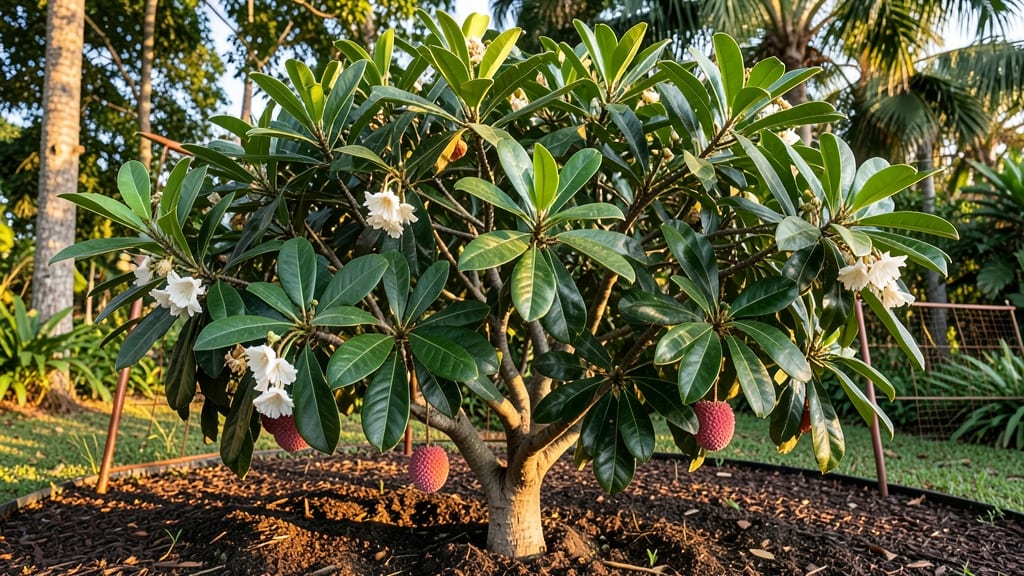
Lychee trees grow best in USDA Hardiness Zones 10-12, where they enjoy warm winters above 40°F and hot summers between 80-90°F. These tropical fruit trees demand high humidity, well-draining soil, and absolute frost protection to thrive long-term.
Lychees are native to Southeast Asia's tropical climates, which explains why they struggle outside Zones 10-12. 🌿 The key factors are temperature consistency and humidity levels—lychees can't tolerate frost at any stage, and their flowering requires specific heat thresholds.
Even in Zones 9-8, gardeners can attempt container growing with careful winter protection, but fruit production becomes unreliable without perfect conditions.
For those in cooler regions, microclimate strategies like greenhouse cultivation or heavily insulated containers become essential. The soil mix must replicate their native tropical environment—think sandy loam with excellent drainage—while maintaining moisture without waterlogging.
Without these conditions, lychee trees may survive but rarely produce the sweet, fragrant fruit they're famous for.
💡 In This Article
- USDA Hardiness Zones for Lychee Trees: Exact Climate Requirements
- Growing Lychees Outside Their Native Zone: Container and Microclimate Strategies
USDA hardiness Zones for lychee trees: exact climate requirements
Lychee trees (Litchi chinensis) evolved in China's subtropical regions, where they experience warm winters (50-65°F) and hot, humid summers (85-95°F). Their hardiness zones (10-12) reflect these needs—they can't tolerate temperatures below 32°F at any growth stage, as frost damages cellular membranes and kills the tree.
The flowering phase is particularly vulnerable, requiring consistent warmth above 60°F for pollen viability. This explains why even brief cold snaps in Zone 9 can devastate crops.
The tropical-subtropical divide matters because lychees need 70-80% humidity during flowering and fruiting. In dry climates (like parts of Zone 11), they struggle to set fruit unless mist systems or shade cloths are used.
The trees also demand well-draining soil with pH 5.5-6.5—their native laterite soils prevent root rot while allowing oxygen flow. Without these conditions, even in the right zone, trees may survive but produce small, bitter fruit or none at all.
Seasonal risks vary by zone: In Zone 10, occasional 35°F dips can cause leaf scorch, while Zone 11's heat spikes above 100°F stress trees without afternoon shade. The critical threshold is 40°F for 4+ hours, which triggers dormancy-like damage.
This is why commercial lychee orchards in Florida (Zone 10) use wind machines to circulate warm air during cold fronts—a technique that mimics their native monsoon-driven climate patterns.
What most gardeners overlook is the chill-hour requirement: lychees need 0-100 hours below 45°F annually to break dormancy. In Zone 9, this means even a single 30°F night can be catastrophic.
The trees' thick, leathery leaves help retain moisture in dry heat, but they can't compensate for temperature extremes. This is why container-grown lychees in cooler zones require heated greenhouses during winter.
For visual comparison, imagine a lychee tree as a delicate orchid—it thrives in a greenhouse but wilts in a cold frame. The root system, while extensive, lacks frost resistance, making it the first casualty of temperature swings.
Even in optimal zones, poor drainage (common in heavy clay soils) causes root asphyxiation, while low humidity leads to flower drop. These factors explain why lychees are a high-maintenance tropical luxury even in their native ranges.
Consider this: A lychee tree in Hawaii (Zone 11) may produce 200-300 fruit per season with proper care, while one in Southern California (Zone 10) might yield 50-100 due to summer drought stress.
The difference lies in microclimate control—Hawaii's trade winds provide natural humidity, while California requires drip irrigation and shade nets. This precision is why lychee cultivation is often commercial rather than backyard-friendly outside Zones 10-12.