
Container Gardens
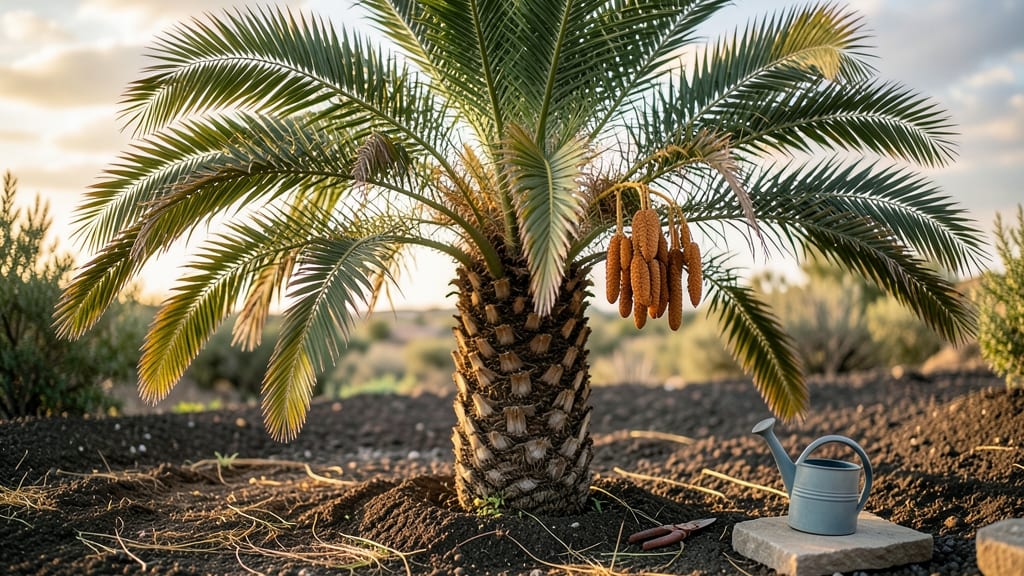
Growing Medjool date palms thrives in USDA zones 9-11, where winter lows stay above 25°F—the magic number that keeps their fronds from turning into crispy brown confetti. 🌵 I learned this the hard way when a surprise frost in zone 8 turned my first palm into a sad, frozen sculpture.
The key isn't just the zone number, though—it's the kind of cold that matters.
Desert climates like Phoenix or Tucson handle Medjools better than coastal zones because they get hot days and dry nights, mimicking the palm's North African homeland. Coastal areas need extra shelter from wind and salt spray, while inland growers battle heat stress in summer.
The soil? Well-draining and slightly sandy—think of a mix that lets water escape faster than your patience when watering new plants.
With the right spot, you'll see 3-5 foot growth per year and sweet, caramel-colored dates by year 5-7. The trick is protecting young palms from even light freezes—wrap them like a burrito in burlap or move containers to sheltered garages.
Marginal zones (like 8b) can work with heated containers or microclimates near south-facing walls.
Whether you're in the Sonoran Desert or a coastal Mediterranean climate, these palms reward patience with year-round tropical vibes and edible gold. Start small—container-grown palms adapt easier than in-ground plants—and watch your backyard transform into a desert oasis. Here's how to pick the perfect spot for your zone.
Climate Limits Shape Growth Zones
The ideal Medjool date palm growing zone isn’t random—it’s shaped by science, specifically the plant’s chill tolerance and heat requirements. Understanding these factors explains why your palm thrives in some areas but struggles in others. Here’s why these zones matter so much for your Medjool dates:
Medjool date palms (Phoenix dactylifera) are subtropical, meaning they can’t handle freezing temps. Even a light frost (<32°F/0°C) can scorch leaves, while prolonged cold (<25°F/-4°C) damages the trunk and roots. Here’s how it breaks down:
- USDA Zones 9-11: These zones average no frost (or rare, brief frosts), keeping palms happy year-round.
- Zones 8 and below: Hard freezes (below 20°F/-7°C) kill exposed palms. Microclimates (e.g., near heat-retaining walls) can help, but survival isn’t guaranteed.
- Cold injury signs:
- Brown, crispy leaf edges (early frost damage)
- Blackened trunk (severe cold)
- Stunted growth or no fruit (chronic stress)
Actionable fix: If you’re in Zone 8, grow Medjools in containers and move them indoors (or under a greenhouse) when temps drop below 40°F/4°C. Use frost cloth for extra protection.
While Medjools love warmth, they’re not desert survivors—they need moderate humidity (40-60%) to thrive. Too much dry heat (like Arizona summers) causes:
- Leaf scorch: Edges turn brown and brittle due to transpiration stress (water loss outpacing absorption).
- Bud drop: Flowers or young dates fall off when the palm can’t hydrate fast enough.
- Root rot risk: Paradoxically, overwatering in hot, dry soil suffocates roots, leading to fungal infections.
Why it happens: Medjools evolved in oases (like Morocco’s Draa Valley), where underground water and misty mornings kept them hydrated. Without that, their stomata (leaf pores) struggle to regulate moisture.
Actionable fix:
- Mulch heavily with organic matter (wood chips, straw) to retain soil moisture.
- Water deeply 2-3x/week in summer (not daily light sprinkles).
- Use drip irrigation to deliver water directly to roots, avoiding leaf burn.
Medjools are heavy feeders and demand specific soil conditions. Outside USDA 9-11, you’ll often see:
| Issue | Cause | Symptoms |
|---|---|---|
| 🟡 High pH (alkaline soil) | Common in Zones 8-10 (e.g., California coast). Locks out iron, manganese, zinc. | Yellowing between leaf veins (chlorosis), weak stems. |
| 🟡 Low potassium | Poor soil in sandy areas (e.g., Florida, Texas). Critical for fruit development. | Small, misshapen dates; purple leaf undersides. |
| 🟡 Salt buildup | Over-fertilizing or poor drainage in coastal zones (e.g., Southern California). | Brown leaf tips, stunted growth. |
Why it happens: Medjools need slightly acidic to neutral soil (pH 6.5-7.5). Outside their native zones, soils often lack organic matter or have calcium carbonate (limestone), which raises pH.
Actionable fix:
- Test soil annually (use a home kit or lab).
- Amend with sulfur to lower pH or peat moss to improve drainage.
- Fertilize with potassium-rich products (like 0-0-50) in spring and summer.
Medjools have shallow roots (mostly in the top 2 feet of soil) but need consistent moisture. In arid zones (like parts of Zone 10), they often suffer from:
- Drought stress: Leaves curl or drop prematurely when soil dries out.
- Root asphyxiation: In low-lying areas (e.g., Texas River Valleys), waterlogging starves roots of oxygen.
Why it happens: Their native wadi (seasonal riverbed) ecosystems provide flash floods followed by dry periods—Medjools are adapted to moisture pulses, not steady drought or soggy soil.
Actionable fix:
- Plant in well-draining soil (mix sand + compost). Avoid clay-heavy areas.
- In containers, use fabric pots to prevent root rot.
- Mulch with gravel around the base to reflect heat and reduce evaporation.
Fixing Your Medjool Date Palm’s Growing Struggles
Got a medjool date palm that’s not thriving in your zone? Whether it’s cold snaps, soil issues, or pests, here’s how to turn things around—practical fixes for common problems, plus prevention tips to keep your palm happy and productive.
Cause: Frost or unexpected chilly nights can shock your palm, causing browning fronds or stunted growth.
How to Fix It:
- 🔥 Wrap It Up: Use burlap sacks or frost cloth to shield the palm from sudden drops below 30°F (USDA Zone 9 limit). Secure loosely to avoid moisture buildup.
- 🌡️ Heat It Up: Place a space heater (safely!) near the base on freezing nights or use Christmas lights wrapped around the trunk for gentle warmth.
- 🌱 Move It Temporarily: If possible, relocate potted palms to a garage, shed, or sunroom during cold snaps. Avoid sudden temperature swings when moving back outside.
Prevention Tips: ✅ Choose the Right Spot: Plant in full sun (6+ hours/day) with shelter from wind (e.g., near a wall or fence). ✅ Mulch Like a Pro: Apply 4–6 inches of organic mulch (straw or wood chips) around the base to insulate roots. ✅ Monitor Forecasts: Sign up for local frost alerts to act fast.
Cause: Medjool palms hate soggy feet—compacted, clay-heavy, or waterlogged soil can rot roots and stunt growth.
How to Fix It:
- 🔄 Refresh the Soil: Dig out 6–12 inches of old soil and replace it with a mix of:
- 60% well-draining potting mix (cactus/succulent blend works)
- 30% perlite or pumice (for aeration)
- 10% compost (for nutrients)
- 🚿 Improve Drainage: If planting in ground, amend the hole with gravel or sand at the bottom before adding soil.
- 💧 Adjust Watering: Let the top 2–3 inches of soil dry out between waterings. Yellowing fronds? You’re overwatering.
Prevention Tips: 💡 Test Your Soil: Use a DIY pH test kit—medjool palms prefer slightly acidic to neutral (6.0–7.5). 💡 Raise Containers: If growing in pots, use cache pots (elevated containers) to prevent water pooling.
Cause: Spider mites, scale insects, or fungal issues (like bud rot) can weaken your palm.
How to Fix It:
- 🔍 Spot the Problem:
- White cottony spots? = Mealybugs → Wipe off with 70% isopropyl alcohol or spray with neem oil.
- Sticky residue on fronds? = Scale insects → Scrape off with a soft brush and apply horticultural oil.
- Black spots or mold? = Fungal infection → Prune affected fronds and spray with copper fungicide.
- 🛡️ Prevent Future Infestations:
- 🌿 Companion Planting: Surround with marigolds or garlic (natural pest repellents).
- 💦 Water at the Base: Avoid wetting fronds to reduce fungal risk.
Pro Tip: Inspect monthly—catch pests early before they spread!
Cause: Even in Zones 9–11, palms need specific care to bear fruit (which takes 5–7 years for medjools).
How to Fix It:
- 🍽️ Feed It Right:
- Spring/Summer: Use a balanced fertilizer (8-8-8 or 10-10-10) every 6–8 weeks.
- Fall/Winter: Switch to a low-nitrogen, high-potassium (5-10-10) to encourage flowering.
- ☀️ Light Check: If indoors or in partial shade, supplement with grow lights (12–14 hours/day).
- 🌸 Encourage Blooming:
- 💧 Stress It Slightly: Reduce water slightly in late summer to mimic dry seasons.
- 🌡️ Temperature Shift: Ensure warm days (80°F+) and cool nights (60°F)—this triggers flowering.
Prevention Tips: ✨ Be Patient: Young palms focus on trunk growth first. Fruit may take years—don’t rush! ✨ Prune Smart: Remove dead fronds but leave healthy ones to photosynthesize.
Final Thought: Medjool palms are tough but finicky—they reward patience with sweet, golden fruit. With these fixes, your palm will thrive in USDA Zones 9–11 (and maybe even push into Zone 8 with extra care!). 🌴✨
Frequently asked questions
Can I grow Medjool date palms in Zone 8?
Yes, but with extra care! Zone 8 is on the edge of the USDA 9-11 range, so protect your palm from frost using burlap wraps or move potted palms indoors when temps drop below 40°F. Microclimates near heat-retaining walls can also help. Young palms are especially vulnerable—consider starting with container-grown plants for easier winter protection.
What's the best soil mix for Medjool palms?
Use a well-draining blend of 60% cactus/succulent mix, 30% perlite or pumice, and 10% compost to mimic their North African homeland. Avoid clay-heavy soils that trap moisture. For in-ground planting, amend with sand or gravel at the bottom of the hole. Test your soil annually—Medjools prefer pH 6.5-7.5.
How cold can Medjool palms tolerate?
They survive brief dips to 25°F (-4°C), but prolonged cold below 30°F (USDA Zone 9 limit) causes damage. Even light frost (<32°F) can scorch leaf edges. In marginal zones, use frost cloth or Christmas lights around the trunk for gentle warmth during cold snaps.
Do Medjool palms need full sun?
They require 6+ hours of direct sunlight daily for optimal growth and fruiting. In hot climates like Arizona, provide afternoon shade to prevent leaf scorch. Coastal areas may need extra protection from salty winds. If growing indoors, supplement with grow lights (12-14 hours/day) for best results.
How long until my Medjool palm produces fruit?
Patience is key—most Medjool palms take 5-7 years to bear fruit, with some taking up to 10 years depending on growing conditions. Focus on proper care (sunlight, water, fertilization) during these early years. Once established, they can produce 50-100 dates per year with proper maintenance.