
Container Gardens
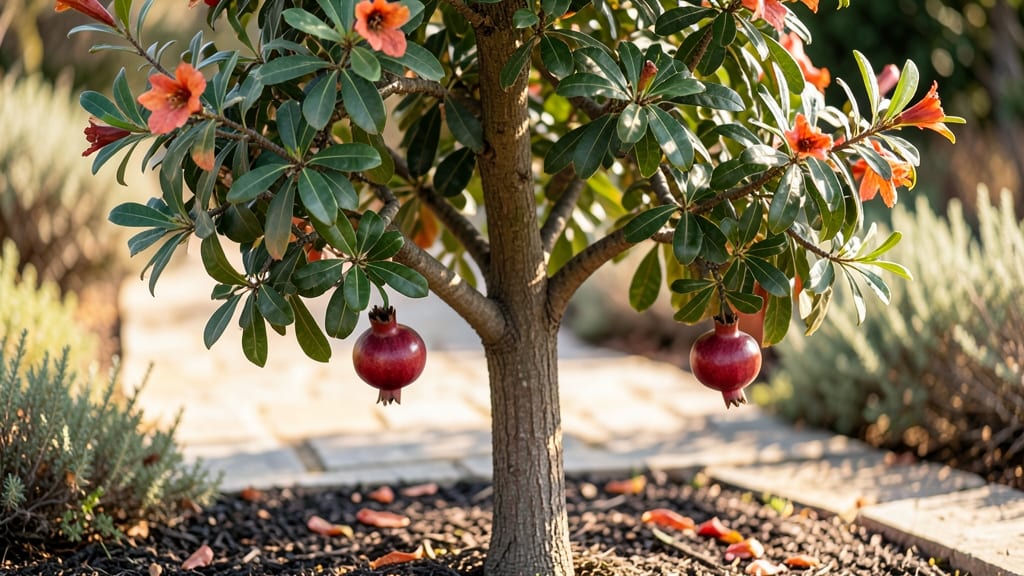
Pomegranates grow best in USDA zones 7 through 11, where cold-hardy varieties like 'Wonderful' and 'Eversweet' can withstand temperatures as low as 10°F (-12°C).
Pomegranates actually prefer warmer climates—zones 8-11 produce the largest fruit—but zone 7 growers can still succeed with proper winter care. 🍇 The key is protecting young trees from sudden freezes, especially when buds begin to swell in early spring.
I’ve seen containers work wonders in zone 6 if you move them indoors during winter, though fruit production may be smaller. For zones 5 and colder, consider dwarf varieties or microclimates near south-facing walls to extend the growing season.
What sets pomegranates apart is their need for chilling hours—typically 200-400 hours below 45°F (7°C)—to trigger flowering. Without enough cold exposure, trees may produce fewer or no fruits. That’s why zone 7 growers often get better results than those in milder microclimates within zone 6.
For container growers, using black pots absorbs heat and can help simulate warmer conditions during the day.
Here’s a pro tip: If you’re in a marginal zone, plant near a heat-retaining surface like a brick wall or use row covers in late fall to trap warmth. Just remember—even cold-hardy varieties need consistent moisture during their first two years to establish strong root systems. 💫
💡 In This Article
- USDA Zone Breakdown for Pomegranate Cultivation
- Best Cold-Hardy Pomegranate Varieties for Zones 7 and Below
USDA zone breakdown for pomegranate cultivation
Pomegranates are tropical-subtropical plants that rely on precise temperature ranges to thrive. The USDA zones 7-11 represent their ideal growing window, where winter lows rarely drop below 15°F (-9°C).
Zone 7's coldest temperatures (10°F to 15°F / -12°C to -9°C) push pomegranates to their physiological limits, while zones 8-11 offer more forgiving winters with minimal frost risk. The difference between these zones isn't just about survival—it's about fruit quality.
Trees in zones 9-11 consistently produce larger, sweeter fruit with thicker arils because they experience fewer cold stress events during dormancy.
The critical factor isn't just the lowest temperature but how quickly the tree can recover from winter dormancy. Pomegranates need a 200-400 hour chilling requirement (temperatures below 45°F / 7°C) to break dormancy and flower properly.
In zone 7, this chilling is naturally met, but in warmer microclimates within zone 6, growers often need to use artificial chilling methods like cold storage or winter row covers.
What's fascinating is how pomegranate buds respond to temperature shifts—buds begin swelling at 50°F / 10°C and are most vulnerable to late spring frosts (28°F / -2°C or lower), which can destroy emerging flowers and reduce yields by up to 80%.
Microclimates play a huge role in expanding pomegranate cultivation beyond official zone boundaries. Urban heat islands can raise temperatures by 5-10°F / 3-6°C compared to rural areas, effectively creating zone 8 conditions in a zone 7 city. South-facing slopes receive 30-50% more sunlight than flat ground, accelerating warming in spring.
For container growers, black plastic pots absorb 20% more heat than standard terracotta, helping simulate warmer conditions. However, these advantages come with trade-offs—container-grown trees in cold zones may produce smaller fruit because their root systems can't access deep soil moisture during heatwaves.
Winter dormancy is where pomegranates reveal their tropical origins. Unlike temperate fruit trees, pomegranates don't fully enter deep dormancy—their leaves stay green until killed by frost. This means they can photosynthesize on mild winter days, but they're also more vulnerable to freeze damage.
The bark of mature trees can survive -10°F / -23°C for short periods, but young trees (3 years old) need protection at 20°F / -7°C. What most growers don't realize is that pomegranates actually prefer winter temperatures between 35°F-45°F / 2°C-7°C for optimal bud development.
Colder than that, and the tree wastes energy trying to stay active.
Here's how temperature extremes affect different growth stages:
- Winter dormancy: 20°F / -7°C is the threshold where young trees need protection; mature trees handle -10°F / -23°C briefly
- Bud break: Occurs at 50°F / 10°C—critical window for frost protection
- Flowering: Optimal at 65°F-75°F / 18°C-24°C; temperatures above 90°F / 32°C can cause flower drop
- Fruit development: Requires 75°F+ / 24°C+ for proper aril formation
The science behind pomegranate cold tolerance lies in their antifreeze proteins, which prevent ice crystal formation in cell walls. However, these proteins have limits—prolonged exposure to 15°F / -9°C can still cause cellular damage.
That's why zone 7 growers often see better results with 'Eversweet' (which has thicker bark) than with 'Wonderful', which is more prone to winter dieback.
For container growers in zone 6, moving pots to unheated garages during winter (where temps stay 30°F-40°F / -1°C to 4°C) can extend the growing season by 4-6 weeks compared to outdoor planting.