
Container Gardens
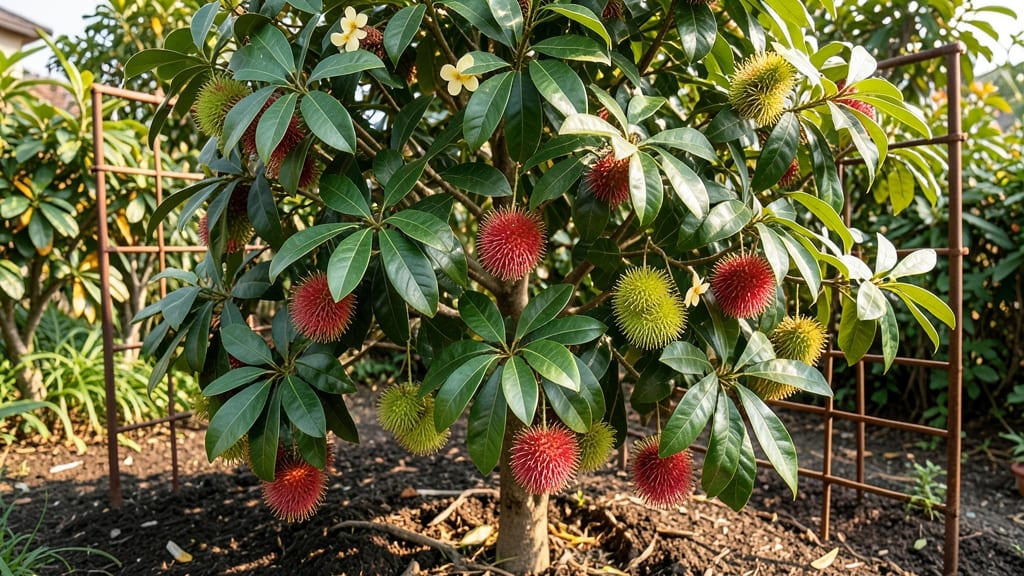
Growing rambutan successfully requires USDA hardiness zones 10-12, where warm tropical conditions with year-round temperatures above 60°F and high humidity create its ideal environment. These trees cannot tolerate frost and need well-draining soil with consistent moisture.
Rambutan trees are tropical natives that demand specific conditions to thrive. 🌴 Unlike hardier citrus varieties, they lack cold resistance and will suffer permanent damage below 50°F.
The high humidity and rainfall typical of their native Southeast Asia are equally critical—they mimic the tree's natural environment and prevent leaf scorch. I've found that even in zone 11, where temperatures dip occasionally, providing shade cloth during cooler months can make a noticeable difference in fruit production.
For those outside these zones, container growing offers flexibility. Moving potted rambutans indoors during winter or using grow lights can extend the growing season. Greenhouse setups with temperature controls are another popular solution, allowing gardeners in zones 9 and below to cultivate these exotic trees year-round.
💡 In This Article
- Understanding Rambutan’s Tropical Climate Needs
- Creating Microclimates for Rambutan in Non-Tropical Regions
Understanding rambutan’s tropical climate needs
Rambutan trees originate from the humid rainforests of Southeast Asia, where they experience year-round warmth and high moisture levels. The tree’s leaves contain a waxy coating that helps retain water, but this adaptation makes them highly sensitive to temperature fluctuations.
When exposed to below 50°F, the cellular structure of the leaves and branches begins to break down, leading to irreversible damage. This is why even brief frost events can kill a rambutan tree—its biological mechanisms simply aren’t equipped to handle cold stress like temperate fruit trees.
The humidity requirement is equally critical. Rambutan trees thrive in environments with 70-90% relative humidity, mimicking their native tropical habitat where morning fog and afternoon showers are common.
In drier conditions, the tree’s stomata (tiny leaf pores) close to conserve moisture, which reduces photosynthesis efficiency by up to 40%. This explains why rambutan trees often struggle in arid climates, even when temperatures are ideal.
For comparison, lychee trees (another tropical fruit) can tolerate slightly lower humidity (60-80%), but rambutan’s needs are more stringent due to its thinner, more delicate foliage.
Soil conditions play a supporting role in this tropical ecosystem. Rambutan trees prefer well-draining soil with a slightly acidic pH (5.5-6.5) to prevent root rot while providing essential nutrients.
The soil must also retain moisture without becoming waterlogged, as the tree’s shallow root system is sensitive to both drought and excess water.
In their native environment, these trees grow in volcanic or alluvial soils rich in organic matter—something gardeners can replicate using a mix of 50% peat moss, 30% perlite, and 20% compost for optimal growth.
What most people don’t realize is how temperature affects flowering and fruiting cycles. Rambutan trees require a consistent 68-86°F range to trigger blooming, and any dip below 60°F can cause flower drop, reducing fruit production by up to 60%.
This is why even gardeners in zone 11 must monitor temperature swings carefully—even a 5°F drop can disrupt the delicate balance needed for successful pollination. The tree’s natural pollinators (like bats and insects) are also temperature-sensitive, further emphasizing the need for stable conditions.
For those comparing rambutan to other tropical fruits, it’s worth noting that mango trees are slightly more cold-hardy (tolerating brief dips to 40°F), while lychee trees require even higher humidity (80-90%) but can handle slightly cooler nights (65°F).
Rambutan’s sensitivity makes it a high-maintenance crop, but this also explains why successful cultivation often results in trees that produce fruit year-round in ideal conditions—something even experienced tropical fruit growers find impressive.
The combination of temperature, humidity, and soil creates a delicate balance that rambutan trees rely on for survival. Without these precise conditions, the tree’s metabolic processes slow down, leading to stunted growth or complete dormancy.
This is why rambutan cultivation remains a niche hobby in non-tropical regions—it demands near-perfect environmental control to thrive.