
Planting
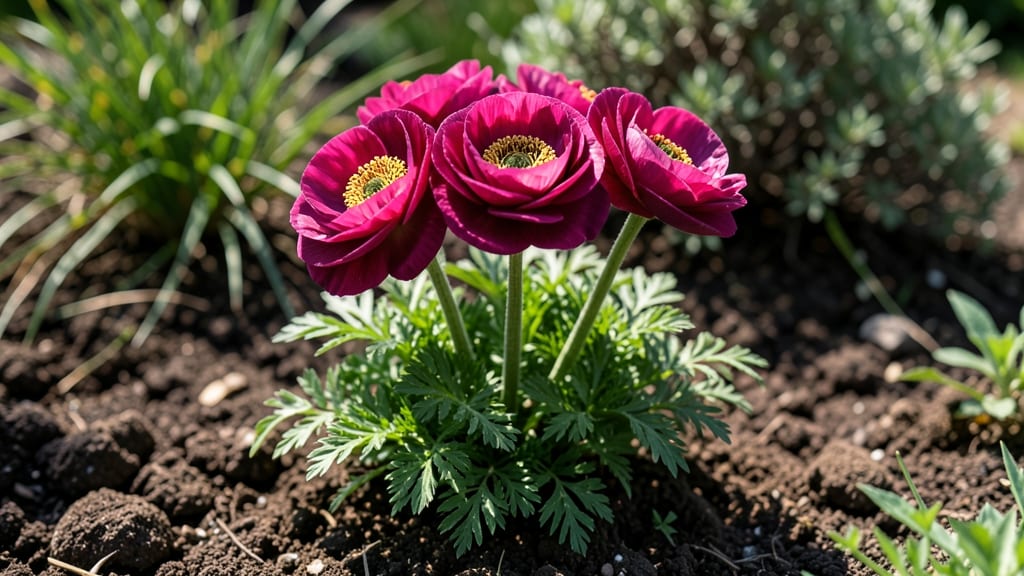
Ranunculus plants thrive only as perennials in USDA zones 8-10, needing winter protection or annual replanting in colder areas because their delicate tubers freeze without proper care.
These stunning flowers act more like tender perennials than true hardy ones, since their tuberous roots can't survive frost below 10°F. 💛 In zones 5-7, gardeners often treat them as annuals or dig up tubers to store indoors, while zones 8-10 allow winter survival with heavy mulch.
The key difference from hardy tubers like dahlias is their sensitivity to prolonged cold—even brief freezes can damage their storage organs.
For colder climates, I recommend lifting tubers after the first frost and storing them in cool, dry peat moss until spring. This mimics their natural dormancy period while preventing rot. In milder zones, a thick layer of straw mulch (6-8 inches) can provide enough insulation for winter survival.
💡 In This Article
- Understanding Ranunculus Cold Hardiness and Tuber Survival
- Protecting Ranunculus in Cold Climates: Seasonal Care Guide
Understanding ranunculus cold hardiness and tuber survival
The delicate nature of ranunculus tubers stems from their biological makeup—these flowers store energy in soft, fleshy tubers that lack the protective cell structures found in hardy perennials like peonies or hostas.
When temperatures drop below 32°F, the tuber cells begin to freeze, causing ice crystals to form between them. These crystals rupture cell membranes, leading to irreversible damage that prevents spring regrowth. Unlike true perennials, ranunculus tubers don't enter a deep dormancy state that protects against freezing.
In USDA zones 8-10, where winter lows rarely dip below 10°F, ranunculus can overwinter in the ground with proper mulching (6-8 inches of straw or leaves). The key threshold is -5°F—below this, even mulched tubers risk damage.
For comparison, dahlias (another tuberous plant) survive to -20°F with protection, while ranunculus tubers act more like tender gladioli or cannas, which require digging in colder zones. This sensitivity explains why gardeners in zones 5-7 often treat them as annuals.
Cold stress doesn't just kill tubers—it affects their ability to regenerate. When tubers experience even brief freezing, the meristematic tissue (growth centers) often dies, leaving only the outer layers viable. This means what might sprout could be stunted or produce weak stems.
The ideal winter temperature for stored tubers is 35-45°F—cooler than room temperature but above freezing—to maintain dormancy without metabolic activity that could exhaust stored energy.
What makes ranunculus particularly vulnerable is their shallow root system. Unlike deep-rooted perennials, their tubers sit just 2-3 inches below soil level, making them exposed to temperature fluctuations. Even a light frost can penetrate this depth, while deeper-rooted plants remain insulated.
This shallow placement also means they're more susceptible to soil moisture changes during freeze-thaw cycles, which can cause rot if not properly drained.
For gardeners pushing the limits in zone 7, a critical test is whether winter lows stay above 15°F consistently. In areas with occasional dips below this, even with mulch, tubers may survive but produce fewer blooms the following season.
The trade-off is between risking tubers in the ground versus the labor of digging and storing them—a decision that depends on your local microclimate and willingness to invest in winter care.
One surprising fact is that ranunculus tubers can actually survive brief exposures to 20°F if they're completely dry, but any moisture in the soil or storage medium turns this lethal. This is why peat moss or vermiculite (which wicks away moisture) becomes essential for overwintering tubers in containers.
The contrast with hardy tubers like sweet potatoes—which can tolerate 25°F with moisture—highlights how ranunculus represents the more delicate end of the tuberous perennial spectrum.