
Container Gardens
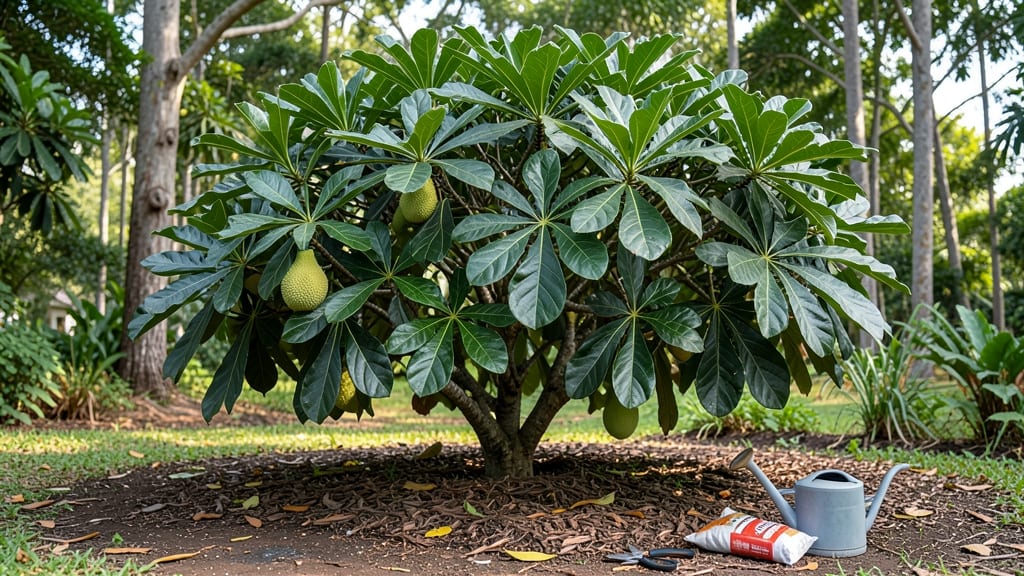
In the soursop growing zone—where winters stay above 50°F—think Florida, Hawaii, and Puerto Rico; I learned this after my Texas tree froze solid. 🌴 These tropical trees demand warmth, humidity, and protection from even light frosts, which means most U.S. gardeners will need to grow them in containers or greenhouses.
The ideal growing zones are USDA 10-12, where nights stay above 60°F and summers hit 90°F+. In cooler subtropical areas like Zone 9, you can grow soursops outdoors only if you shield them from winter chills.
Microclimates near heat-retaining walls or under eaves can extend the growing season by weeks—just don’t let temps dip below 40°F for more than a few hours.
What you’ll get is a year-round harvest of creamy, pineapple-like fruit—if you keep the tree happy. The secret is mimicking its native tropical home: daily misting in dry climates, well-draining soil, and partial shade during peak summer heat.
Even in containers, these trees can grow 15-20 feet tall, so plan for vertical space.
For gardeners in Zones 7-9, overwintering indoors near a sunny window works—just move them back outside before the last frost. The key is patience: soursops take 3-5 years to bear fruit, but once they do, you’ll never want to live without that tropical taste again.
Climate Mismatches in Soursop Growth
Soursop trees (Annona muricata) thrive in tropical and subtropical climates but struggle outside their ideal growing zones. When planted in unsuitable areas, they face stress that stunts growth, reduces fruit yield, or even kills the plant.
Understanding why these issues arise helps gardeners create the perfect conditions for a bountiful harvest.
Soursop trees are heat-loving and cold-sensitive, with a narrow temperature range for optimal growth. When exposed to conditions outside this range, their metabolic processes slow or shut down.
- Cold Snaps Below 30°F (-1°C):
Soursop trees originate from tropical regions where temperatures rarely drop below 50°F (10°C). When nighttime temps fall below 30°F (-1°C), cellular damage occurs due to ice crystal formation in plant tissues. This disrupts water uptake, leading to leaf browning, bark splitting, and root death.
Actionable Fix: Plant in microclimates (e.g., near heat-retaining walls) or use mulch to insulate roots. In colder zones, grow soursop in containers and move them indoors during winter.
- Heat Stress Above 100°F (38°C):
While soursop loves warmth, prolonged exposure to high humidity + extreme heat (common in USDA Zones 10-12) can cause heat shock. This leads to:
- Wilting despite moist soil (due to stomatal closure, reducing water absorption).
- Sunburn on leaves, appearing as bleached or crispy patches.
- Reduced flowering/fruiting due to hormonal disruptions.
Actionable Fix: Provide afternoon shade (e.g., with shade cloth) and ensure consistent moisture (but avoid waterlogging). Drip irrigation is ideal to keep roots cool.
Frost is the #1 killer of soursop trees in marginal growing zones. Unlike citrus, soursop has no cold-hardiness—even a light frost can be fatal. Here’s why:
- Ice Formation in Vascular Tissues:
When water in plant cells freezes, it expands and ruptures cell walls. This cuts off nutrient transport, causing:
- Blackened leaves (from oxidized chlorophyll).
- Cracked bark (visible as vertical splits on the trunk).
- Root suffocation (ice crystals block oxygen uptake).
- Delayed Recovery:
Even if the tree survives a frost, new growth may fail to emerge for weeks. This is because the meristem cells (growth centers) are permanently damaged.
Actionable Fix:
- In Zone 9b and colder, plant soursop in large containers (15+ gallons) and overwinter indoors (near a sunny window or under grow lights).
- Use frost cloth as a last resort—it’s better than nothing but won’t save the tree if temps drop below 28°F (-2°C).
- Choose frost-resistant varieties (though none exist—focus on container growing instead).
Soursop trees need consistent moisture but hate soggy roots. Outside their native tropical zones, water management becomes critical.
- Drought Stress:
In arid or seasonal climates (e.g., parts of Florida’s dry season or California’s Mediterranean zone), soursop trees experience:
- Leaf drop (a survival mechanism to reduce water loss).
- Stunted growth (roots can’t absorb enough water for photosynthesis).
- Fruit abortion (flowers drop before pollination).
Actionable Fix: Water deeply 2-3 times per week during dry spells, aiming for 1-2 inches of moisture per week. Use mulch (wood chips or straw) to retain soil moisture.
- Waterlogging:
In humid zones with poor drainage (e.g., southern Florida or Hawaii’s lowlands), excess water leads to:
- Root rot (from Phytophthora fungi thriving in anaerobic soil).
- Yellowing leaves (chlorosis due to oxygen deprivation).
- Weak structure (trees become prone to wind damage).
Actionable Fix: Plant in well-draining soil (amend with perlite or sand) and ensure elevated beds or raised containers in swampy areas. Avoid overwatering—stick to 1 inch per week in rainy seasons.
Soursop trees prefer slightly acidic to neutral soil (pH 6.0-7.0). Outside their native range, soil chemistry often becomes the hidden limiting factor.
- Alkaline Soil (pH > 7.5):
Common in calcareous regions (e.g., southern Texas or parts of Australia), high pH locks out essential nutrients like:
- Iron (Fe) → Yellow leaves with green veins (iron chlorosis).
- Phosphorus (P) → Purple stems and slow growth.
- Zinc (Zn) → Stunted new leaves.
Actionable Fix: Test soil pH and amend with elemental sulfur (to lower pH) or peat moss. Use chelated iron supplements if chlorosis appears.
- Nitrogen Deficiency:
In poor or sandy soils, soursop trees may show:
- Pale green leaves (old leaves first).
- Reduced flowering (nitrogen fuels leafy growth over fruit).
Actionable Fix: Apply a balanced fertilizer (10-10-10) at planting, then monthly organic compost during growing season. Avoid over-fertilizing—s
Fixing soursop growing challenges
Soursop trees thrive in warm climates, but even in the right growing zones, problems can arise. Whether you're battling pests, poor soil, or environmental stress, these practical solutions will help you nurture a healthy soursop tree—even in containers.
Below, we map common issues to step-by-step fixes and prevention tips to keep your tropical fruit tree flourishing.
---
Cause: Compacted or waterlogged soil cuts off oxygen to roots, leading to root rot or stunted growth.
How to Fix It: 🔥 Amend the Soil – Mix in organic matter like coconut coir, perlite, or compost to improve aeration. For containers, use a well-draining potting mix (50% tropical soil + 30% perlite + 20% compost). 🍳 Raise the Planter – Elevate containers on feet or a tray to prevent water pooling at the bottom. 👨🍳 Check Drainage Holes – Ensure pots have multiple drainage holes (or drill them if needed). Line the bottom with gravel or broken pottery shards for extra airflow.
Prevention Tips: ✨ Test soil moisture before watering—stick your finger 2 inches deep; if damp, wait. 🌡️ Mulch lightly with pine bark or straw to retain moisture without suffocating roots.
---
Cause: Soursops need temperate warmth (70–85°F). Too much heat or frost shocks the tree, causing leaf scorch or fruit drop.
How to Fix It: 🔥 Provide Shade Cloth – Use 30–50% shade cloth during peak sun (10 AM–4 PM) in hot zones. 🍳 Move Containers Strategically – In cold snaps, roll pots indoors or to a sunroom/garage (avoid drafts). 👨🍳 Mulch Thickly – Apply 3–4 inches of organic mulch (wood chips or leaves) to insulate roots in winter.
Prevention Tips: 💡 Monitor microclimates—containers heat up faster than ground soil. Use light-colored pots to reflect sunlight. ✨ Group plants together to create a natural windbreak and retain warmth.
---
Cause: Mealybugs, aphids, or fruit flies thrive in humid, tropical conditions, weakening soursop trees.
How to Fix It: 🔥 Spray Neem Oil – Mix 1 tsp neem oil + 1 tsp mild soap per quart of water. Spray every 7–10 days until pests vanish. 🍳 Introduce Beneficial Insects – Release ladybugs or lacewings (available at garden centers) to eat aphids naturally. 👨🍳 Prune Infested Branches – Cut off heavily damaged leaves and dispose of them in sealed bags (don’t compost!).
Prevention Tips: 🌡️ Encourage airflow—space plants 3–4 feet apart and prune for sunlight access. 🎯 Inspect new plants before bringing them home—quarantine for 2 weeks to spot hitchhiking pests.
---
Cause: Soursops hate soggy roots but also struggle in drought. Over/underwatering leads to root rot or leaf drop.
How to Fix It: 🔥 Adjust Watering Schedule – - Containers: Water when top 1–2 inches of soil are dry (usually 2–3 times per week in summer). - Ground-Planted: Water deeply 1–2 times per week (less in rainy seasons). 🍳 Use a Moisture Meter – Stick one in the soil to avoid guessing. Aim for 60–70% moisture (not soggy). 👨🍳 Repot if Needed – If roots are circling the pot, upgrade to a larger container (1–2 sizes bigger).
Prevention Tips: ✨ Water at the base—avoid leaf wetting to prevent fungal diseases. 💡 Group pots together to retain humidity without overwatering.
---
Cause: Soursops are heavy feeders—poor soil or over-fruiting depletes nutrients like nitrogen, potassium, or magnesium.
How to Fix It: 🔥 Fertilize Seasonally – - Spring/Summer: Use a balanced fertilizer (10-10-10) every 4–6 weeks. - Fall/Winter: Switch to a low-nitrogen, high-potassium (5-10-10) to support fruiting. 🍳 Add Epsom Salt – For yellowing leaves (magnesium deficiency), dissolve 1 tbsp Epsom salt in a gallon of water and spray monthly. 👨🍳 Use Compost Tea – Brew compost tea (steep compost in water for 24 hours) and water plants with it for a nutrient boost.
Prevention Tips: 🎯 Test soil annually—use a home soil test kit to check pH (ideal: 6.0–6.5) and nutrient levels. 🌡️ Mulch with compost—top-dress with aged compost every 3–4 months for slow-release nutrients.
--- Final Pro Tip: 🌟 Observe your soursop tree daily—catching issues early (like wilting or pest trails) means quicker fixes and a healthier harvest! With these adjustments, your tropical fruit tree will thrive in any container-friendly zone.
Frequently asked questions
What are the best US states for growing soursop outdoors?
Soursop thrives in USDA Zones 10-12, making Florida, Hawaii, Puerto Rico, and southern California (like San Diego) ideal locations. In these areas, soursop can grow year-round outdoors with minimal protection. Even in Zone 9, like southern Arizona or parts of Texas, you can grow them outside if you shield them from winter chills.
Can I grow soursop in a container if I live in Zone 7?
Yes! Container growing is perfect for cooler climates. Use a 15+ gallon pot with well-draining soil and move it indoors when temperatures drop below 50°F. Place it near a sunny window or under grow lights during winter. Just ensure the container has drainage holes to prevent root rot.
How do I protect my soursop from frost in marginal zones?
Soursop is frost-sensitive—even a light freeze can kill it. For outdoor plants in Zone 9b or colder, wrap the trunk with burlap or frost cloth and cover the entire plant with a blanket if temps drop below 32°F. Better yet, grow in containers and move them to a garage or sunroom before winter. Mulch heavily around the base for extra insulation.
How long does it take for a soursop tree to bear fruit?
Soursop trees typically take 3-5 years to produce fruit from seed, but grafted trees can bear fruit in as little as 1-2 years. Patience is key—young trees focus on root and leaf growth before flowering. Provide consistent care (water, fertilizer, and warmth) to encourage earlier fruiting.
What’s the best way to overwinter a potted soursop?
Place your potted soursop in a bright, frost-free location (like a garage or sunroom) where temperatures stay above 50°F. Reduce watering but keep the soil slightly moist. If natural light is limited, supplement with a grow light for 12-14 hours daily. Avoid drafts and check for pests regularly during dormancy.