
Planting
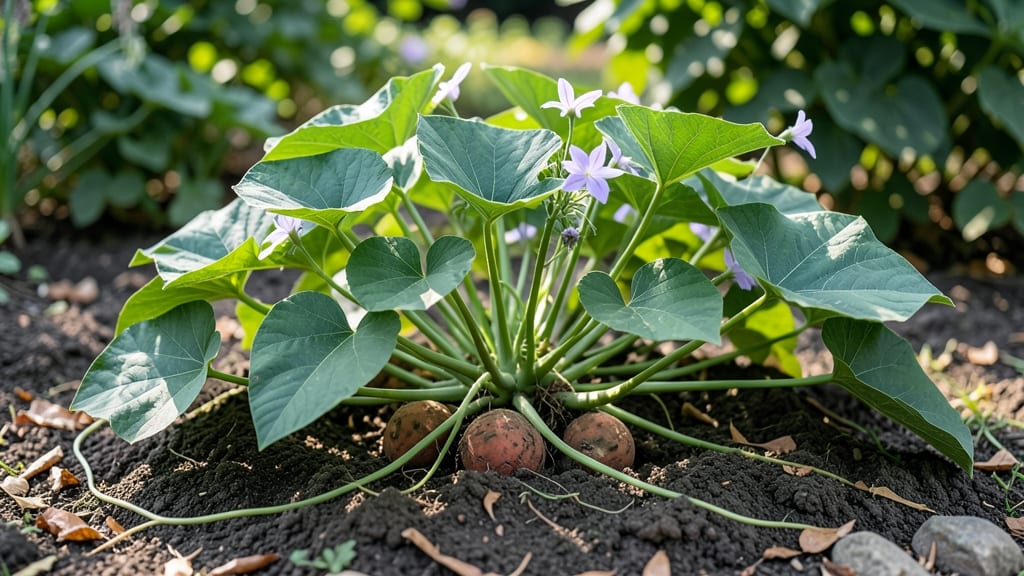
Sweet potatoes grow best in USDA hardiness zones 9-11, where warm temperatures persist year-round. Gardeners in colder regions must plant them as annuals and harvest before frost hits, since they can't survive below 45°F without protection.
Sweet potatoes are tropical plants at heart, meaning they demand consistent warmth to thrive. 🌱 Their edible roots and foliage both suffer when temperatures dip below 50°F, with frost causing irreversible damage.
In cooler zones, I've seen success by planting after the last frost date and using black plastic mulch to raise soil temperatures. The key is working with their natural growth cycle—sweet potatoes need about 90-120 days of warm weather to mature properly, which limits their growing window in northern climates.
Interestingly, their cold sensitivity makes them different from regular potatoes, which can handle cooler temperatures. This tropical nature explains why sweet potatoes are often grown as annuals in temperate zones rather than perennials.
The good news? With proper planning and protection, you can still enjoy a harvest even in zones as cold as 3, though yields may be smaller.
💡 In This Article
- Sweet Potato Cold Tolerance and Freeze Sensitivity Explained
- Growing Sweet Potatoes in Cold Zones: Seasonal Strategies
Sweet potato cold tolerance and freeze sensitivity explained
Sweet potatoes are tropical plants with a delicate relationship with cold. Their foliage begins to suffer when temperatures drop below 50°F, while the tubers themselves can't tolerate prolonged exposure to 45°F or colder.
The reason lies in their biological makeup: unlike regular potatoes, which store starches in underground tubers that can withstand cooler temperatures, sweet potatoes store energy in their leaves and stems during early growth stages.
When frost hits, these tender leaves wilt and die, cutting off the tuber's nutrient supply and causing irreversible damage. 🌱
The optimal growing temperature range for sweet potatoes is between 70-90°F, with soil temperatures needing to stay above 60°F for proper tuber formation. This tropical requirement explains why they thrive in USDA zones 9-11, where warm winters are the norm.
Even a light frost can kill the vines, and temperatures below 32°F will damage the tubers themselves. For comparison, regular potatoes can handle temperatures down to 28°F when fully mature, while yams (their close relatives) are slightly more cold-tolerant but still prefer warmer climates than sweet potatoes.
What makes sweet potatoes particularly vulnerable is their shallow root system. The tubers develop just below the surface, making them susceptible to temperature fluctuations. In contrast, regular potatoes grow deeper, providing some natural insulation.
The foliage's sensitivity is equally problematic - when nighttime temperatures drop below 55°F for more than a few days, the leaves develop brown spots and eventually die back, signaling the plant to redirect energy away from tuber development.
This physiological response explains why gardeners in cooler zones often see stunted growth or poor yields when planting sweet potatoes too early in the season.
Interestingly, the sweet potato's cold sensitivity extends to its germination process. Seeds (or slips) won't sprout reliably in soils below 65°F
This requirement for consistent warmth is what truly differentiates sweet potatoes from other root crops - while carrots or beets might tolerate cooler soils, sweet potatoes demand tropical-like conditions throughout their growing cycle. The good news is that once established, their deep root systems can help stabilize soil temperatures around the developing tubers, but only if the surrounding environment remains warm enough to support vigorous foliage growth. One fascinating aspect of sweet potato cold sensitivity is how it affects their storage characteristics. Tubers harvested from plants grown in marginal climates (just outside their ideal zone) often have thinner skins and less natural sweetness because the plant's energy was diverted to survival rather than storage. This is why commercial sweet potato production in cooler zones focuses on varieties bred for shorter growing seasons and better cold tolerance, like 'Beauregard' or 'Georgia Jet,' which can handle slightly cooler temperatures than heirloom varieties. 💫