
Plants
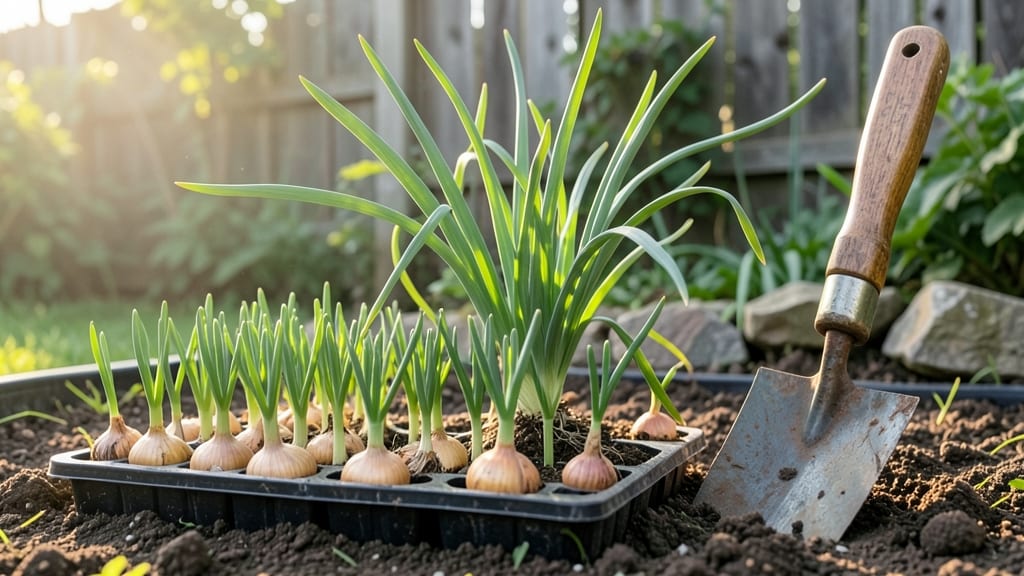
Planting onions in Zone 6a at the right time is the key to avoiding bitter bulbs and wasted effort.
Timing is everything when growing onions in Zone 6a—plant too early, and you risk bolting; too late, and your harvest suffers. Mastering the exact planting window ensures sweet, plump bulbs every season.
In this guide, I’ll break down the perfect months for planting onion sets, seeds, or seedlings, including how to adjust for your specific variety and soil conditions. Whether you’re aiming for a spring harvest or fall-planted bulbs, you’ll find the exact dates to follow.
You’ll also discover how to avoid common mistakes that ruin onion harvests, like planting at the wrong soil temperature or ignoring day-length requirements. Let’s get those 🧅 growing the right way!

Zone 6A onion planting calendar: best months for bulbs vs green onions
Mastering the Zone 6A onion planting schedule means understanding two distinct timelines: one for bulb onions and another for green onions. Bulb onions thrive when planted in fall or early spring, while green onions grow best with spring and summer succession plantings.
The key difference lies in their day-length sensitivity and frost tolerance, which I’ll break down for you.
In Zone 6A, where last frost dates average April 15 and first frosts arrive October 15, you have precise windows to maximize yields. For bulb onions, planting too early in spring risks bolting (flowering prematurely), while late summer plantings give you a fall harvest before hard frosts.
Meanwhile, green onions are far more forgiving and can be sown repeatedly throughout the growing season.
| Planting Type | Best Planting Months | Soil Temp Requirement | Frost Tolerance | Harvest Window |
|---|---|---|---|---|
| Bulb Onions (Sets/Seeds) | Late August - Early September | 45-55°F (7-13°C) | Survives light frost | May - June (next year) |
| Bulb Onions (Transplants) | March - Early April | 40-50°F (4-10°C) | Tolerates light frost | June - July |
| Green Onions (Seeds) | April - September (succession) | 50-60°F (10-16°C) | Cold-hardy to 20°F (-7°C) | 6-8 weeks after sowing |
| Green Onions (Transplants) | March - August | 45-55°F (7-13°C) | Cold-hardy to 25°F (-4°C) | 4-6 weeks after transplant |
For bulb onions, I recommend starting with onion sets (small bulbs) in late August to early September—this gives them time to establish roots before winter.
The plants overwinter in the ground, then resume growth in spring. Aim for a soil temperature of 45-55°F (7-13°C) at planting; colder soils delay germination.
Spring plantings of bulb onions should happen 4-6 weeks before your last frost date (around March in Zone 6A). Use transplants instead of seeds for faster maturity. These onions will mature by mid-summer, giving you a June-July harvest before heat stress sets in.
Avoid planting after April 15, or your bulbs may bolt prematurely.
Green onions, on the other hand, are perennial in mild winters and can be sown every 2-3 weeks from April through September. They thrive in cooler temperatures and even tolerate light frosts down to 20°F (-7°C).
For a continuous supply, I plant transplants in March (harvest in May) and seeds in late summer (harvest before first frost).
Heat sensitivity is a critical factor for bulb onions in Zone 6A. Once soil temperatures exceed 75°F (24°C), bulb formation slows, and onions become pungent or bolt. Green onions handle heat better but still prefer 60-75°F (16-24°C) for optimal growth.
If summer heat arrives early, I recommend shade cloth or drip irrigation to keep soil cool and moist.
Pro tip: Use mulch (straw or leaves) to protect fall-planted bulb onions from temperature swings and soil heaving during winter. In spring, remove mulch 2-3 weeks before harvest to let bulbs dry and sweeten. For green onions, mulch isn’t necessary but helps retain moisture during dry spells.
If you’re new to onion growing, start with short-day varieties like Texas Early White or Red Creole—they’re more forgiving for Zone 6A’s climate. Long-day varieties (e.g., Sweet Spanish) require precise timing and may struggle unless planted early. Always rotate crops to prevent soil-borne diseases like onion thrips
How to adjust planting times for different onion varieties in Zone 6A
Not all onions thrive on the same schedule in Zone 6A. The key to success lies in understanding whether your variety is a short-day, intermediate-day, or long-day onion.
Each type responds differently to daylight hours and soil temperatures, so planting at the wrong time can lead to bolting (premature flowering) or poor bulb development. Let’s break down the exact planting windows for each category to maximize your harvest.
For short-day onions like Texas Early White, the window is narrow but critical. These varieties need to be planted as early as February in Zone 6A, when soil temperatures hover around 45-50°F.
The goal is to give them enough time to mature before the long days of summer trigger bolting. I’ve found that starting them indoors in late January gives me a head start, then transplanting outdoors once the soil warms.
Here’s how the planting windows compare for each onion type, including soil temperature triggers and ideal planting months:
Intermediate-day onions, like Yellow Granex, are the most forgiving. They adapt well to Zone 6A’s climate and can be planted in both spring (March-April) and fall (August). For spring plantings, aim for soil temperatures of 50-55°F, while fall plantings should occur when soil is still warm enough to support root growth but cooling rapidly. I’ve had great success with a late-August planting, which matures just in time for a late fall harvest.
If you’re growing long-day onions such as Sweet Spanish, timing is even more critical. These varieties need cooler temperatures and longer daylight hours to form bulbs properly. In Zone 6A, plant them after the last frost date (typically mid-April) when soil temperatures reach 55-60°F.
Planting too early can cause bolting, while waiting too long may result in small bulbs. I’ve found that using black plastic mulch helps retain heat and extend the growing season for these varieties.
Pro tip: For all onion types, soil preparation is just as important as timing. Amend your soil with compost to improve drainage, and avoid fresh manure, which can cause onions to bolt. Also, consider succession planting every 2-3 weeks for a continuous harvest of green onions or smaller bulbs.
With the right variety and timing, you’ll enjoy a bountiful onion harvest all season long! 🧅