
Propagation
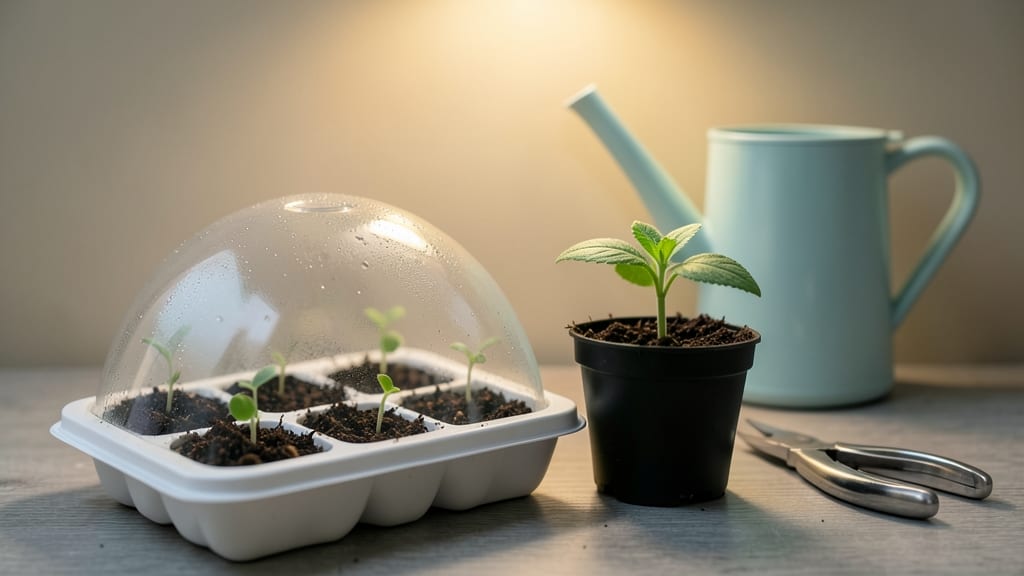
A Zone 6B seed starting calendar begins 6-8 weeks before the last frost (mid-to-late February) for cool-season crops like lettuce and peas, while warm-season seeds (tomatoes, peppers) start indoors 8-10 weeks prior (late March). Adjust timing based on specific varieties and local frost dates for optimal transplant readiness.
For Zone 6B gardeners, timing is everything—cool-season crops like spinach and kale need that early start to mature before summer heat sets in, while tomatoes and peppers require longer indoor growth periods. 🌱 I always check my local frost dates first, then work backward from the plant's maturity timeline.
For example, a 60-day tomato variety needs to hit transplant size by early May, so I start seeds around late March to account for potential delays. The key is balancing indoor space with outdoor readiness, especially when dealing with finicky seedlings.
Pro tip: Use a seed-starting journal to track each variety's progress—some, like basil, bolt quickly if started too early, while others, like broccoli, tolerate cooler indoor temperatures better. Adjusting for light intensity (grow lights vs. south-facing windows) and soil warmth (heat mats help) can shave critical weeks off your schedule.
When in doubt, err on the side of starting too early—you can always move seedlings outside under row covers if they outgrow their pots.
💡 In This Article
- Science Behind Zone 6B Seed Starting Timing
- Variety-Specific Seed Starting Schedule for Zone 6B Gardens
Science behind zone 6B seed starting timing
Zone 6B's seed starting windows hinge on three critical factors: your last average frost date, the plant's days-to-maturity, and the soil temperature required for germination.
For example, lettuce seeds need soil temps of 45-75°F to sprout, while tomatoes require 70-85°F—a difference that explains why cool-season crops get an earlier start.
The USDA calculates Zone 6B's last frost as April 15±10 days, but local microclimates (like urban heat islands) can shift this by 1-2 weeks. This variability is why gardeners use historical frost records from their specific location rather than relying solely on zone averages.
The plant's maturity cycle is where the math gets interesting. A 50-day basil plant needs to reach transplant size by May 15 (after last frost), so you'd start seeds 8 weeks earlier (late March)—but only if you're using grow lights.
Natural sunlight in Zone 6B weakens by March 1, so seedlings grown on windowsills often take 20% longer to reach maturity. This is why grow lights (providing 12-16 hours/day of 2,000-3,000 lux) become essential for warm-season crops.
The photosynthesis rate in seedlings drops by 40% with insufficient light, directly impacting transplant readiness.
Soil temperature plays a hidden but crucial role in germination speed.
Cool-season crops like peas (50-70°F) can germinate in 7-14 days, while warm-season peppers (75-90°F) take 14-21 days—a difference that forces earlier starts for the latter. 🌱 Heat mats (raising soil temps by 10-15°F) can shave critical days off warm-season germination.
The science here involves enzyme activity: cooler temps slow down the breakdown of starches into sugars, delaying seedling emergence. This is why some gardeners use bottom heat for pepper seeds, even in Zone 6B's cooler early spring.
Adjusting for early or late frosts requires understanding your local climate patterns. If your area has a 30% chance of frost after April 15, you might need to extend your cool-season window by 2 weeks.
For warm-season crops, this could mean starting 2 weeks earlier—but only if you have adequate grow space. The root-bound risk increases with early starts, as seedlings often outgrow their 2-3 inch pots before transplant time.
This is why succession planting (staggering starts every 2 weeks) becomes a game-changer for continuous harvests.
Here's a concrete example: In Zone 6B, a 70-day tomato variety needs to be transplanted by May 20, so you'd start seeds on March 20—but only if using grow lights.
Without them, you'd shift to March 30—a 10-day difference that can mean the difference between a full harvest and bolted plants. This timing also accounts for the 2-3 week hardening-off period needed to acclimate seedlings to outdoor conditions.
The goal is to have robust, 4-6 inch tall seedlings ready for transplant when soil temps reach 60°F consistently.
What most gardeners overlook is how humidity levels affect seedling health. Zone 6B's spring often brings 40-50% humidity, which can lead to damping off—a fungal disease that kills seedlings at the soil line.
This is why proper air circulation (using small fans) and sterile seed-starting mix become critical. The porosity of your growing medium matters too: a mix that's 60% peat/40% perlite drains better than straight potting soil, reducing the risk of fungal growth.
These details explain why some gardeners swear by custom seed-starting mixes—they're not just about drainage; they're about creating the ideal microbial environment for healthy root development.