
Plants
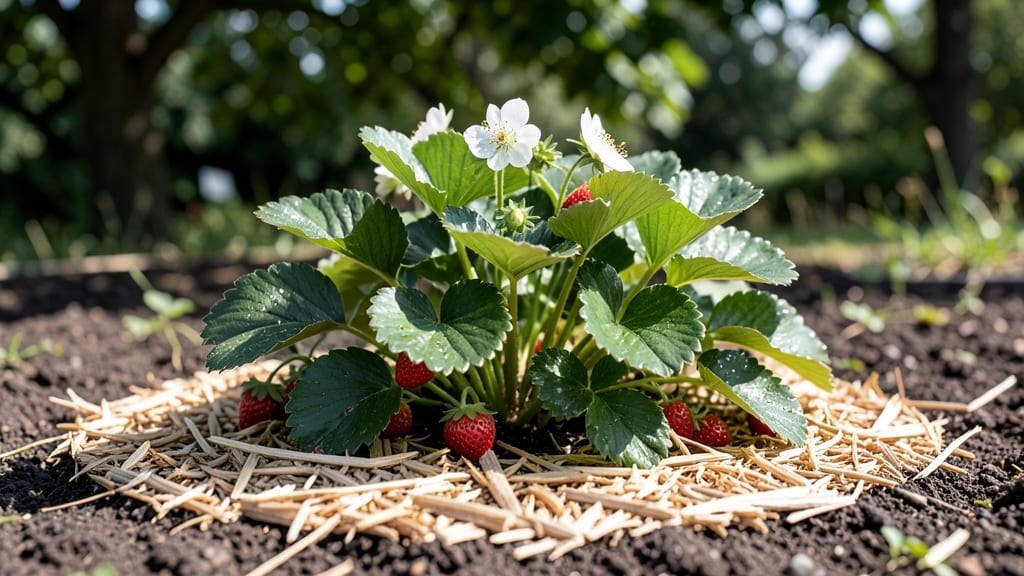
Strawberries are perennial in Zone 7 but require winter protection to survive freezing temperatures, as they thrive best in USDA zones 5-9 with proper mulching and cold-hardy varieties like 'Albion' or 'Chandler'.
Strawberries in Zone 7 can survive multiple growing seasons, but their hardiness depends on winter care.
Without protection, temperatures below 10°F can damage crowns and roots, reducing next year's yield. 🌱 Cold-hardy varieties like 'Chandler' are bred to withstand colder snaps, while regular mulching with straw or pine needles insulates roots from harsh freezes.
I've found that combining these strategies—choosing the right variety and insulating properly—can extend your strawberry patch's lifespan by years.
What sets Zone 7 apart is its borderline climate: it's too cold for tropical varieties but not cold enough for Arctic-hardy types. This means growers must act as their plants' winter advocates. The key is timing—applying mulch before the first frost and removing it in early spring to prevent rot.
For extra security, I recommend using frost blankets during prolonged cold snaps, especially in late winter when buds begin to swell.
💡 In This Article
- How Cold Temperatures Affect Strawberry Plant Survival
- Best Winter Care Practices for Zone 7 Strawberry Gardens
How cold temperatures affect strawberry plant survival
Strawberry plants enter dormancy when temperatures consistently drop below 50°F, but their survival hinges on how far those temperatures plummet. The real danger comes when cell walls rupture from ice crystal formation—this happens at -5°F to -10°F, where most standard strawberry varieties suffer irreversible damage.
Zone 7's average winter lows (0°F to 10°F) put these plants at risk, especially since crowns (the thickened stem base) are more vulnerable than roots. The crown contains meristem tissue responsible for regrowth, and even brief exposure to -15°F can kill it completely.
What makes strawberries unique is their hybrid nature—most commercial varieties are octoploids (8 sets of chromosomes), which gives them some cold tolerance but also makes them more sensitive to rapid temperature swings.
For example, a 20°F drop in 24 hours can cause frost cracks in the crown, while gradual cooling allows the plant to harden off naturally. This is why Zone 7 growers must monitor forecasts and protect plants during polar vortex events, where temperatures can crash 30°F overnight.
The USDA zone rating system accounts for these risks by averaging the coldest winter temperatures over 30 years—Zone 7's 0°F to 10°F range explains why some varieties thrive while others fail.
Root systems play a surprising role in survival—they can tolerate colder soil temperatures (20°F) because they're insulated by organic matter. However, the crown sits exposed, making it the weak link. When roots freeze, they can't absorb water, leading to dehydration stress even if the air temperature isn't extreme.
This is why mulching isn't just about insulation—it's about maintaining a 5-10°F buffer between the crown and freezing air. Think of it like a thermal blanket: straw or pine needles trap heat radiating from the soil while preventing moisture loss through evaporation.
Timing is everything in strawberry hardiness. Plants enter dormancy when day lengths shorten (12 hours of daylight triggers this response), but they won't fully harden until after 2-3 weeks of cold exposure.
This is why early winter mulching (before 40°F nights) is critical—it gives the plant time to prepare. The science here involves a natural antifreeze compound called "dehydrin" that strawberries produce, but this process requires stable cold conditions.
Sudden warm spells in winter can trick plants into breaking dormancy prematurely, making them vulnerable when cold returns.
Consider these cold-hardiness factors when evaluating varieties for Zone 7:
- Crown tolerance: 'Albion' survives to -15°F with protection, while 'Seascape' tops out at -10°F
- Root depth: Deeper roots (6-8 inches) access warmer soil layers naturally
- Leaf persistence: Some varieties like 'Chandler' keep leaves through winter, which can insulate crowns
- Fruit bearing: June-bearing types harden faster than everbearing varieties
The bottom line is that strawberries in Zone 7 can be perennial, but they need grower intervention to bridge the gap between their natural hardiness and winter extremes. Without protection, the survival rate drops from 80-90% (with care) to 20-30% (without).
This is why I always recommend combining cold-hardy varieties with winter mulching—it's the difference between a thriving patch and a lost investment. 🌱