
Plants
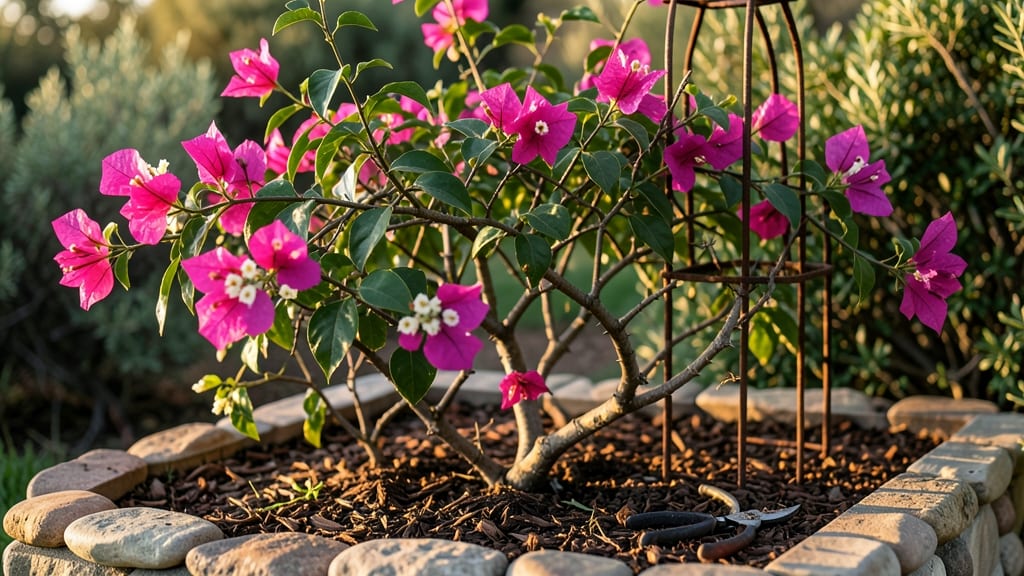
Bougainvillea can thrive in Zone 7 when planted with cold-resistant varieties like 'California Gold' or 'San Diego Red,' but they need careful winter protection—such as mulching, wrapping, or moving pots indoors—before temperatures fall below 20°F (-6°C).
Zone 7's mild winters can still damage bougainvillea, especially tropical varieties that aren't bred for cooler climates. The key is selecting cold-hardy cultivars like 'Thunderbird' or 'California Gold,' which can tolerate brief dips to 15°F (-9°C) with proper care.
These varieties develop thicker stems and smaller leaves, reducing frost damage. 🌿 For potted plants, I always move them to a garage or basement with consistent 40-50°F (4-10°C) temperatures, while in-ground plants benefit from a thick layer of straw mulch and burlap wraps around the base.
Timing matters just as much as technique—wait until the first hard frost (28°F (-2°C)) before taking action. Prune back dead growth in early spring, but avoid heavy cuts until after the last frost date in your area.
This balance between protection and pruning ensures your bougainvillea rebounds with vibrant blooms come summer.
💡 In This Article
- Cold-Tolerant Bougainvillea Varieties for Zone 7
- Step-by-Step Winter Care Guide for Zone 7 Bougainvillea
Cold-tolerant bougainvillea varieties for Zone 7
The secret to growing bougainvillea in Zone 7 lies in selecting varieties specifically bred for cooler climates. Unlike tropical types that wilt at 32°F (0°C), cold-hardy cultivars like 'California Gold' and 'Thunderbird' can withstand brief dips to 15°F (-9°C) thanks to their genetic adaptations.
These varieties develop thicker, woody stems that store moisture and nutrients, acting like natural insulation against frost. 🌟 Their smaller leaves also reduce surface area exposed to cold, minimizing damage compared to broad-leaved tropical species.
What sets these cold-tolerant types apart is their USDA hardiness rating of Zone 9a-10a with special care, but their growth habits make them uniquely suited for Zone 7.
For example, 'San Diego Red' produces vibrant bracts even in cooler springs, while 'Thunderbird' grows more compactly, reducing wind damage during winter storms. These traits aren't just about survival—they translate to more reliable blooming seasons in your garden.
The science behind this hardiness comes down to cellular adaptations. Cold-resistant bougainvillea varieties produce higher concentrations of cryoprotectants—natural antifreeze compounds like proline and sugars—that prevent ice crystal formation in their cells.
This is why they can bounce back from light frosts while tropical varieties suffer leaf burn and dieback. 🔥 The trade-off? These cold-hardy types may bloom slightly later in spring, but their resilience makes them worth the wait.
If you're comparing varieties, consider 'California Gold' for its bright yellow bracts that stand out against winter mulch, or 'Thunderbird' for its deep purple hues that add winter interest.
Both handle Zone 7's 300-400 chill hours better than tropical types, which struggle with prolonged exposure to temperatures below 40°F (4°C). The key difference is in their root systems—cold-hardy varieties develop deeper, more extensive roots that anchor them better against winter winds.
For container growers, these varieties also perform better because their compact growth habit fits smaller pots. I've found that 'San Diego Red' in a 15-gallon container with winter insulation can survive Zone 7 winters with minimal stress, while tropical types in identical containers often suffer frost damage.
The thicker stems also mean they recover faster from pruning cuts in early spring.
One common misconception is that all bougainvillea need full sun year-round. Cold-hardy varieties actually benefit from partial shade during winter months in Zone 7, which helps conserve energy.
Their leaves may turn slightly purple in cold snaps—a natural response to protect chlorophyll—but they'll green up again once temperatures rise above 50°F (10°C). This adaptability is what makes them ideal for Zone 7 gardens.