
Plants
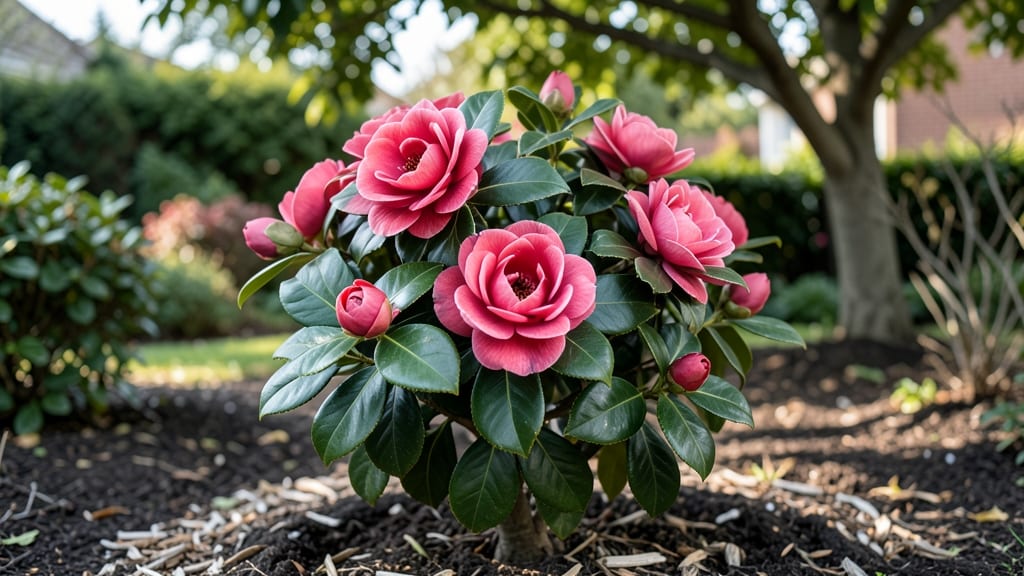
Camellias thrive in Zone 7 when you choose frost-resistant types like Sasanqua or Japonica hybrids, plant them in protected spots, and shield their roots with thick mulch. While most varieties endure temperatures down to 10°F, Zone 7’s occasional dips below that mean extra winter protection is often necessary.
Zone 7’s fluctuating winter temperatures—where cold snaps can drop below 10°F—test camellias’ limits, especially for tender Japonica varieties. 🌿 The key to success lies in selecting Sasanqua hybrids, which naturally handle colder climates better, and strategically placing plants where they’re sheltered from harsh winds and late-season freezes.
I’ve seen even the hardiest camellias struggle when planted in exposed areas, so always scout your yard for microclimates where frost lingers less.
Adding 2-3 inches of mulch in late fall creates a protective barrier that keeps roots from freezing, while wrapping young plants in burlap during extreme cold can make all the difference.
For best results, focus on varieties like ‘Yuletide’ (a Sasanqua that blooms in winter) or ‘Winter’s Star’ (a Japonica hybrid with improved cold tolerance). These types not only survive Zone 7 winters but often reward you with stunning late-season flowers.
The trade-off? They may need a bit more TLC during their first few winters to establish strong root systems. Once settled, though, they become low-maintenance stars in any garden. 💫
💡 In This Article
- Camellia Cold Hardiness: Understanding Zone 7 Temperature Limits
- Top Cold-Tolerant Camellia Varieties for Zone 7 Gardens
Camellia cold hardiness: understanding Zone 7 temperature limits
Camellias handle cold through a mix of natural adaptations and environmental protection. Their cold tolerance hinges on dormancy mechanics—a survival state where growth slows, and cells produce protective proteins like antifreeze molecules.
Most camellias can survive down to 10°F, but damage begins when temperatures drop below 5°F, causing cell walls to rupture and roots to freeze. 🌡️ This is why Zone 7’s unpredictable winters—where sudden freezes can dip to 0°F—pose risks, especially for tender Japonica varieties.
The key difference between Sasanqua and Japonica lies in their genetic hardiness. Sasanqua camellias evolved in Japan’s cooler coastal regions, where winter temps often hover around 20-30°F, giving them a built-in advantage.
Their leaves are smaller and thicker, reducing moisture loss, while their root systems grow deeper to access stable soil temperatures. In contrast, Japonica varieties, bred for their showy blooms, often struggle in Zone 7 without extra care because their larger leaves and shallower roots make them more frost-sensitive.
Frost sensitivity varies by plant part: buds and flowers freeze at 28-32°F, while stems and roots tolerate 10°F before damage occurs. This explains why late-season blooms often suffer in Zone 7—even if the plant survives, frost can blacken flowers overnight. 🌸 The solution?
Choose early-blooming varieties like Sasanqua ‘Yuletide’, which flowers in winter when frost risks are lower, or opt for Japonica hybrids like ‘Winter’s Star’, bred to withstand 15°F with proper protection.
Microclimates play a critical role in Zone 7 survival. South-facing slopes warm faster in winter, while north-facing areas stay colder. Planting near buildings, fences, or evergreen windbreaks can raise temps by 5-10°F, creating a buffer against frost.
Mulch thickness matters too: 3-4 inches of organic mulch (like pine straw) insulates roots, while 2 inches may not provide enough protection during prolonged cold snaps. 🌿 Even the hardiest camellias need this extra layer to avoid root damage.
Dormancy isn’t just about surviving cold—it’s also about timing. Camellias enter dormancy in late fall when nights stay below 50°F for 2-3 weeks. If winter arrives early (like in Zone 7’s unpredictable climate), plants may not be fully prepared, making them vulnerable.
This is why gradual acclimation—like reducing watering in fall—helps harden off plants before winter. The goal? Mimic natural conditions where camellias slowly adapt to cooler temps.
What most gardeners overlook is the chilling requirement: camellias need 200-400 hours below 45°F to set buds properly. Zone 7 often meets this, but erratic warm spells can disrupt dormancy, causing buds to swell prematurely—only to be killed by a late frost.
This is why pruning in late winter (after the last frost) is safer than early spring. 🌱