
Flowers
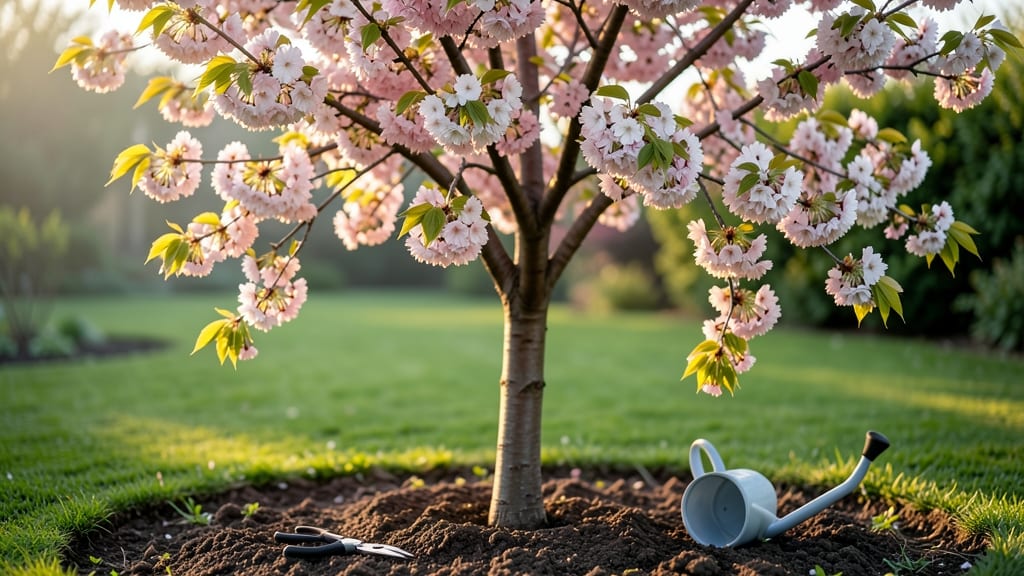
The cherry blossom zone covers USDA hardiness zones 5 through 8, where iconic varieties like Prunus serrulata (Yoshino) and Prunus avium (wild cherry) flourish. Success depends on choosing region-appropriate cultivars and providing full sun with well-draining soil to prevent root rot.
The cherry blossom growing region extends from the Midwest to the Pacific Northwest, where winter chill requirements (300-1,000 hours below 45°F) trigger perfect spring blooms. 🌸 For example, Yoshino cherries handle zone 5's harsh winters, while Kwanzan varieties prefer milder zone 7 climates.
I always check the USDA map's interactive tool to pinpoint my exact microclimate—this helps avoid planting trees that'll struggle with late frosts or summer heatwaves.
Beyond zones, soil pH between 6.0-7.0 and 6-8 hours of direct sunlight per day make all the difference in bloom intensity. The key is balancing moisture—too much water causes root suffocation, while drought stress weakens the tree's ability to produce vibrant flowers.
I recommend amending heavy clay soils with compost and installing a drip irrigation system for consistent moisture without waterlogging.
💡 In This Article
- USDA Hardiness Zones for Cherry Blossom Trees
- Optimal Planting Conditions for Cherry Blossoms
USDA hardiness zones for cherry blossom trees
The cherry blossom growing range aligns closely with USDA hardiness zones 5 through 8, where winter chill requirements (typically 300-1,000 hours below 45°F) trigger the tree's dormancy cycle essential for spring blooming.
This chill period acts like a biological timer, ensuring the tree knows when to break dormancy and produce flowers. For instance, Yoshino cherries (Prunus serrulata 'Yoshino') thrive in zones 5-8, while Kwanzan varieties (Prunus serrulata 'Kwanzan') prefer zones 6-9 due to their slightly less cold tolerance.
Each zone presents unique climate challenges. Zone 5's harsh winters (down to -20°F) require varieties with thick bark and deep root systems, like the 'Autumn Royal' cherry, which can withstand extreme cold.
Meanwhile, zone 8's milder winters (10-20°F) are better suited for varieties like 'Shirofugen', which needs protection from late spring frosts that can damage delicate blossoms.
The USDA Plant Hardiness Map's interactive tool lets you pinpoint your exact microclimate—critical for avoiding planting trees that'll struggle with late frosts or summer heatwaves.
What most gardeners overlook is how summer heat affects cherry blossoms. Zones 7-8 often face 90°F+ temperatures that can stress trees, causing early leaf drop or poor blooming. Varieties like 'Amanogawa' handle heat better due to their drought-tolerant roots.
I always recommend checking the USDA map's 10-year climate averages for your area, as microclimates (like urban heat islands) can shift your effective zone by 1-2 degrees.
Beyond zones, elevation matters. A tree planted at 2,000 feet may experience 5°F colder winters than one at sea level, even in the same zone. For example, Denver (zone 5b) has colder winters than Seattle (zone 8a) at the same elevation.
This is why I cross-reference the USDA map with local weather stations—sometimes a 100-mile drive can mean the difference between a thriving blossom tree and a failed planting.
Consider these zone-specific varieties for optimal results:
- Zone 5: 'Stella Compact' (dwarf variety, handles -25°F)
- Zone 6-7: 'Yoshino' (classic pink blooms, 6-8 feet tall)
- Zone 7-8: 'Kwanzan' (double pink flowers, 25-30 feet tall)
- Zone 8-9: 'Shirotae' (white blossoms, heat-tolerant)
The science behind zone selection involves understanding how cold hardiness interacts with bloom timing. Trees in colder zones (like zone 5) often bloom 2-3 weeks later than those in zone 7 to avoid frost damage. This delayed blooming is a survival mechanism—what nature calls "risk management" for gardeners! 🌸