
Pruning
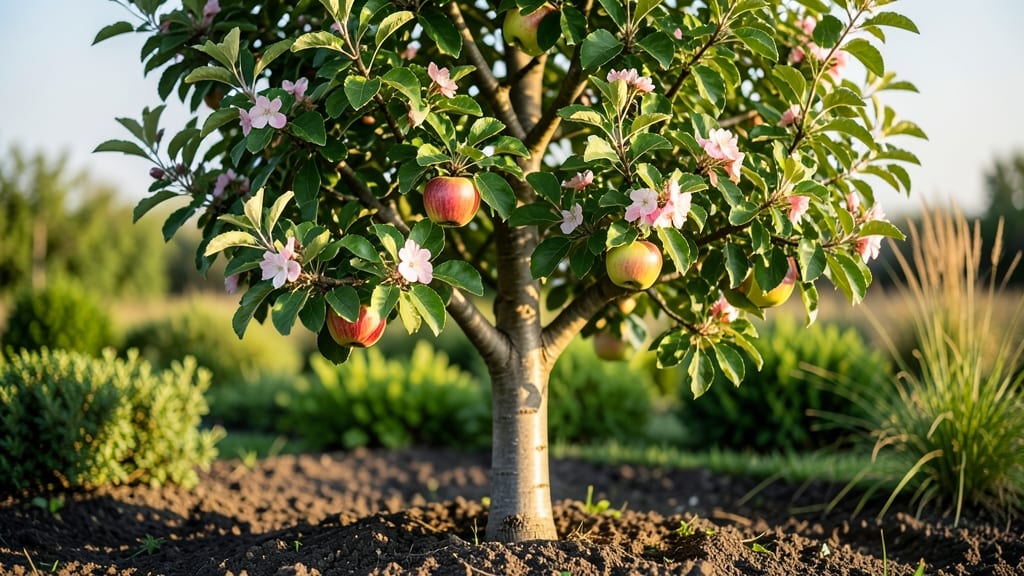
Determining the best zones for Honeycrisp apple trees means planting them in USDA Hardiness Zones 3 through 8, where they handle winter temperatures best. Their late blooming and cold-resistant roots let them survive brief Zone 2 exposure with proper winter care.
Honeycrisp apples earned their reputation for hardiness thanks to their delayed flowering cycle, which helps them avoid late spring frosts. 🌳 Unlike early-blooming varieties, their blossoms typically appear after the danger of frost has passed in most northern climates.
This trait, combined with their deep root systems, explains why they thrive in colder regions where other varieties might struggle.
The Zone 3-8 range reflects their ability to endure winter temperatures down to -40°F, though Zone 2 gardeners can still grow them successfully with protective measures like thick mulching and tree wraps.
In marginal zones like Zone 3 or 4, monitoring bloom dates becomes critical—early spring frost can still damage flowers even in cold-hardy varieties.
For gardeners pushing the limits, I recommend planting near south-facing walls or using low-lying areas where cold air collects less. These microclimate strategies can add 2-5°F of protection during critical winter months. The key is balancing their natural resilience with smart cultural practices tailored to your specific climate zone.
💡 In This Article
- Honeycrisp Apple Tree Cold Hardiness Explained
- Winter Care for Honeycrisp Trees in Marginal Zones
Honeycrisp apple tree cold hardiness explained
The Honeycrisp apple tree's remarkable cold tolerance stems from its unique biological adaptations. Unlike many fruit trees that bloom early in spring, Honeycrisp varieties typically flower 2-3 weeks later than standard apples, avoiding the most dangerous frost periods in northern climates.
This delayed blooming is genetically programmed into the tree's growth cycle, allowing it to survive winter temperatures down to -40°F without significant damage to its dormant buds.
Another key factor is their winter dormancy mechanism.
During cold months, Honeycrisp trees enter a deep dormancy state where their cells produce protective proteins and sugars that act like antifreeze, preventing ice crystal formation in their tissues. 🌟 This natural cold acclimation process is more advanced than in varieties like Fuji (Zone 5-9) or Gala (Zone 5-8), which lack the same level of cold hardiness.
Their rootstock also plays a crucial role—most commercial Honeycrisp trees are grafted onto M.9 or B.9 rootstocks, which have their own cold-resistant characteristics.
When comparing Honeycrisp's cold hardiness to other popular varieties, the differences become clear. For example, Fuji apples typically struggle in Zone 3, while Honeycrisp thrives there.
The secret lies in their cellular structure: Honeycrisp apples have thicker cell walls that resist winter desiccation, while their leaves contain higher levels of antioxidants that protect against oxidative stress during freeze-thaw cycles. This biological advantage explains why they can survive brief exposures to Zone 2 conditions with proper protection.
However, this cold hardiness doesn't mean they're completely frost-proof. In Zone 3 and 4 areas, late spring frosts can still damage blossoms if they arrive unexpectedly.
The tree's late blooming helps, but gardeners in these zones should still monitor weather forecasts during bloom season. 🌨️ The ideal scenario is planting Honeycrisp trees in locations with 10-14 days of frost-free period before typical bloom dates in your region, which usually occurs between late May and early June in most northern climates.
What sets Honeycrisp apart from other cold-hardy varieties is their ability to maintain fruit quality in challenging conditions. Even when grown at the northern edge of their range, they produce apples with the same signature crisp texture and sweet-tart flavor profile.
This consistency is due to their efficient photosynthesis during the short growing seasons in colder zones, where they develop a stronger canopy structure that maximizes sunlight capture.
For gardeners considering Honeycrisp in colder climates, understanding these biological mechanisms helps explain why they perform so well in Zone 3. The combination of late blooming, winter dormancy adaptations, and cold-resistant rootstock creates a tree that's uniquely suited to northern growing conditions.
This is why they've become a favorite among orchardists in Minnesota, Wisconsin, and other cold northern states where other varieties might fail.
In practical terms, this cold hardiness means you can successfully grow Honeycrisp apples in regions where other popular varieties would struggle.
Their ability to handle -40°F temperatures with proper care makes them an excellent choice for home gardeners in the upper Midwest and Northeast United States. 🍏 The key is matching their natural cold resilience with appropriate site selection and winter protection strategies.