
Trees
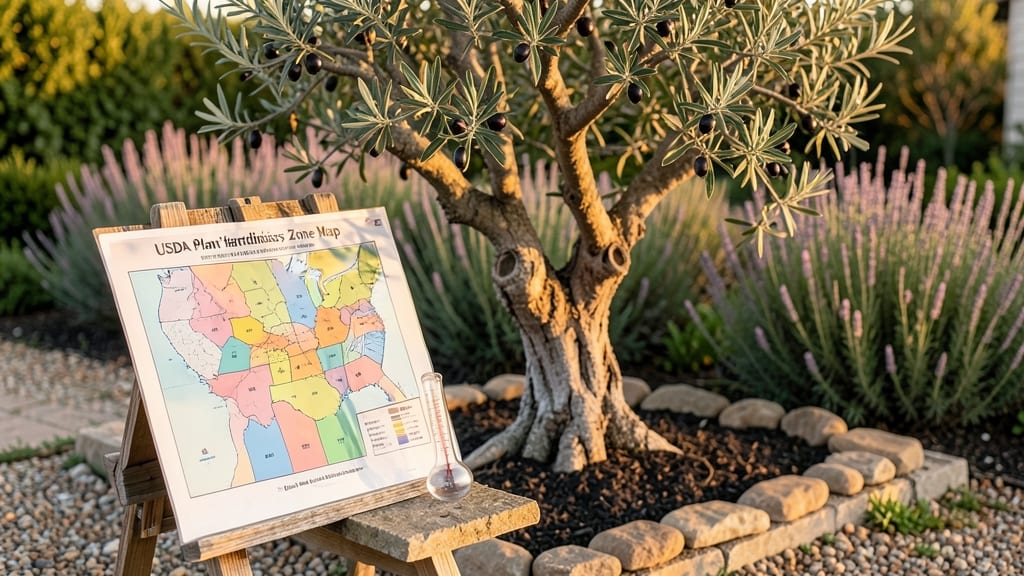
Olive trees thrive best in USDA hardiness zones 8 through 10, where they naturally withstand temperatures as low as 20–25°F (-6 to -4°C). Most varieties will suffer damage or die in colder climates without protection.
Understanding olive tree hardiness zones helps you choose the right location and care strategies. 🌿 In zones 8-10, these trees flourish with minimal stress, producing abundant fruit and strong growth.
The key difference between coastal and inland zones is humidity—coastal areas provide natural moisture protection, while inland zones often need supplemental watering during dry spells. Younger trees or sensitive varieties like 'Manzanillo' may need extra winter protection even within their ideal zones.
For growers in zones 7 and below, winterizing becomes critical. Mulching with straw or bark helps insulate roots, while wrapping the trunk with burlap prevents cold damage. Some cold-hardy varieties like 'Arbequina' can tolerate slightly lower temperatures, but most still require winter cover.
Container-grown olives offer flexibility, allowing you to move them indoors during frost warnings.
💡 In This Article
- USDA Zones 8-10: Ideal Olive Tree Climate Requirements
- Extending Olive Tree Growth in Zones 7 and Below
USDA zones 8-10: ideal olive tree climate requirements
The Mediterranean climate of zones 8-10 creates perfect conditions for olive trees, where average winter lows stay above 20°F (-6°C) and summers provide 100-150 frost-free days for fruit development. Olive trees thrive in these zones because their native habitat—Spain, Italy, and Greece—mirrors this temperature range.
The key factor is avoiding prolonged exposure below 25°F (-4°C), which causes cellular damage through ice crystal formation in leaves and bark.
Coastal microclimates within these zones offer additional advantages. Areas like California's Central Coast (zone 9b) benefit from ocean breezes that moderate temperatures, reducing heat stress in summer and frost risk in winter.
Inland zones, however, experience more extreme temperature swings—daytime highs can reach 95°F (35°C) while nights drop to 40°F (4°C). This fluctuation triggers the tree's natural dormancy cycle, which is essential for fruit production.
Humidity also plays a role: coastal zones maintain 60-70% relative humidity, while inland areas often drop below 40%, requiring supplemental irrigation.
Seasonal adjustments become crucial in zone 10's hotter climates. Olive trees here need afternoon shade during summer to prevent leaf scorch from temperatures exceeding 90°F (32°C). Pruning in late winter (February-March) removes excess foliage that could overheat in these conditions.
Meanwhile, zone 8's cooler winters demand careful monitoring—even brief dips below 15°F (-9°C) can kill tender varieties like 'Mission,' while hardier types like 'Leccino' recover better. 🌿
Soil composition matters just as much as temperature. Olive trees prefer well-draining, slightly alkaline soil (pH 6.5-8.0) to prevent root rot. In zones 9-10, sandy loam soils are ideal, while zone 8's heavier clay soils require amendments like perlite or compost.
The tree's deep root system (up to 6 feet/1.8 meters) needs consistent moisture—drought stress in summer can reduce fruit yield by 30-40%—but never waterlogged conditions, which cause root suffocation.
One often-overlooked factor is sunlight exposure. Olive trees require 6-8 hours of direct sun daily, but in zone 10's intense sunlight, afternoon shade becomes vital. Partial shade (30-50% coverage) during peak hours (11 AM-3 PM) prevents leaf burn while maintaining photosynthesis efficiency.
The trade-off is slightly reduced fruit production—shaded trees may yield 15-20% less olives compared to full-sun counterparts, but the quality improves with better oil content.
For those growing in zone 9b-10a, consider these seasonal tips: apply a 2-inch (5 cm) layer of mulch in summer to retain moisture, and prune in early spring to stimulate new growth before the heat sets in.
In zone 8, focus on winter protection—even hardy varieties benefit from a 3-inch (7.5 cm) layer of straw mulch around the base to insulate roots. The difference between thriving and struggling often comes down to these microclimate adjustments. 💛