
Planting
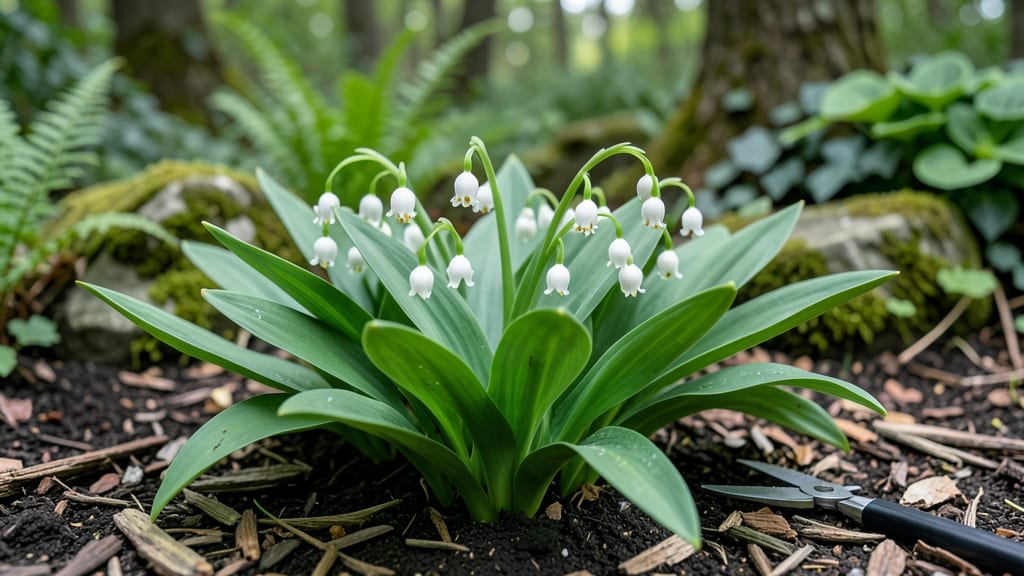
Lily of the valley thrives in USDA zones 3 through 8, where its cold-hardy roots and shade-tolerant leaves create ideal growing conditions. This hardy perennial spreads rapidly in cooler climates while maintaining vibrant blooms in milder winters, with varieties like 'Variegata' excelling in zones 4-7.
Lily of the valley's secret to success lies in its deep, fibrous root system that stores moisture and nutrients, allowing it to survive harsh winters in zones 3-5. 🌱 Unlike many shade plants, it actually prefers cooler temperatures for dormancy, which is why it performs so well in northern climates.
The key to getting the best blooms is planting in well-drained soil with morning sun and afternoon shade—this balance helps prevent fungal issues while keeping the foliage lush.
For gardeners in zones 6-8, the real advantage becomes timing. Most varieties bloom in late spring, but some like 'Aureovariegata' produce golden foliage that lasts all season. The trick is to plant in early fall for root establishment, giving you that signature fragrance and white bell-shaped flowers the following spring.
Just be warned—this plant spreads aggressively, so containment is essential unless you want it taking over your garden!
💡 In This Article
- Understanding Lily of the Valley’s Cold Tolerance and Growth Habits
- Top Lily of the Valley Varieties for Different Planting Zones
Understanding lily of the valley’s cold tolerance and growth habits
Lily of the valley's cold hardiness comes from its specialized root system, which stores carbohydrates during dormancy.
These roots can endure temperatures down to -30°F in zone 3, thanks to a natural antifreeze-like compound called "dehydrins" that protects cell membranes from freezing. 🔥 This adaptation explains why it thrives where hostas (zone 4-9) might struggle in extreme winters.
The plant's ability to enter deep dormancy at 40°F or below is what allows it to survive harsh northern winters while still rebounding with vigorous spring growth.
What makes lily of the valley unique is its preference for cooler growing seasons. Unlike many perennials that suffer in hot climates, it actually performs better in zones 4-6 where summer temperatures rarely exceed 85°F.
The plant's broad, waxy leaves help reduce water loss during dry spells, while its compact growth habit (typically 12-18 inches tall) prevents heat stress.
This is why gardeners in zone 7 often see better blooms when planted in partial shade—it mimics the cooler, moist conditions of its native European woodlands.
The flowering process is directly tied to temperature cues. Lily of the valley requires a period of cold dormancy (typically 4-6 weeks below 45°F) to trigger bud formation. This is why plants in zone 8 may need winter protection or supplemental chilling to bloom reliably.
The scent—often described as sweet and honey-like—is most intense in the morning when temperatures are coolest, which is why many gardeners plant it near patios or entryways. 🌟
Comparing it to other shade plants reveals its resilience. While ferns require consistent moisture and hostas can suffer from crown rot in wet winters, lily of the valley handles both extremes.
Its ability to spread via underground rhizomes allows it to quickly colonize new areas, creating dense ground cover that outcompetes weeds. This aggressive growth habit is both its greatest strength and its biggest challenge for gardeners trying to contain it.
One fascinating adaptation is its ability to photosynthesize even in low light conditions. The plant's leaves contain high levels of chlorophyll b, which helps capture light in shaded environments. This is why it often thrives under trees where other plants would struggle.
The trade-off is that it may produce fewer blooms in deep shade, with flower stalks typically emerging in late April to early May depending on local climate patterns. 🌱
For gardeners pushing the limits in zone 9 or warmer, the key is providing afternoon shade and consistent moisture. The plant can survive brief periods of drought once established, but its blooming potential decreases when summer temperatures exceed 90°F for extended periods.
This is why many southern gardeners grow it in containers or raised beds where they can control moisture levels more precisely.