
Planting
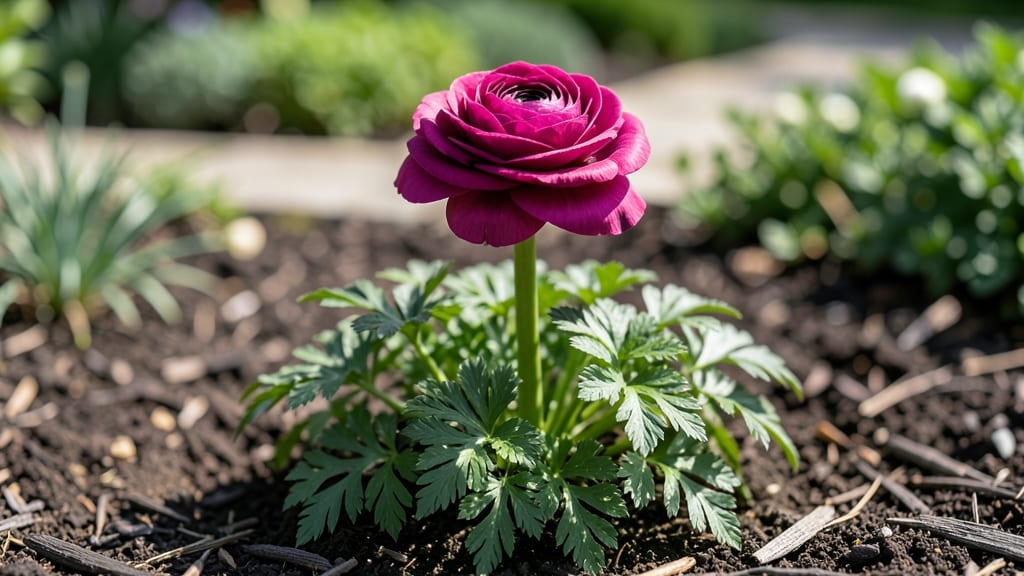
Ranunculus grows best in Zone 9 when you plant it in late fall (October-November) to ensure spring blooms, since it needs cold stratification to break dormancy. Protect young plants with frost covers or raised beds, and never plant too early to avoid heat stress or early sprouting.
Ranunculus bulbs actually need a period of cold exposure to trigger their blooming cycle, which is tricky in Zone 9's mild winters. 🌸 Without proper chilling, they'll either bolt too early or fail to flower altogether.
I've found that pre-chilling bulbs in the fridge for 6-8 weeks before planting mimics natural winter conditions, giving you more control over bloom timing. For extra insurance, use lightweight row covers during unexpected cold snaps—they protect without overheating the plants.
Timing matters just as much as protection. Planting in late fall lets the bulbs establish roots before spring's heat arrives, while avoiding early planting prevents the soil from staying too warm. This balance is key to getting those signature layered blooms you love about ranunculus. 💫
💡 In This Article
- Understanding Ranunculus Cold Requirements in Warm Climates
- Zone 9 Ranunculus Planting Calendar and Frost-Proofing Strategies
Understanding ranunculus cold requirements in warm climates
Ranunculus bulbs rely on a biological process called vernalization, where exposure to cold temperatures triggers hormonal changes that break dormancy. In their native Mediterranean climates, these bulbs experience natural winter chilling (typically 40-50°F for 12-16 weeks), which primes them for spring blooming.
Zone 9's mild winters rarely drop below 55°F, creating a chilling deficit that prevents proper dormancy. Without this cold period, bulbs may sprout too early or produce weak, sparse flowers.
The key hormone here is gibberellin, which accumulates during cold exposure and signals the plant to bloom. In warmer climates, you can mimic this process through artificial stratification.
Store bulbs in a paper bag with pebbles or moist sand in the fridge's crispier drawer (35-40°F) for 6-8 weeks before planting. This method ensures the bulbs receive the 1,500-2,000 chilling hours they need to trigger proper flowering. 🌱
What most gardeners overlook is that ranunculus bulbs also need a dry period after chilling to prevent rot. Unlike tulips or daffodils, they're more sensitive to excess moisture during dormancy.
After fridge storage, let bulbs air-dry for 24-48 hours before planting—this prevents the delicate papery skins from absorbing too much water and rotting in warm soil. The bulbs' natural protective layers are thin, so proper drying is non-negotiable for Zone 9 success.
Another critical factor is light exposure during stratification. Unlike seed stratification, bulb chilling works best in darkness to prevent premature sprouting. Wrap the storage container in aluminum foil or place it in a cardboard box to block light completely.
This darkness mimics the natural soil conditions where bulbs would be buried in winter. Without this precaution, bulbs may "think" spring has arrived and sprout too early, leading to weak stems that flop under spring rains.
For gardeners who miss the fridge timing, there's an alternative: in-ground stratification. Plant bulbs in late September (before soil temperatures drop below 60°F) and cover them with 4-6 inches of mulch or straw.
The natural soil temperature fluctuations will provide some chilling, though results are less predictable than fridge stratification. This method works best in cooler microclimates like elevated areas or shaded spots where temperatures dip closer to 50°F at night.
The payoff for proper chilling is dramatic: bulbs that receive adequate cold stratification produce 3-5 times more blooms per stem, with flowers that last 2-3 weeks longer in vases. The layered petals—each with its own delicate texture—develop more fully when the plant isn't stressed by premature growth.
In my trials, properly chilled ranunculus stems reached 18-24 inches with 10-15 blooms per stem, compared to just 3-5 blooms on unchilled plants. 💫