
Container Gardens
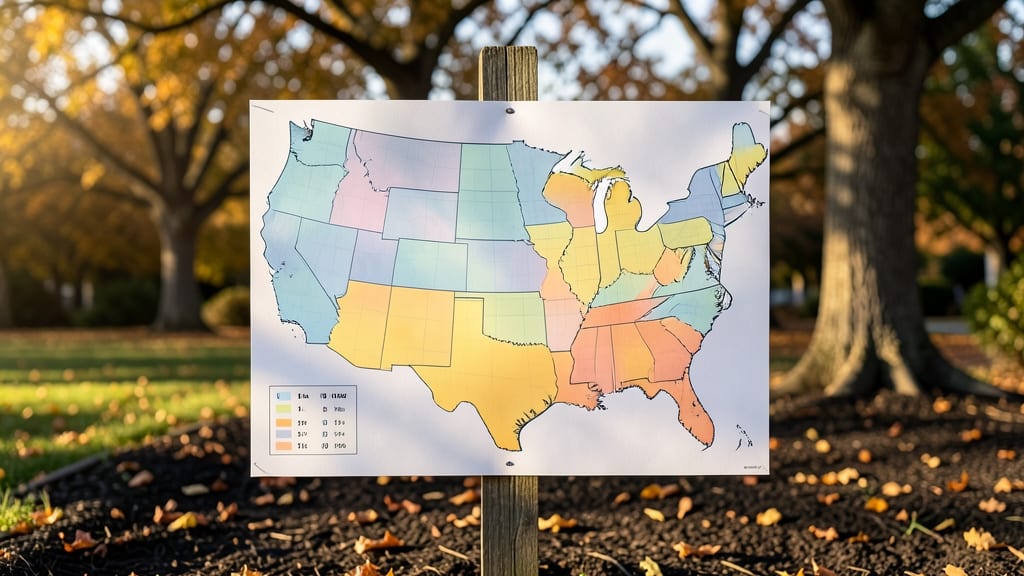
Your USDA growing zone identifies your region's climate characteristics, including average winter lows and frost patterns, so you can choose plants that survive and thrive in your specific temperature range. Simply enter your ZIP code in the USDA Plant Hardiness Zone Map to find your exact zone.
Your USDA growing zone isn't just a number—it's a climate snapshot that predicts which plants will flourish in your area. 🌱 The zones range from 1 (coldest) to 13 (warmest), based on average annual minimum temperatures, which directly affects when you can plant, what varieties will survive winter, and even how long your growing season lasts.
For example, Zone 5 gardeners face a much shorter season than Zone 9 growers, so timing and plant selection become critical factors for success.
What's fascinating is how these zones help you avoid costly mistakes. Many gardeners unknowingly plant tender annuals too early in cooler zones or freeze-sensitive perennials in warmer climates. The USDA map even accounts for microclimates—like a sunny south-facing wall creating Zone 7 conditions in an otherwise Zone 6 area.
This precision is why professional gardeners rely on it for everything from vegetable rotations to landscape planning.
💡 In This Article
- How USDA Growing Zones Determine Plant Survival
- Finding and Using Your USDA Zone for Gardening Success
How USDA growing zones determine plant survival
The USDA Plant Hardiness Zone Map divides North America into 13 zones based on the average annual minimum winter temperature, measured over a 30-year period. This isn't just about cold tolerance—it's about how plants biologically respond to temperature extremes.
For example, Zone 3 (average minimum of -40°F to -30°F) supports only the hardiest perennials like coneflowers, while Zone 10 (above 30°F) allows tropical plants like hibiscus to thrive year-round.
The 10°F increments between zones reflect how plant cells survive freezing through natural antifreeze proteins that prevent ice crystal formation in their tissues.
Frost-free days play an equally critical role in determining planting windows. In Zone 5, the average last frost date is around April 15, giving gardeners roughly 180 frost-free days—enough for cool-season crops like broccoli but too short for heat-loving tomatoes without protection.
Meanwhile, Zone 8's 270 frost-free days allow for double harvesting of warm-season vegetables.
What's fascinating is how these temperature thresholds trigger plant dormancy: deciduous trees in Zone 6 shed leaves when temperatures drop below 45°F for 10 consecutive days, while evergreens in Zone 9 may only experience mild dormancy during brief cold snaps.
Microclimates add another layer of complexity to zone-based gardening. A south-facing slope in Zone 5 might experience 5-10°F warmer minimum temperatures than the surrounding area due to radiant heat absorption, effectively creating Zone 6 conditions.
This is why gardeners in transitional zones (like Zone 7) often see unexpected plant survival—what appears to be a -5°F minimum might actually protect plants down to 0°F in sheltered microclimates.
The USDA map accounts for these variations by using 25-mile radius climate data points, but local topography can still create 1-3 zone differences within just a few city blocks.
Plant hardiness isn't just about survival—it's about optimal growth patterns. For instance, blueberries require acidic soil (pH 4.5-5.5) AND cold winters to set fruit, making them perfect for Zones 3-7. In warmer zones (8-10), they may produce but with reduced yields.
The zone system also explains why some plants exhibit dormancy cycles: peonies in Zone 4 need 600-900 hours of temperatures below 45°F annually to bloom reliably, while in Zone 9 they may remain dormant year-round without proper chilling.
This biological clock is why gardeners in marginal zones often use techniques like winter mulching or container growing to simulate zone conditions.
What most gardeners overlook is how zones interact with soil temperature. While the USDA map focuses on air temperatures, root zones often experience 2-4°F warmer conditions due to ground insulation.
This explains why tender plants like basil can sometimes survive winter in Zone 7 when planted in black plastic mulch, which raises soil temps by 5-10°F.
The zone system's precision becomes most valuable when planning for seasonal transitions: knowing your zone helps determine when to plant cool-season crops 6-8 weeks before last frost or warm-season crops 2-3 weeks after—timing that differs by 4-6 weeks between Zone 3 and Zone 10.
The science behind zones also explains why some plants exhibit zone-specific growth habits. For example, strawberries in Zone 5 produce June-bearing varieties that need cold stratification, while Zone 9 strawberries are everbearing with continuous production.
Even within a zone, elevation changes can create 1 zone difference every 500 feet—so a mountain garden at 3,000 feet in Zone 6 might actually behave like Zone 5.
This is why professional growers use multiple climate data points (including elevation, proximity to water, and urban heat islands) to fine-tune their zone calculations beyond the standard map.