
Shrubs
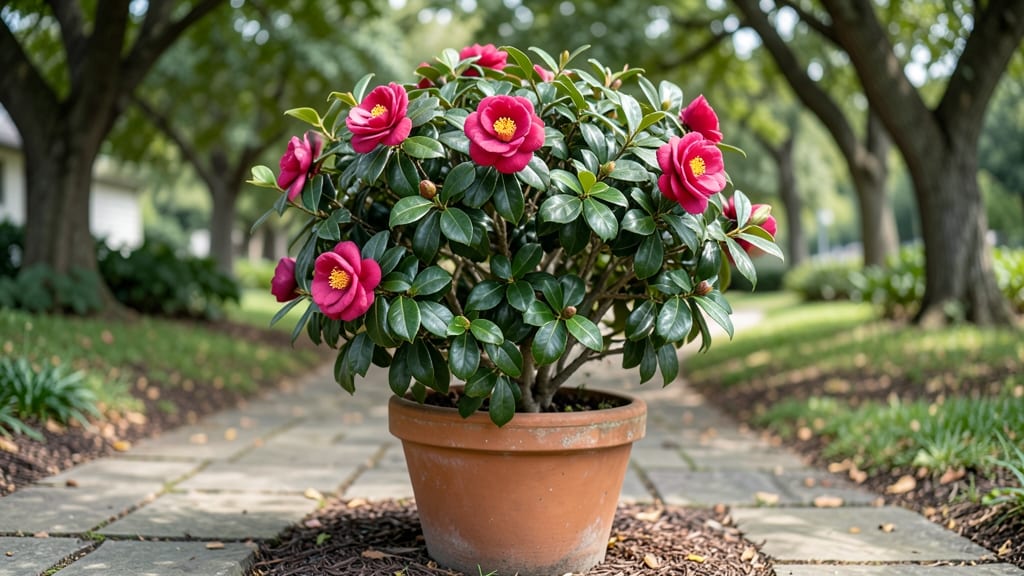
Camellia bushes grow best in USDA hardiness zones 7 through 10, where they can thrive with proper care. Most varieties prefer partial shade and well-draining, acidic soil, though cold-hardy types like Camellia sasanqua can survive down to zone 6, while tropical varieties need protection in zones 8 and above.
Choosing the right zone for your camellia bush isn't just about the number—it's about understanding your local climate. Zone 6 gardeners should opt for sasanqua varieties, which tolerate brief cold snaps, while zone 10 growers might need to protect their plants from summer heat stress.
The key difference lies in frost sensitivity: camellias in colder zones need winter mulching and wind protection, while those in warmer zones may struggle with excessive heat or humidity. 🌿 I always recommend testing your soil pH (aim for 5.5-6.5) and selecting varieties that match your region's microclimate.
For example, Camellia japonica flourishes in zones 7-9 with its iconic blooms, while Camellia oleifera thrives in zones 8-10 and offers both ornamental and oil-producing benefits. Urban gardeners might face additional challenges like heat islands or compacted soil, requiring extra attention to drainage and airflow.
The best approach? Start with your zone, then fine-tune based on your specific growing conditions.
💡 In This Article
- Understanding Camellia Hardiness Zones and Climate Needs
- Top Camellia Varieties by Region and Planting Tips
Understanding Camellia hardiness zones and climate needs
Camellias thrive in USDA zones 7-10 because their native habitats in East Asia experience mild winters and warm summers—ideal conditions for their delicate foliage and blooms. The critical temperature threshold is 15°F, below which most varieties suffer frost damage.
For instance, Camellia sasanqua, found in zone 6, can tolerate brief dips to 5°F thanks to its thicker leaves and deeper root systems, while Camellia japonica in zone 7 may need winter protection from 20°F and lower. 🌡️
Humidity plays a surprisingly large role in camellia health. These plants originate from subtropical regions where atmospheric moisture stays high year-round. In zones 8-10, excessive summer humidity can promote fungal diseases like petal blight, while zones 6-7 often face winter desiccation from dry winds.
The ideal relative humidity range is 40-60%, which explains why coastal gardeners in zone 9 often have thriving camellias—ocean breezes naturally regulate moisture levels. In drier inland zones, regular misting or mulching helps maintain this balance.
Seasonal care varies dramatically by zone. Zone 6 gardeners must apply 4-6 inches of mulch in late fall to insulate roots, while zone 10 growers focus on summer shade cloth to prevent heat stress above 90°F.
Wind protection is equally critical: camellias in exposed zones 7-8 can suffer winter burn from cold winds, so evergreen windbreaks or burlap wraps work wonders. 🌿 The key is mimicking their natural habitat—partial shade in summer and winter protection in colder zones.
Soil temperature matters just as much as air temperature. Camellia roots prefer soil temps between 60-70°F for optimal growth. In zone 6, spring planting should wait until soil warms to 55°F to avoid root shock, while zone 10 gardeners might plant in fall to escape summer heat.
This explains why many nurseries recommend "bare-root" planting in cooler zones—the exposed roots warm faster in spring soil. The root zone's pH (5.5-6.5) also affects nutrient uptake, with aluminum toxicity becoming an issue in acidic soils below pH 5.0.
Microclimates create the biggest surprises. A south-facing wall can turn zone 6 into a zone 7 microclimate, while a sheltered valley in zone 8 might behave like zone 9. This is why I always recommend testing multiple spots in your garden.
For example, Camellia reticulata (zone 8-10) might survive winter in zone 7 if planted against a brick wall, while Camellia pitardii (zone 9-10) would struggle in zone 8 without summer shade. The solution? Start with your zone as a baseline, then observe how your specific site modifies those conditions.
What most people overlook is how camellias handle seasonal transitions. In zones 7-9, spring bloomers like Camellia japonica need gradual temperature increases to flower properly—sudden warm spells can cause buds to drop. Meanwhile, in zones 8-10, fall-planted varieties may require 30-40% shade during peak summer to prevent leaf scorch.
The plant's natural dormancy cycle must align with your local climate patterns for consistent blooming. 🌸