
Plants
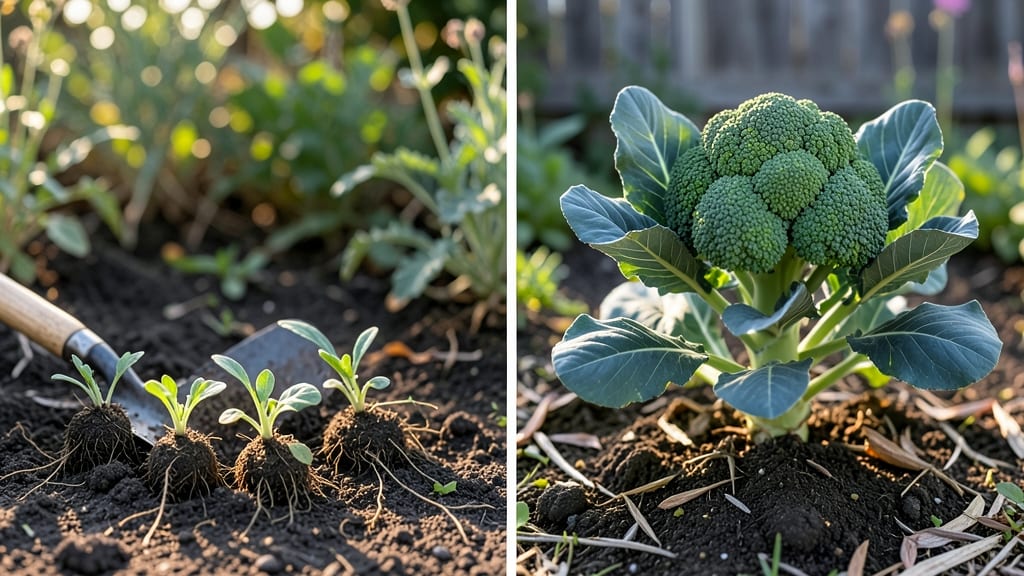
Planting fall broccoli in Zone 6 about 4-6 weeks before your first frost is the key to a harvest that outlasts the heat and beats the cold.
Timing your fall broccoli planting in Zone 6 can mean the difference between a bountiful harvest and wasted effort—get it wrong, and frost will ruin your crop before it matures. I’ve seen 60-day-old plants wither overnight when a late frost hits, and you’ll want to avoid that heartbreak.
For Zone 6 (General), that window typically lands in late August to early September, but your exact dates depend on your local frost risk and the variety you’re growing. Fast-maturing types like ‘Waltham 29’ can go in a little later, while slower growers like ‘Calabrese’ need that early start.
Below, I’ll break down the exact dates, soil prep tricks, and spacing tips to ensure your 🥦 broccoli thrives—plus how to adjust if your fall runs long or short. Let’s get those plants in the ground at the perfect moment.

Best planting dates for fall broccoli in Zone 6 (with frost risk analysis)
Timing your fall broccoli planting in Zone 6 requires precision—get it wrong, and frost will turn your crop into mushy disappointment before it matures. The key is planting 60-80 days before your average first frost (typically mid-October in Zone 6), but soil temperatures and variety maturity also play critical roles.
Let’s break down the exact windows to maximize your harvest while minimizing frost risk.
For Zone 6, your planting window spans from late July to early September, but not all dates are equal. Early plantings (late July) give you the longest growing season, while late plantings (early September) require cold-hardy varieties to survive light frosts.
The 30-day buffer I recommend accounts for local microclimates—urban areas may frost earlier than rural zones, so adjust accordingly.
Here’s the critical data you need to plan your fall broccoli perfectly, including frost risk analysis and soil prep tips:
| Planting Window | Days to Maturity | Soil Temp (°F) | Frost Risk | Action |
|---|---|---|---|---|
| Late July (Early Planting) | 60-70 days | 50-65°F | Low (harvest before frost) | Use fast-maturing varieties like 'De Cicco' |
| Mid-August (Mid Planting) | 55-65 days | 45-60°F | Moderate (light frost possible) | Choose semi-dwarf varieties like 'Waltham 29' |
| Early September (Late Planting) | 50-55 days | 40-55°F | High (frost likely) | Select cold-hardy varieties like 'Calabrese' |
Your soil temperature is non-negotiable—broccoli seeds need 40-60°F to germinate, but 50°F+ speeds up growth. Use a soil thermometer to confirm conditions before planting. If your soil is cooler than 45°F, wait 1-2 weeks or use black plastic mulch to warm it faster.
Pro tip: Plant in raised beds if your ground stays cold longer.
For Zone 6’s first frost (mid-October), calculate your harvest window by subtracting 50-60 days from the frost date. If you plant August 15th, your broccoli should be ready by October 10th, just before frost hits.
Use this 30-day buffer calculator: Subtract 30 days from your frost date, then plant 60 days before that adjusted date to account for early frosts.
Don’t overlook succession planting—sow half your seeds in late July and the other half in early August for a staggered harvest. This ensures you’re not left with a single frost-killed crop all at once.
Pair faster-maturing varieties (like 'Early Purple Sprouting') with slower ones (like 'Green Goliath') to extend your harvest timeline.
If your local microclimate runs cooler (e.g., near lakes or hills), push your planting 2 weeks earlier to avoid frost. Conversely, in urban heat islands, you can plant 1-2 weeks later since soil stays warmer.
Always monitor your local frost forecast—apps like Frost Date Calculator or Old Farmer’s Almanac provide hyper-local data.
Post-planting, focus on consistent moisture—broccoli needs 1-1.5 inches of water weekly, especially during head formation. Mulch with straw or shredded leaves to insulate roots from temperature swings and retain moisture. Avoid over-fertilizing with nitrogen, which promotes leafy growth over tight heads.
Watch for early frost warnings in late September. If a light frost (28-32°F) is forecasted, cover plants with frost blankets or row covers. For hard frosts (below 28°F), harvest what you can immediately—broccoli can tolerate 20-25°F for short periods but won’t recover.
By following these Zone 6-specific planting dates and adjusting for your microclimate, you’ll enjoy homegrown broccoli from October through November—just in time for hearty fall meals. Happy planting!
How to adjust planting for early, mid, OR late fall harvests in Zone 6
Zone 6 gardeners know timing is everything when it comes to fall broccoli. Early, mid, or late harvests all require different strategies to beat frost. The key is balancing maturity timelines with frost risk while using soil and variety tricks to extend your growing season.
For early harvests, focus on fast-maturing varieties planted in late July to give you heads by September. Mid-season plantings in early August aim for October harvests, while late plantings in late August push your luck for November harvests before hard frost hits.
Each approach needs its own tweaks to succeed.
- 📍 Early Harvest: Plant fast varieties (50-60 days) by July 20 for September harvests. Use row covers to delay frost.
- 🌡️ Mid-Season: Choose 60-70 day varieties planted August 1-15. Warm soil with black plastic mulch for faster growth.
- ❄️ Late Harvest: Risk 70-80 day varieties planted August 20-31. Use cold frames to protect tender heads.
- 🌱 Succession Plant: Stagger plantings every 2 weeks for continuous harvests until frost.
- 🌡️ Soil Warmth: Test soil at 55°F+ before planting. Use straw mulch to retain heat.
Succession planting is your secret weapon for extended harvests. Instead of one big planting, try small batches every 2 weeks from July through August. This spreads out your risk and ensures you always have fresh broccoli while the weather cooperates.
Just be sure to choose varieties with consistent maturity times to avoid a harvest free-for-all.
Cold-hardy varieties like Waltham 29 or Calabrese can handle light frosts (28°F), but don’t push it. Pair these with row covers or cold frames to shave off 10-14 days from your frost date.
For late plantings, consider broccoli raab, which matures faster and tolerates cooler temps better than traditional varieties.
Soil warming is another game-changer. Black plastic mulch can raise soil temps by 5-10°F, giving your late plantings a head start. Remove it once plants are established to prevent overheating. Alternatively, straw mulch insulates roots, protecting them from temperature swings that can stunt growth.
Remember, overcrowding is the enemy of fall broccoli. Space plants 18-24 inches apart to prevent disease spread and ensure heads develop properly. Thin seedlings early to avoid competition, and always harvest outer leaves first to keep plants productive until frost.
With these adjustments, you’ll turn Zone 6’s short growing window into a harvest goldmine. Start with early plantings, then layer in mid and late batches—your taste buds (and dinner table) will thank you all winter long. 🥦